
Future development along the K-10 Highway corridor requires a rigorous evaluation of environmental protections and the preservation of sensitive agricultural lands. Douglas County currently stands at a significant crossroads as local leaders prepare to evaluate a massive $153.6 million development proposal that could fundamentally alter the economic landscape of Eudora, Kansas. At the center of this discussion is the Eisele property, a 132.5-acre site positioned strategically at the intersection of K-10 Highway and East 2300 Road. Spearheaded by Main Street Development Group LLC, this ambitious project aims to transform recently annexed land into a bustling hub of commerce and industry, leveraging a specialized tax incentive structure to fuel its growth. To bring this vision to life, developers are requesting the establishment of a Tax Increment Financing district, a tool that redirects future property and sales tax gains back into the project. This strategy is essential for managing the high-capital nature of the site.
Fueling Economic Growth through Phased Development
Strategic Commercial and Industrial Zoning: Two Distinct Phases
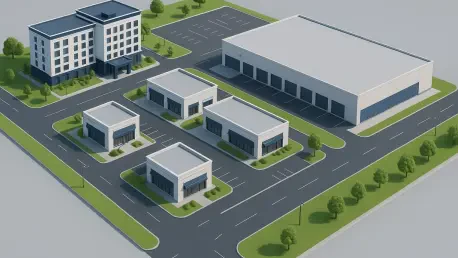
The expansion is meticulously organized into two distinct phases to ensure a balanced transition from rural land to an industrial powerhouse. Phase I, known as the K-10 Commerce Park, focuses on 34 acres dedicated to high-traffic commercial needs, including a hotel, restaurants, and a large-scale truck stop. This initial $43.6 million stage is set to break ground in 2027, providing immediate service-oriented amenities to the K-10 corridor. The inclusion of hospitality and dining facilities is intended to capture the significant traffic flow moving between major regional hubs, creating a commercial anchor that supports the local workforce and travelers alike. By starting with these high-visibility services, the developer builds a foundation of activity that justifies the subsequent larger industrial investments planned for the remainder of the site over the following decade.
Following the commercial foundation, Phase II will introduce a $110 million industrial expansion, featuring two massive facilities designed to anchor the region’s manufacturing and distribution capabilities through 2035. These industrial buildings are expected to cater to a variety of modern logistics and production needs, reflecting the increasing demand for supply chain infrastructure in the Midwest. The scale of these structures represents a significant shift in the local economy, moving toward high-density employment centers that can accommodate the sophisticated requirements of modern industry. This phased approach allows the county to adjust its public safety and utility services incrementally rather than all at once. The long-term vision for the Eisele property emphasizes a shift from agricultural dominance to a diversified economic engine that supports the broader region through high-value land use.
Long-Term Financial Projections: Tax Increment Financing Benefits
The economic impact of this Tax Increment Financing district is projected to be substantial over its twenty-year lifespan, providing a self-sustaining financial framework for growth. Financial feasibility studies estimate that the project will generate approximately $70.22 million in property tax increments and over $5 million in sales tax revenue. Under a “pay-as-you-go” arrangement, the developers would shoulder the initial costs of vital public infrastructure like roads and utilities, later receiving reimbursement from the tax revenue generated by the new businesses. This financial strategy, combined with a request for industrial revenue bonds to waive sales taxes on construction materials, is designed to lower the barriers to entry for such a high-capital investment. It ensures that the burden of basic infrastructure construction does not fall on the existing taxpayers.
By the time the final industrial building is completed in the mid-2030s, the once-quiet Eisele property is expected to be a primary engine for the county’s tax base and job market. The redirection of tax increments back into the development allows for the construction of high-quality infrastructure that might otherwise be unaffordable for the municipality alone. Furthermore, the projected sales tax revenue from the commercial phase provides a steady stream of income that supports the ongoing maintenance of the district. This reinvestment cycle is critical for maintaining the competitiveness of the K-10 corridor against other regional developments. The long-term fiscal health of Eudora depends on these proactive measures to attract businesses that contribute to the regional tax pool while providing stable employment for the local population and residents in neighboring cities.
Modernizing Regional Infrastructure and Land Use
Adapting the Plan 2040 Framework: Regional Land Use Shifts
Beyond the Eudora project, the Douglas County Board of Commissioners is reviewing a pivotal amendment to “Plan 2040,” the region’s comprehensive long-term roadmap. The proposal seeks to reclassify land west of K-10 from industrial and residential use to a “commercial center” designation. This shift reflects a broader trend of moving toward integrated, mixed-use landscapes that can accommodate both business and residential growth in a cohesive manner. However, this transition requires a “triple-crown” approval from the Planning, City, and County Commissions to ensure that traffic management and emergency services can keep pace with the change. This rigorous vetting process is meant to prevent the disjointed sprawl that can occur when development outpaces planning, ensuring that the character of the county is preserved while still allowing for the necessary modernization of land use patterns.
The reclassification of this land is not merely a bureaucratic change but a fundamental reimagining of how the county interacts with the highway corridor. By designating these areas as commercial centers, officials aim to foster environments where people can work, shop, and live within closer proximity, reducing the overall strain on regional transportation networks. This strategic pivot acknowledges that the old model of isolated industrial zones is becoming less effective in a modern economy that prizes connectivity and accessibility. The commissioners scrutinized the potential for increased noise and light pollution, balancing these concerns against the need for economic vitality. As Douglas County continues to grow, the ability to adapt its primary planning documents to current market realities remains a cornerstone of its development strategy, ensuring that the community remains attractive for both investors and future residents.
Essential Services and Utility Management: Sustaining the Footprint
As the county expands, officials are also prioritizing the basic infrastructure required to support a growing population and the increased demands of new commercial zones. This includes a mandatory five-year update to the Solid Waste Management Plan for Douglas and Jefferson counties, ensuring that trash and recycling services remain sustainable as the suburban footprint grows. Efficient waste management is a critical yet often overlooked component of large-scale development that requires careful coordination between neighboring jurisdictions. The update focuses on expanding recycling capacities and optimizing collection routes to handle the higher volumes of waste generated by new industrial facilities. These logistical improvements are essential for maintaining the environmental health of the region as it undergoes this period of rapid physical and economic transformation.
Additionally, the commission considered the approval of a new wireless communication facility on U.S. Highway 40, highlighting the commitment to bolstering digital connectivity in rural-urban fringe areas. The board recognized that the most effective path forward involved a localized approach to environmental oversight and utility coordination. They determined that prioritizing regional digital connectivity served as the catalyst for economic resilience in the face of rapid expansion. By approving these specialized permits, the county ensured that technological infrastructure matched the pace of physical construction, providing the necessary bandwidth for modern businesses to thrive. These decisions laid the groundwork for a more robust regional network that supported both the new K-10 developments and the existing community, demonstrating a holistic approach to managing the various challenges posed by large-scale commercial growth.