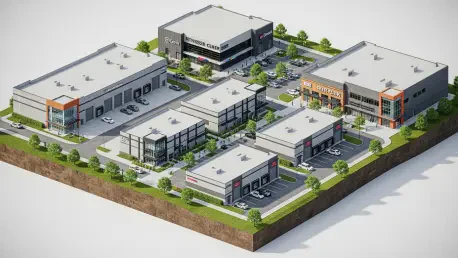

The rapid metamorphosis of Meridian from a small agricultural town into Idaho’s second-largest city has necessitated a radical shift in how regional planners and private developers approach large-scale land use. At the heart of this evolution lies a massive 220-acre mixed-use project that represents a collaborative masterwork between Ahlquist, Adler Industrial, and McAlvain Companies. Located at the critical junction of Interstate 84 and Ten Mile Road, this development is not merely an expansion of the city limits but a deliberate attempt to create a self-contained urban ecosystem. By transforming what was once vacant land into a dense cluster of residential, commercial, and industrial facilities, the project aims to serve as a central hub for the entire Treasure Valley. This “dirt to done” philosophy ensures that every acre is utilized with precision, moving away from fragmented growth toward a cohesive community designed for the modern era.
Strategic Design and Physical Scale
Combatting Urban Sprawl Through Thoughtful Infill
A fundamental principle driving this massive undertaking is the concept of thoughtful infill, which seeks to curb the relentless spread of urban sprawl by prioritizing high-density development within existing infrastructure zones. Rather than extending the city’s footprint further into rural outskirts, the developers chose to concentrate their efforts on 220 acres that sit directly across from established commercial districts. This strategic positioning allows the project to integrate seamlessly into the current city grid, making it easier to manage utility expansion and public services. By building vertically and increasing the density of the available land, the plan ensures that thousands of residents can live in close proximity to their workplaces. This approach not only preserves the surrounding agricultural landscape but also creates a more vibrant and walkable urban core that challenges the traditional car-centric development patterns typical of the American West.
Moreover, this focus on density directly addresses the growing regional concerns regarding traffic congestion and long-distance commuting. By providing residential units within the same complex as major office spaces and retail centers, the project reduces the reliance on local highways for daily errands and professional travel. The design incorporates a sophisticated network of pathways and transit-friendly corridors that encourage residents to utilize alternative modes of transportation. This internal connectivity is a key component of the broader master plan, which envisions a lifestyle where essential services are just a short walk or bike ride away. As the Treasure Valley continues to experience an influx of new residents, this model of integrated living offers a sustainable solution to population growth. It demonstrates that urban expansion can be managed in a way that enhances quality of life while minimizing the environmental and logistical burdens associated with rapid metropolitan development.
Engineering the Foundation: A Monumental Earthwork
To facilitate such a grand vision, the physical preparation of the site required an engineering feat of staggering proportions, involving the movement of approximately 173,000 cubic yards of earth to create a level foundation. To put this massive volume into perspective, it is equivalent to covering roughly 85 football fields with a foot of soil, a task that required months of heavy machinery operation and meticulous topographical planning. This extensive earthwork was necessary to accommodate the diverse array of structures planned for the site, ranging from heavy industrial warehouses to multi-story retail and office buildings. Every cubic yard moved was a calculated step toward ensuring the long-term stability and functionality of the development’s infrastructure. The scale of this preparation work underscores the commitment of the developers to transform the raw landscape into a high-performance urban environment that can support the technological and structural demands of the twenty-first century.
Beyond the sheer volume of soil moved, the project’s infrastructure phase involved the installation of advanced utility networks and high-capacity drainage systems designed to handle the needs of a dense population. The technical complexity of coordinating these subterranean systems across 220 acres cannot be overstated, as it requires precise alignment with city standards and future growth projections. Engineers worked closely with municipal authorities to ensure that the site could support a wide range of activities, from high-tech manufacturing to hospitality. This foundational phase serves as the skeleton upon which the entire mixed-use community is built, providing the necessary resilience to withstand the pressures of intensive daily use. By investing heavily in the initial preparation of the land, the developers have created a versatile platform that can adapt to the changing needs of the Meridian community. This meticulous attention to detail ensures that the transition from vacant dirt to a fully realized urban center is both efficient and durable.
Economic Synergy and Future Regional Development
Integrating Lifestyle Amenities and Industrial Growth
The retail landscape of the development is anchored by Meridian’s very first Target, a flagship 148,000-square-foot store that serves as a major draw for the entire Treasure Valley. As the fourth location for the national retailer in the region, this site reflects the high population density and economic vitality of the Ten Mile corridor. The presence of such a high-profile brand acts as a powerful catalyst for the surrounding commercial ecosystem, encouraging other businesses to establish a presence nearby. This anchor store is expected to generate significant foot traffic, creating a vibrant shopping environment that benefits both national chains and local specialty retailers. Beyond the tax revenue generated for the city, the store provides hundreds of employment opportunities for local residents, further strengthening the community’s economic base. The strategic placement of such a large-scale retail center at the heart of the project ensures that it functions as a regional destination rather than just a neighborhood convenience.
Complementing the retail giant is a diverse lineup of dining and wellness options, including a 100,000-square-foot Life Time fitness facility and popular destinations like In-N-Out Burger. These amenities are designed to support a high-quality lifestyle for the thousands of people who will eventually call this community home. The inclusion of two on-site hotels ensures that the area can accommodate business travelers and visitors, while essential services like a specialized daycare for law enforcement families address specific community needs. This mix of uses ensures that the development remains active throughout the day, providing a safe and engaging environment for exercise and leisure. By combining these varied services into a single walkable district, the project fosters a sense of place that is often missing in traditional suburban development. The focus on holistic community needs demonstrates a commitment to creating a sustainable environment that prioritizes the well-being of all its inhabitants.
While the retail and wellness sectors are highly visible, the industrial component led by Adler Industrial provides the project’s critical economic foundation. The development features six flex buildings designed to house a variety of operations, including light manufacturing, warehousing, and food processing. These structures are built to meet the high technical standards of modern business, offering the flexibility needed for companies to scale their operations as the Treasure Valley continues to grow. By providing move-in-ready space for a wide range of industries, the project ensures that Meridian can attract and retain high-quality employers. This focus on industrial capacity prevents the area from becoming a simple shopping destination, turning it instead into a functional engine for the regional economy. The inclusion of these buildings creates a stable environment for job creation, offering residents the opportunity to work in high-growth sectors within their own community, which enhances overall regional economic stability.
This industrial integration serves as a buffer against economic volatility, ensuring that the development is not solely dependent on consumer spending or retail trends. The ability to house diverse operations—from tech startups to logistical firms—creates a robust environment where businesses of all sizes can thrive. These facilities are built with modern logistics in mind, featuring high-clearance ceilings and efficient loading docks that meet the standards of contemporary supply chain management. As more companies relocate to the region to take advantage of the growing talent pool and favorable business climate, having move-in-ready industrial space becomes a competitive advantage for the city of Meridian. This strategic focus on “work” within the live-work-play equation ensures that the project contributes to the regional gross domestic product while providing a stable foundation for long-term growth. It transforms the Ten Mile corridor into a functional engine that powers the local economy.
Strategic Governance: Actionable Insights and Outcomes
The success of the development was deeply rooted in a two-decade-long partnership between the city of Meridian and private entities, spearheaded by a unified master plan. Mayor Robert Simison highlighted that the transformation of the Ten Mile interchange was a proactive endeavor, specifically designed to anticipate the infrastructure needs of a growing population. This coordination was evident in the alignment of the project with the Highway 16 extension, ensuring that regional connectivity was enhanced rather than strained by the new development. For other municipalities facing similar growth, the actionable lesson was the necessity of establishing clear zoning standards and long-term utility commitments well in advance of construction. This collaborative governance framework allowed the city to maintain control over its urban form while providing developers with the certainty needed for large-scale investment. Such partnerships were essential for creating a functional environment where public and private interests could work in harmony.
The completion of the inaugural phase established a new benchmark for how the Treasure Valley approached metropolitan density and economic integration. Planners observed that the successful merging of a massive Target anchor with flex industrial spaces provided a stable revenue base that shielded the city from market fluctuations. The project successfully transitioned from a complex engineering challenge into a vibrant lifestyle center that balanced the needs of residents, workers, and regional visitors. By prioritizing thoughtful infill and collaborative governance, the developers avoided the pitfalls of uncoordinated sprawl that had characterized previous growth in the region. Ultimately, the development stood as a testament to the power of a unified long-term vision, proving that rapid expansion could be managed without sacrificing quality of life. The site became a blueprint for future endeavors, showing that the integration of diverse spaces was the most effective path toward a resilient future.