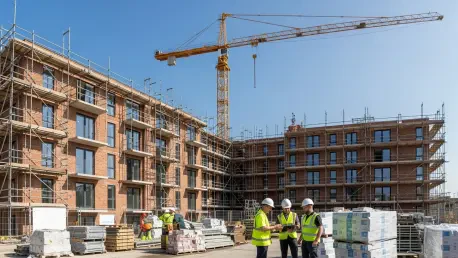

The landscape of residential development in Northern Ireland is undergoing a transformative shift as the government officially confirms a seventeen percent surge in social housing construction projects. This growth represents a significant milestone in the regional effort to provide secure and affordable accommodations for thousands of families currently on waiting lists. For the current fiscal cycle, a record-breaking investment of two hundred and ten million pounds has been mobilized to facilitate the commencement of one thousand seven hundred and sixty-five new residential units. This financial injection is not merely a statistical increase but a deliberate reaction to the pressing demand for high-quality housing across various districts. Communities Minister Gordon Lyons emphasized that this expansion serves as a cornerstone for broader economic stability and social cohesion. By prioritizing these starts, the executive branch is signaling a departure from reactive measures toward a more robust, proactive construction framework. This initiative aligns with the goal of reducing housing stress and revitalizing urban and rural communities alike.
Strategic Vision: The Road to One Hundred Thousand Homes
A central pillar of this progress is the Executive Housing Supply Strategy, which serves as an ambitious long-term roadmap for the region. This strategy sets a formidable target of delivering at least 100,000 new homes by 2039, with a specific mandate that at least one-third of these properties be designated as social housing. Moving from 2026 to 2028, the government intends to accelerate the pace of these developments by streamlining the allocation of land and ensuring that local councils are equipped to handle the influx of planning applications. The transition toward this long-term planning model reflects a growing consensus that the housing crisis cannot be solved with short-term fixes or sporadic funding rounds. By committing to a multi-decade horizon, officials are providing the construction industry with the certainty required to invest in workforce training and new technologies. This strategic foresight is expected to yield dividends in terms of both property volume and community resilience.
To ensure these ambitious targets are met with efficiency and fiscal responsibility, the Department for Communities is actively conducting thorough reviews of existing grant rates and construction standards. These policy adjustments are specifically designed to maximize the impact of every pound of public funding while simultaneously raising the bar for modern living conditions. Maintaining high quality and safety for all residents remains a non-negotiable priority, leading to the implementation of more rigorous environmental and structural requirements. As the department refines these frameworks, there is a clear emphasis on incorporating sustainable building materials and energy-efficient systems to reduce long-term costs for tenants. This focus on modernization ensures that the new social housing units are not just temporary solutions but durable assets that contribute to the regional carbon reduction goals. By aligning social objectives with environmental standards, the government is creating a more holistic approach to urban development that benefits both the environment and the local population.
Collaborative Efforts: Strengthening the Delivery Network
The current momentum in the housing sector is largely attributed to the unified efforts between the government, the Northern Ireland Housing Executive, and various housing associations. These delivery partners have demonstrated remarkable agility in navigating a complex landscape of shifting priorities and economic pressures. For instance, Choice Housing, a prominent delivery partner, recently reported its highest level of activity in its fifty-year history, showcasing the scale of current operations. They have managed to balance a massive new-build program with a substantial eighteen million pound investment dedicated to the maintenance of existing properties. This dual focus ensures that while new units are being added to the stock, the quality of current homes does not diminish. The Northern Ireland Federation of Housing Associations has played a crucial role in coordinating these efforts, acting as a bridge between policymakers and the organizations on the ground. This collaborative ecosystem is essential for overcoming the logistical hurdles inherent in large-scale residential construction projects.
Despite the impressive statistics, the sector continues to face systemic challenges such as planning bottlenecks, infrastructure limitations, and budgetary fluctuations that could hinder progress. Stakeholders have adopted a proactive problem-solving approach to address these issues, working closely with utility providers and planning authorities to clear roadblocks. Infrastructure limitations, particularly regarding wastewater management and road access, have often slowed down the completion of otherwise viable projects. However, by integrating housing plans with broader infrastructure development, the executive is attempting to synchronize these essential services more effectively. This integrated approach is intended to prevent delays that have historically plagued the construction industry in the region. Furthermore, the push for more predictable funding cycles remains a top priority for housing associations that need to plan their pipelines years in advance. Overcoming these administrative and physical barriers will be vital for maintaining the growth rate observed in the recent cycle and ensuring a steady supply of homes.
Human Impact: Realizing the Benefits of Modern Infrastructure
Beyond the financial data and policy frameworks, the human dimension of these housing initiatives is best illustrated through the tangible experiences of families receiving new keys. The relocation of the Carr family to a modern, stable residence on Minorca Avenue in Carrickfergus serves as a practical example of how government investment translates into improved life quality. For many families, moving into a high-standard social home provides a level of security that was previously unattainable, fostering a sense of belonging and stability within the community. These modern homes are designed with family needs in mind, offering better layouts and higher energy efficiency that lead to lower utility bills. Such personal success stories underscore the reality that housing policy is ultimately about people rather than just bricks and mortar. As more units are completed and occupied, the positive social impact ripples through local schools, healthcare facilities, and small businesses. Providing a stable foundation for families is recognized as a key driver for long-term social mobility and the overall health of the regional population.
The recent advancements in the social housing sector established a clear path for future residential development across the region. Leaders recognized that while the seventeen percent increase in starts marked a significant achievement, the sustainability of this trajectory required ongoing collaboration and financial transparency. Decision-makers advocated for the adoption of more agile planning processes to ensure that infrastructure upgrades kept pace with the demand for new residential sites. It was determined that a move toward localized housing strategies would allow for better alignment between community needs and construction priorities. Experts suggested that fostering partnerships with private developers could further diversify the available housing stock and accelerate the delivery of mixed-tenure projects. Furthermore, stakeholders emphasized the importance of investing in digital construction tools to enhance efficiency and reduce waste during the building phase. By focusing on these actionable steps, the administration ensured that housing remained a primary engine for economic growth and social stability for the duration of the current decade.