
The American construction landscape is currently undergoing its most radical transformation in decades as massive public funding merges with the urgent physical demands of the burgeoning artificial intelligence sector. This shift is not merely about pouring concrete or erecting steel; it represents a strategic pivot toward high-value, specialized infrastructure designed to meet the rigorous technological and environmental standards of the modern era. As federal mandates prioritize domestic manufacturing and technological sovereignty, the industry is witnessing an unprecedented surge in complex projects that require sophisticated engineering and innovative financing. From high-speed rail lines connecting major urban hubs to massive data science centers at top-tier universities, the current wave of development reflects a nation-wide effort to modernize the foundational systems that drive economic growth. These initiatives are setting a new benchmark for how public and private entities collaborate to build resilient, tech-forward environments that can support the rapid pace of scientific discovery and global mobility throughout the current decade.
Civil Transit and Strategic Financing
Expanding Rail Networks Through Major Contracts
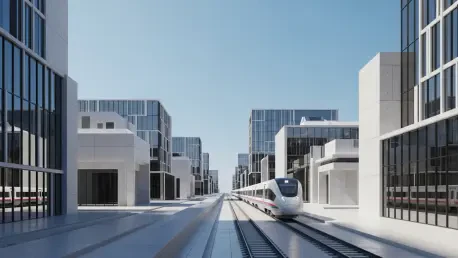
Heavy civil and rail sectors are seeing record-breaking contract awards as state and federal agencies prioritize high-capacity transit solutions to alleviate urban congestion and modernize regional travel. In New York City, a multi-billion-dollar subway extension is currently reshaping the subterranean landscape, aimed at improving accessibility and efficiency for millions of commuters who rely on the city’s dense transit network. Simultaneously, California is moving forward with a $3.5 billion contract for high-speed rail tracks, signaling a major commitment to sustainable long-distance travel and the creation of a high-speed corridor that rivals international standards. These projects represent more than just transportation upgrades; they are vital economic engines that facilitate the movement of labor and capital across expanding metropolitan regions. By modernizing these legacy systems, the nation is ensuring that its transit infrastructure can handle the logistical demands of a growing population while reducing the carbon footprint of regional travel.
The sheer scale of these transit initiatives necessitates a departure from traditional construction methods toward integrated project delivery systems that prioritize speed and accuracy. Engineers are now utilizing advanced modeling tools to navigate the complexities of urban tunneling and high-speed rail alignment, where precision is measured in millimeters rather than inches. This focus on technological precision is essential for managing the intricate utility relocations and structural reinforcements required in densely populated areas. Furthermore, the integration of smart sensors and real-time monitoring systems into new rail beds allows for proactive maintenance, extending the lifecycle of these multi-billion-dollar assets. As these networks expand from 2026 to 2030, the emphasis remains on creating a seamless, interconnected transport system that supports the digital and physical mobility requirements of a highly mobile workforce. This approach ensures that public funds are utilized effectively to build lasting infrastructure that can adapt to changing usage patterns over time.
Adopting Public-Private Partnership Models
Managing the escalating costs of such ambitious projects has led many public agencies to embrace the public-private partnership, commonly referred to as the P3 model, for long-term project viability. This strategic approach allows the public sector to leverage private capital and international technical expertise, which is particularly beneficial for high-risk projects like California’s high-speed rail development. Under these agreements, private stakeholders take on a significant portion of the financial and operational risk in exchange for long-term revenue streams from system operations or government subsidies. This model shifts the burden away from immediate taxpayer funding, allowing for a more staggered and manageable fiscal impact while ensuring that projects remain on schedule and within budget. By aligning the incentives of both sectors, P3s foster a more disciplined approach to project management, where efficiency and cost control are prioritized to ensure the long-term sustainability of the nation’s infrastructure.
Beyond financial risk mitigation, P3 arrangements facilitate the transfer of cutting-edge technology and best practices from global leaders in rail and infrastructure development to domestic projects. Private partners often bring proprietary construction techniques and maintenance software that might otherwise be unavailable to state agencies, leading to higher quality outcomes and lower life-cycle costs. This collaborative framework is also being applied to smaller regional projects, where local governments seek to revitalize aging bridges and highways without depleting their immediate budgets. As the complexity of modern infrastructure continues to grow, the ability to pool resources and expertise through these partnerships becomes a critical factor in project success. This evolution in financing marks a permanent shift in how the nation approaches the construction of its most essential assets, moving toward a model that values long-term partnership over simple transactional contracting. The resulting synergy between sectors is proving essential for delivering the large-scale projects required today.
Institutional Growth and Technological Integration
Constructing Specialized Research and AI Facilities
The rapid expansion of artificial intelligence is driving a specific and intense demand for specialized academic and research facilities that can support the high-performance computing required for machine learning. A notable example is the recently completed $557 million Gateway building at the University of California, Berkeley, which serves as a centralized hub for data science and interdisciplinary AI research. Unlike standard office buildings, these structures must accommodate massive power requirements and sophisticated cooling systems necessary for the operation of advanced server clusters and specialized hardware. Architects are designing these spaces to facilitate spontaneous interaction between researchers from different fields, recognizing that breakthroughs in AI occur at the intersection of various scientific disciplines. These buildings represent a new category of institutional infrastructure, where the physical environment is explicitly engineered to foster scientific innovation and maintain national leadership in the digital economy.
Federal agencies are simultaneously undertaking a major revitalization of their core facilities to ensure that national aerospace capabilities remain competitive on a global scale. NASA recently allocated $300 million for critical infrastructure upgrades at the Johnson Space Center in Houston, emphasizing the importance of modernizing its astronaut training and engineering development bases. These investments are directed toward refurbishing aging laboratories and testing facilities that have been in continuous use for decades, bringing them up to current safety and performance standards. The goal is to create a more resilient and flexible infrastructure that can support a wide variety of missions, from lunar exploration to the testing of new propulsion technologies. This modernization effort is crucial for maintaining the nation’s leadership in space, providing engineers and scientists with the state-of-the-art tools they need to navigate the complexities of modern aerospace endeavors while ensuring the highest levels of operational safety.
Strategic Evolution and Future Operational Integration
The intersection of massive infrastructure spending and the rapid advancement of artificial intelligence redefined the strategic priorities of the American construction sector. Stakeholders who successfully navigated this transition focused on integrating advanced digital tools and adopting collaborative financing models to mitigate the risks associated with high-complexity projects. Organizations prioritized the development of specialized facilities that could support the unique demands of modern computing and aerospace research, recognizing that the physical environment is a critical enabler of technological progress. Future success in this landscape required a commitment to continuous modernization and the adoption of data-driven decision-making processes that improved both efficiency and safety across the job site. By looking ahead, industry leaders emphasized the importance of fostering public-private partnerships and investing in the workforce necessary to operate these sophisticated systems. This proactive approach ensured that the nation’s infrastructure remained resilient and capable of supporting a competitive economy.