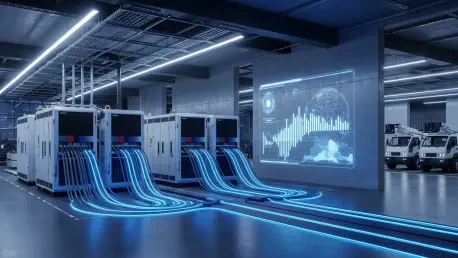

The architectural landscape of professional sports is undergoing a radical metamorphosis as massive venues transition from being notorious energy consumers to becoming primary examples of environmental stewardship. Historically, these structures were viewed solely through the lens of capacity and spectacle, often at the expense of local utility grids and ecological health. However, a new paradigm has emerged where the U.S. Green Building Council’s LEED framework serves as the primary blueprint for both new constructions and extensive renovations. This shift is not merely about optics; it represents a fundamental change in how urban planners and sports franchises conceptualize the long-term footprint of high-traffic public spaces. By prioritizing sustainability, these landmarks demonstrate that hosting tens of thousands of fans does not have to result in a massive carbon debt. Consequently, the industry is witnessing a trend where high-performance engineering is as celebrated as the events occurring on the field, proving that civic icons can lead the charge in resource management.
Integrating Sustainable Technologies
Core Innovations: Power and Lighting
To reach these ambitious sustainability goals, many stadiums are prioritizing on-site renewable energy through massive investments in solar technology and integrated power systems. Facilities like MetLife Stadium and Levi’s Stadium have led the way by installing thousands of solar panels that generate significant portions of their electricity needs directly from the sun. This shift significantly reduces their reliance on the local grid, especially during peak demand periods when games are in session. Furthermore, these arrays are often designed as dual-purpose structures, providing shade for parking lots or covering pedestrian bridges while simultaneously feeding clean energy back into the facility. This approach allows teams to stabilize their long-term energy costs while demonstrating a visible commitment to renewable resources. As these installations become more efficient, the capacity for stadiums to operate as microgrids becomes a tangible reality, allowing them to support surrounding communities.
Complementing these power generation efforts is a widespread industry adoption of advanced LED lighting and motion-sensor technology to eliminate unnecessary electricity waste. These sprawling complexes feature vast interior spaces, corridors, and locker rooms that do not require constant illumination, yet traditional lighting often left these areas burning energy throughout the day. By integrating smart sensors that detect occupancy, stadiums can automatically dim or extinguish lights in non-active zones, realizing substantial savings. Moreover, the transition to high-efficiency LED field lighting provides better visibility for players and fans while consuming a fraction of the power required by older metal-halide systems. These modern arrays also offer the flexibility of instant on-off capabilities and color-changing effects, which enhance the spectator experience without the cooling requirements and long warm-up times of legacy technology. This synergy between energy efficiency and performance quality marks a new standard for modern venue management.
Resource Management: Water and Ventilation
Beyond power generation, sophisticated water conservation strategies have become essential components of modern venue design, addressing one of the most pressing environmental challenges. Modern stadiums are now equipped with low-flow plumbing fixtures and ultra-efficient irrigation systems that utilize weather data to minimize waste when maintaining natural grass surfaces. Some facilities have even implemented graywater recycling systems, which treat and reuse water for non-potable purposes such as flushing toilets or cleaning stadium seating areas. This holistic approach to water management ensures that massive events do not deplete local municipal supplies during critical seasons. Additionally, the integration of advanced filtration systems allows for the safe discharge of stormwater, preventing the runoff of pollutants into nearby ecosystems. By treating water as a finite and valuable resource, venue operators are setting a precedent for responsible urban development that prioritizes the health of the local watershed.
Innovative architectural features are also being utilized to mitigate the need for energy-intensive mechanical cooling through natural ventilation and smart design. For instance, the massive retractable roof at BC Place serves a functional role beyond weather protection by allowing for controlled airflow that regulates the interior temperature naturally. When weather conditions are temperate, opening these structures facilitates a cross-breeze that can replace or supplement traditional air conditioning systems entirely. Furthermore, the use of high-reflectivity roofing materials and strategically placed green spaces helps to reduce the urban heat island effect, which is often exacerbated by large concrete structures. Some newer designs incorporate vertical gardens and rooftop vegetation that act as natural insulation, keeping the building cooler in the summer and warmer in the winter. These passive cooling strategies represent a return to fundamental architectural principles where the building’s form works in harmony with the local climate.
Leading the Industry by Example
Case Studies: Implementing Real-World Solutions
Specific case studies highlight how these green initiatives blend environmental responsibility with direct community benefits, creating a symbiotic relationship between teams and fans. Levi’s Stadium in California has gained international recognition for “Faithful Farms,” a sprawling rooftop garden that produces thousands of pounds of fresh crops annually. This produce is not only utilized in the stadium’s luxury suites and concessions but is also donated to local food banks, addressing food insecurity in the surrounding region. This initiative demonstrates that even a high-tech sports venue can contribute to local agriculture and urban greening efforts. By turning underutilized roof space into a productive asset, the stadium reduces its carbon footprint while providing educational opportunities for visitors to learn about sustainable farming. This model proves that sustainability is not just about reducing negative impacts but can also involve active contributions to the social and nutritional health of the local population.
Similarly, MetLife Stadium utilizes hybrid-electric vehicle fleets and a network of smart sensors to modernize its daily operations and logistical requirements. The transition to electric utility vehicles for facility maintenance and security significantly lowers the onsite emissions and noise pollution typically associated with large-scale stadium management. In addition to vehicle upgrades, the facility has integrated building management systems that use real-time data to optimize heating, ventilation, and air conditioning across different zones based on attendance levels. These technological upgrades allow the stadium to drastically lower its energy demands without sacrificing the comfort of the fans. By treating the stadium as a living laboratory for green tech, the management team can test and refine new strategies that can eventually be scaled to other large-scale public facilities. This proactive stance on modernization ensures that the venue remains at the cutting edge of environmental efficiency while providing a blueprint for other professional franchises.
Modernization Trends: Retrofitting and Global Standards
International venues are also pushing the boundaries of what is possible in high-performance architecture, moving beyond local standards to achieve global recognition. Mexico City’s Estadio Banorte recently achieved LEED Platinum status, the highest possible rating, by drastically improving its energy use intensity through extensive mechanical system overhauls. This achievement is particularly notable because it involved a comprehensive upgrade of existing infrastructure rather than starting from scratch. By replacing outdated chillers and boilers with high-efficiency alternatives and installing a sophisticated building automation system, the venue reduced its energy consumption by a significant margin. These international benchmarks show that whether through massive engineering feats or the strategic use of carbon credits, stadiums are successfully moving toward carbon neutrality. The success of Estadio Banorte serves as a powerful message that environmental excellence is attainable in any region, provided there is a commitment to investing in modern technology.
A critical trend in this green movement is the growing preference for retrofitting legacy structures rather than opting for complete demolition and reconstruction. The renovation of older facilities serves as a prime example of sustainable practice, as it preserves the embodied energy of the original building materials while introducing modern efficiency. Retrofitting sixty-year-old facilities to meet contemporary environmental standards avoids the massive carbon footprint associated with new concrete and steel production. As major events like the FIFA World Cup and the Super Bowl approach, the pressure to meet international green benchmarks is accelerating, solidifying the stadium’s role as a leader in urban resource conservation. This focus on longevity and adaptation ensures that historic venues can continue to serve as community hubs without becoming environmental liabilities. By prioritizing the revitalization of existing assets, the sports industry is demonstrating a sophisticated understanding of sustainability that values historical continuity.
The Evolution of Sustainable Venue Management
The transition toward sustainable sports architecture established a new benchmark for how massive public infrastructures managed their environmental footprints. Venue operators successfully identified that integrating renewable energy and water-saving technologies provided both ecological benefits and long-term financial stability. For future projects, the emphasis shifted toward full life-cycle assessments, ensuring that every material used in construction or renovation supported a circular economy. Decision-makers recognized that the path to carbon neutrality required constant data monitoring and a willingness to adopt emerging technologies as they matured. Moving forward, teams and municipalities prioritized the installation of high-capacity battery storage systems to maximize the utility of on-site solar arrays. Furthermore, expanding urban agriculture initiatives and graywater systems turned every stadium into a net-positive contributor to local resources. This era of development proved that even the largest buildings could become catalysts for global change.