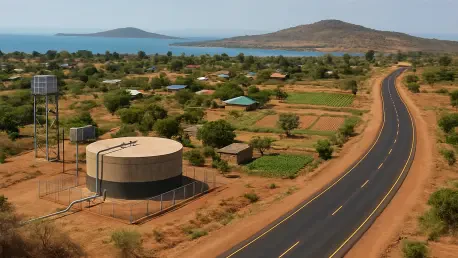

The arid landscape of Homa Bay County is undergoing a radical shift as the national government commits a staggering Sh5.8 billion toward the comprehensive revitalization of Karachuonyo West. This massive financial injection represents more than just a budgetary allocation; it is a strategic maneuver designed to address chronic water scarcity, improve agricultural productivity, and modernize local infrastructure that has long hindered the region’s economic potential. For decades, residents of this sub-county have contended with seasonal droughts and inadequate road networks that isolated them from larger markets, but the current initiative seeks to bridge this gap through a series of integrated development projects. By focusing on both immediate relief and long-term sustainability, the investment aims to turn Karachuonyo West into a regional hub for trade and food security. The multi-sectoral approach ensures that the funding reaches the most critical areas, from piped water systems to bitumen-standard roads that will eventually link the lakeshore to major transit corridors across the country.
Strategic Infrastructure: Building the Foundation for Regional Prosperity
A cornerstone of this transformative project involves the large-scale expansion of the Kimira-Oluch Smallholder Farm Improvement Project, which is specifically engineered to bring reliable irrigation to thousands of households. The Sh5.8 billion fund facilitates the construction of advanced gravity-fed water systems, reducing the reliance on unpredictable rainfall and allowing farmers to engage in year-round crop production rather than subsistence farming. This technological shift is essential for Karachuonyo West, where the soil is fertile but the climate is increasingly erratic, necessitating a move toward modern hydraulic engineering. Beyond irrigation, the investment covers the rehabilitation of local dams and the installation of solar-powered boreholes in remote villages, ensuring that even the most isolated communities have access to clean drinking water. Such efforts are expected to significantly lower the incidence of waterborne diseases while simultaneously boosting the local dairy and horticulture sectors, providing a steady income stream for the youth and women in the community.
Furthermore, the investment strategy incorporates the deployment of digital infrastructure to ensure that Karachuonyo West is not left behind in the country’s ongoing technological transition. By installing high-speed fiber optic cables alongside the new road corridors, the government is setting the stage for digital hubs where young people can access global job markets and e-government services without migrating to urban centers. This focus on connectivity extends to the education sector, where local technical and vocational training centers are receiving upgrades to their facilities and equipment, aligning their curricula with the needs of a modernized economy. The synergy between physical roads and digital highways creates a robust environment for innovation, where traditional sectors like fishing can benefit from electronic payment systems and real-time market data. This holistic vision ensures that the Sh5.8 billion investment does not just build physical structures but also fosters a culture of self-sufficiency and tech-driven progress that will sustain the region for many generations.
Local authorities and community leaders decided that the long-term success of these infrastructure projects depended on a rigorous maintenance framework and continued public-private partnerships. They established specialized management boards composed of local professionals to oversee the irrigation systems and road networks, ensuring that maintenance was prioritized before any signs of wear appeared. This governance model prioritized transparency and accountability, which encouraged international donors to provide additional grants for sustainable energy projects in the same region. Stakeholders also focused on vocational training programs that equipped the local population with the skills necessary to manage new technologies, thereby reducing the reliance on external contractors. These actions ensured that the investment went beyond mere construction, creating a resilient economic ecosystem that remained operational despite market fluctuations. The integration of local feedback into the final development stages allowed the region to overcome traditional barriers, ultimately setting a new standard for rural transformation across the continent.