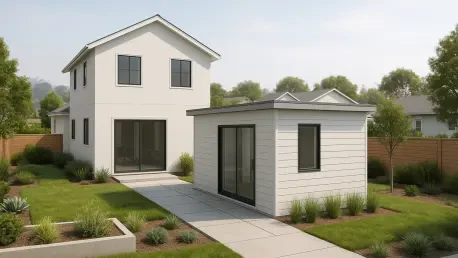

Accessory dwelling units now account for approximately 37.5% of all newly certified housing in Los Angeles, representing the highest share since record-keeping began a decade ago. This remarkable statistic underscores a transformation in how the city approaches density, moving away from high-rise exclusivity toward a distributed model of growth that utilizes existing residential infrastructure. The legislative landscape has shifted significantly, with state laws effectively ending single-family zoning and allowing homeowners to bypass many of the bureaucratic hurdles that previously stifled small-scale development. From 2026 to 2028, the city witnessed a doubling of applications as prefabricated technologies made these units more affordable and faster to install. Despite this momentum, the reliance on individual homeowners to solve a systemic shortage remains a contentious strategy. Urban planners are now evaluating if this organic growth can provide the volume of units necessary to stabilize a market where the median home price remains out of reach.
The Regulatory Catalyst: Streamlining the Permitting Process
The acceleration of the ADU market can be largely attributed to the Los Angeles Department of Building and Safety’s implementation of the Standard Plan Program, which offers pre-approved architectural designs. By selecting from a library of vetted blueprints, property owners have been able to slash the approval timeline from several months to just a few weeks. This administrative efficiency has demystified the construction process for the average resident, who may lack the expertise to navigate complex zoning codes or environmental regulations. Furthermore, recent revisions to California state laws have further limited the ability of local municipalities to impose restrictive height or setback requirements that once rendered small lots ineligible for expansion. These policies have created a more predictable environment for contractors and lenders, encouraging a specialized ecosystem of builders who focus exclusively on secondary dwellings. This results in the “missing middle” finally being addressed.
Beyond the technical aspects of permitting, there is a palpable shift in the socio-cultural perception of density within traditionally quiet suburban enclaves. The initial resistance from neighborhood associations has gradually given way to an economic pragmatism as homeowners realize the potential for supplemental rental income or the benefits of keeping extended family nearby. This evolution has fostered a new form of “gentle density” that avoids the aesthetic disruptions often associated with large apartment complexes. Instead of massive concrete structures, the landscape is being populated by thoughtfully designed cottages and garage conversions that maintain the visual character of the community. This approach has proven particularly effective in neighborhoods like Van Nuys and South Los Angeles, where older housing stock provided ample space for back-lot additions. However, the reliance on private property owners means that the distribution of new units is uneven and often favors those who already possess equity.
Economic Realities: Financing and Equity in Local Development
While the policy path has been cleared, the financial barriers to entry remain a significant hurdle for many residents who wish to contribute to the housing supply. Even with modern modular construction techniques, which can bring a basic unit to completion for approximately $150,000, the cost remains prohibitive for low-to-moderate-income families. Traditional mortgage products are often poorly suited for ADU projects, forcing many to rely on home equity lines of credit or high-interest personal loans. In response to this gap, several credit unions and community-based financial institutions have begun offering specialized “backyard bonds” and micro-loans specifically designed for secondary housing. These financial instruments recognize the long-term value of the rental income these units generate, treating the ADU as a revenue-producing asset rather than a mere home improvement. Without broader access to affordable capital, the current boom risks becoming a luxury amenity for the wealthy rather than a democratic solution.
The impact of these units on the overall rental market is another area of intense scrutiny, as many ADUs are being utilized as short-term vacation rentals rather than permanent residences for local workers. Although the city has implemented stricter regulations to prioritize long-term stays, the higher profit margins of the tourism sector continue to tempt property owners. This creates a tension between the goal of increasing housing density and the reality of commercialized residential spaces. To mitigate this, some innovative pilot programs have offered property tax abatements to owners who agree to rent their units to Section 8 voucher holders or essential workers at below-market rates. These incentives are crucial for ensuring that the newly created density actually serves the populations most vulnerable to displacement. The long-term success of the ADU strategy depends on its ability to transition from a speculative investment vehicle into a stable source of affordable housing.
The city eventually recognized that ADUs alone could not dismantle the housing crisis, though they remained a vital component of a multi-pronged strategy. Lawmakers shifted their focus toward integrating these small-scale developments with larger regional transit projects, ensuring that the densest ADU clusters were supported by robust public services. City officials prioritized the legalization of middle-scale developments, such as four-plexes and courtyard apartments, to complement the backyard units. For residents looking to contribute to this evolution, the next logical step involved exploring community land trusts that allowed for collective ownership of ADUs across multiple adjacent properties. This model successfully lowered individual financial risks and promoted long-term affordability through shared equity agreements. Future considerations necessitated a move toward standardized utility connection fees to further reduce the overhead for small-scale developers.