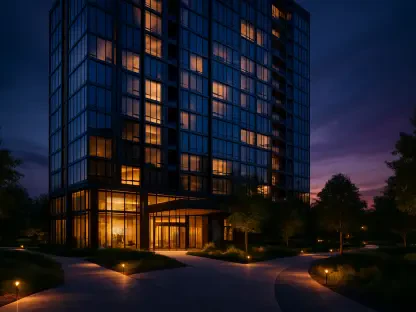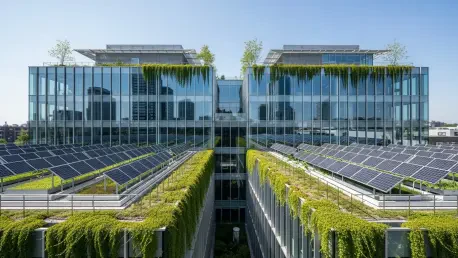

The shimmering glass facade of the Hydro building at the Colorado State University Spur campus does more than reflect the Denver skyline; it signals a monumental shift in how urban structures interact with the natural world. Achieving LEED Platinum certification is a feat fewer than five buildings at CSU have ever accomplished, placing this facility in an elite tier of environmental design. Rather than simply meeting standard efficiency goals, the structure serves as a high-performance blueprint for the future of urban infrastructure. Its recognition by the U.S. Green Building Council signifies a transition from passive sustainability to active ecological leadership, proving that modern architecture can function as a productive part of the ecosystem.
A New Benchmark for Sustainable Excellence in Denver
The urgency of ecological stewardship in modern infrastructure is driven by a critical need to address climate resilience and resource scarcity. As part of a specialized three-building campus alongside the Vida and Terra facilities, Hydro represents a coordinated effort to solve the global “food-water-health” nexus. This commitment is not just an aesthetic choice but a necessary response to the environmental pressures facing growing urban centers. By prioritizing high-level certifications, institutions like CSU set a standard for how public projects should mitigate their carbon footprint and manage finite resources effectively.
The Urgency of Ecological Stewardship in Modern Infrastructure
Technical innovations powering the LEED Platinum certification are defined by cutting-edge systems that drastically reduce reliance on traditional energy grids. A standout feature is the connection to the National Western Center’s sewer-heat recovery system, which stands as the largest installation of its kind in North America. This system, combined with an expansive on-site solar renewable energy array, creates a highly efficient energy loop. Furthermore, the facility employs a specialized graywater reuse system and hosts multiple green roof research plots that double as living laboratories, allowing for real-time data collection on urban plant life.
Technical Innovations Powering the LEED Platinum Certification
Green architecture is often viewed as an exclusive luxury, yet the Hydro building redefines this narrative by democratizing sustainability through the land-grant mission. In alignment with CSU’s goals, the Spur campus serves as a free, year-round learning destination for K-12 students, professional researchers, and local residents. University leadership and green building experts designed this space to be transparent, allowing visitors to see the “hidden” systems that drive high-performance infrastructure. This approach ensures the facility serves as both a functional utility and an educational tool, inspiring the next generation of environmental problem-solvers.
Democratizing Sustainability through the Land-Grant Mission
To replicate the success of the Hydro building, developers and planners must adopt a framework that integrates specialized research with public engagement. The strategy involves moving beyond simple efficiency by creating “living buildings” that contribute to their community’s educational and physical well-being. Practical application of this model includes prioritizing shared infrastructure, such as district-scale heat recovery, and designing spaces that invite public curiosity. By focusing on the intersections of water conservation and food security, future architectural projects can move from being standalone structures to becoming vital hubs for community resilience.
Implementing a Functional Nexus for Food, Water, and Health
The project demonstrated that true sustainability required a shift toward regenerative systems that actively restored the environment. Stakeholders prioritized the integration of public policy with architectural design to ensure long-term viability. Future planners should look toward modular water-recycling technologies and decentralized energy grids as the next steps in urban evolution. These advancements allowed the industry to move past basic conservation, turning every new construction into a potential site for carbon sequestration and resource generation.