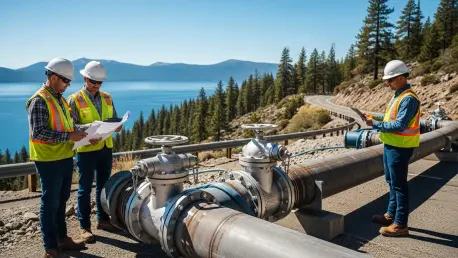

The shimmering azure depths of Lake Tahoe have long served as a symbol of pristine alpine beauty, yet this iconic landscape faces an escalating threat from increasingly volatile wildfire seasons that challenge traditional suppression methods. While the surrounding forests provide an aesthetic backdrop for millions of visitors annually, the dense vegetation and difficult terrain create a complex environment where standard fire hydrants often lack the necessary pressure and volume to combat fast-moving blazes. In response to these growing vulnerabilities, regional planners and utility districts have initiated a transformative overhaul of the basin’s water distribution networks. This project transcends basic utility maintenance, representing a fundamental shift toward an integrated defense system specifically engineered to provide massive water flow at a moment’s notice. By bridging the gap between urban infrastructure and wildland protection, the new system aims to create a reliable hydraulic shield. These improvements represent a critical step in preserving both the local economy and the fragile ecosystem from the destructive power of modern megafires.
Engineering High-Volume Delivery for Extreme Conditions
The core of this technological upgrade centers on the installation of oversized transmission mains and high-capacity pumping stations capable of maintaining significant pressure even during peak demand. Engineers have replaced aging four-inch pipes with twelve-inch and sixteen-inch high-density polyethylene lines that resist corrosion and seismic shifts, ensuring the network remains operational during a crisis. These upgrades allow fire departments to draw thousands of gallons per minute from specific nodes, a capability that was previously impossible in high-elevation residential zones. Furthermore, the integration of variable frequency drives in the pump stations ensures that water pressure can be ramped up instantaneously without causing catastrophic pipe bursts from sudden surges. This precision engineering provides a level of reliability that is essential when emergency crews are battling flames in the steep, wind-swept canyons surrounding the lake. The focus remains on creating a robust backbone that can withstand heat and sustain high-intensity firefighting operations for extended periods.
Beyond the physical piping, the system incorporates advanced supervisory control and data acquisition technology to provide real-time telemetry across the entire water district. These digital sensors monitor flow rates, reservoir levels, and pressure gradients every few seconds, allowing operators to detect and bypass potential leaks or clogs before they hinder fire suppression efforts. If a fire reaches a specific neighborhood, the system can automatically reroute water from non-essential sectors to the impacted area, maximizing the available resources for firefighting crews on the ground. This automated responsiveness reduces the reliance on manual valve adjustments, which can be dangerous or impossible during an active evacuation. By utilizing cloud-based analytics, the district can simulate various fire scenarios and optimize the network’s performance ahead of time. Such data-driven management ensures that every gallon of water is used as efficiently as possible, turning the infrastructure into an active participant in the community’s safety strategy.
Strategic Integration: Proactive Community Protection
Implementing these upgrades requires a nuanced understanding of the wildland-urban interface, where human settlements meet flammable natural vegetation. Planners have prioritized the installation of specialized fire hydrants and drafting points in areas with the highest fuel loads, essentially creating a perimeter of high-flow access points. These strategic locations are determined through advanced fire behavior modeling that predicts how a blaze might move through specific drainage basins or across ridgelines. By placing high-capacity outlets in these critical zones, the system enables firefighters to establish defensive lines more quickly and effectively than ever before. This approach also includes the installation of massive backup generators and solar-plus-storage systems at every critical pump station to ensure that even a total power grid failure will not compromise the water supply. The resilience of the system is therefore tied to its independence from the traditional electrical grid, allowing for continuous water flow during the most severe conditions.
The successful implementation of the Tahoe water system provided a clear roadmap for how high-tech infrastructure directly influenced regional safety and ecological preservation. Stakeholders realized that traditional civil engineering had to evolve into a more proactive discipline that prioritized extreme weather scenarios over daily consumption patterns. By analyzing the performance of the new pressure-regulated zones, planners discovered that the ability to maintain consistent flow during simulation tests significantly boosted the confidence of emergency responders. The project also highlighted the importance of integrating ecological health with mechanical reliability, as the improved water access allowed for more controlled burns and forest thinning operations. Stakeholders determined that future initiatives required the adoption of similar smart-grid technologies to ensure mountain towns remained habitable despite a shifting climate. The investment in high-diameter piping and automated sensors moved the needle from reactive defense to proactive resilience.