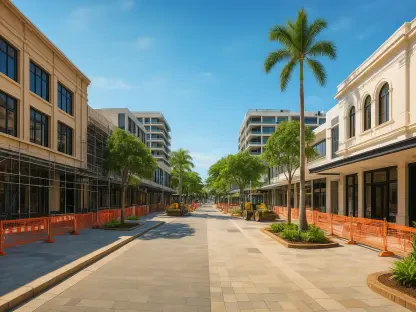

Heavy machinery remains idling at massive project sites across the American heartland as developers grapple with the dual pressures of persistent skilled labor shortages and fluctuating material costs that have redefined project timelines. While legislative packages like the Bipartisan Infrastructure Law and the Inflation Reduction Act promised a renaissance of American building, the actual implementation has proven more complex than simply signing a check. The injection of billions into the sector from 2026 to 2028 was intended to catalyze a modernization effort across transportation, energy, and digital networks, yet the industry faces a significant bottleneck. Private firms find themselves competing for the same limited pool of master electricians and heavy equipment operators needed for these high-priority federal contracts. Consequently, the success of this fiscal strategy depends not just on the volume of capital available, but on the ability of local municipalities to streamline permitting and synchronize their efforts with national economic goals.
Industrial Transformation: High-Tech Manufacturing Evolution
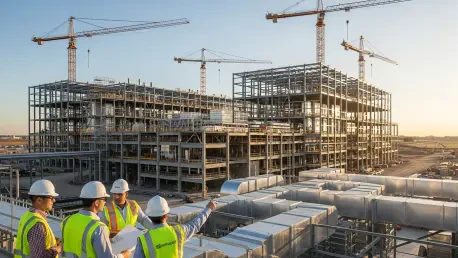
The recent surge in high-tech manufacturing projects, particularly those fueled by the CHIPS and Science Act, has significantly altered the landscape of domestic construction requirements. Companies such as Intel and Taiwan Semiconductor Manufacturing Company have broken ground on massive fabrication plants that require specialized environmental controls and intricate structural engineering far beyond standard industrial builds. These projects have absorbed a massive portion of the available skilled labor, creating a localized vacuum that drives up wages and project costs for smaller regional developers. From 2026 to 2027, the focus shifted toward ensuring these facilities could be completed on schedule to meet global demand for American-made electronics. This trend underscored a broader move within the industry toward hyper-specialization, where construction firms must now possess expertise in cleanroom environments and advanced electrical integration. The reliance on federal subsidies for these projects has made the sector more resilient against market downturns.
Industrial Transformation: Green Energy and Grid Modernization
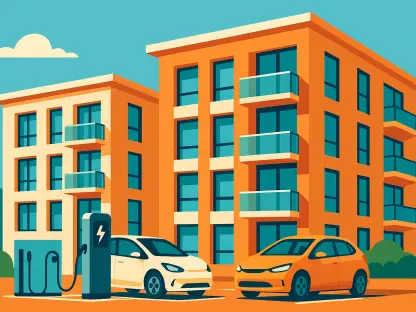
Parallel to the semiconductor boom, the expansion of green energy infrastructure has introduced a new set of challenges and opportunities for contractors across the country. Solar farm installations and the rapid rollout of nationwide electric vehicle charging networks have become staples of the federal funding agenda, necessitating a pivot toward distributed infrastructure. This shift meant that construction companies had to adapt to working in more remote locations, often far from established logistical hubs or traditional labor pools. The federal government’s commitment to decarbonizing the power grid by 2035 sparked a wave of modernization projects for aging transmission lines, which required a specific class of high-voltage technicians who were already in short supply. As these green projects progressed from 2026 to 2028, the industry saw a significant uptick in the adoption of modular construction techniques to expedite assembly. This adaptation helped mitigate some of the risks associated with labor scarcity and required higher precision.
Operational Strategy: Workforce Development and Future Solutions
Stakeholders ultimately realized that financial injections alone were insufficient to address the deep-seated structural issues within the American building trades. To maximize the utility of federal funding through 2028, industry leaders moved toward aggressive workforce development initiatives that integrated apprenticeships with community college programs. These partnerships focused on teaching advanced robotics and automated masonry to bridge the gap left by an aging workforce that retired in record numbers. Construction executives prioritized the implementation of site-wide artificial intelligence to optimize logistics and reduce material waste, which allowed projects to stay within the tight budgetary constraints imposed by inflation. Furthermore, the transition to standardized pre-fabricated components allowed for a more predictable construction timeline, reducing the volatility that previously deterred private investors. By focusing on these technological and educational advancements, the industry established a more sustainable framework for future growth.