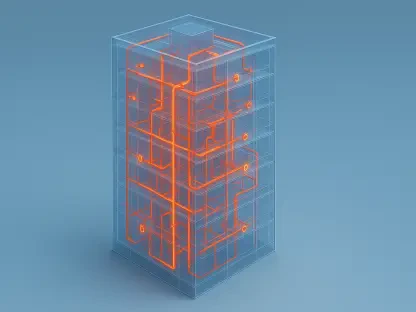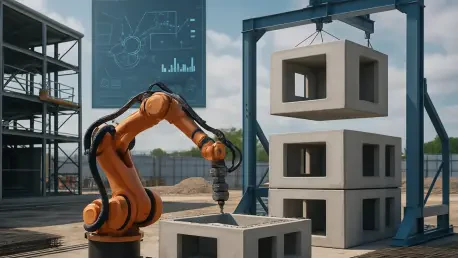

Contractors are increasingly adopting modularization and offsite fabrication to meet aggressive schedules while mitigating the effects of local labor shortages. This operational shift represents only the tip of a much larger iceberg as artificial intelligence moves from a back-office optimization tool to a primary driver of physical construction demand. The current market environment requires a departure from traditional building methods, favoring firms that integrate high-precision digital workflows directly into their project management cycles. By leveraging AI-driven generative design and automated documentation, companies are now able to process massive datasets to identify potential scheduling conflicts or safety hazards before a single shovel hits the ground. This evolution ensures that projects remain lean and predictable, effectively reducing the historical volatility of labor costs and material delivery. As the industry moves further into this digital transformation, the focus is shifting toward the creation of specialized facilities that support the physical expansion of the global computing grid.
Transforming the Global Infrastructure Portfolio
The surge in computing requirements has sparked a massive capital influx into the development of hyperscale data centers, which now serve as the central nervous system of the digital economy. These facilities are no longer characterized as simple storage warehouses; instead, they have become highly complex infrastructure hubs that necessitate enormous power supplies and specialized cooling architectures. The scale of these developments is triggering a secondary wave of construction requirements, including high-capacity power transmission lines and advanced manufacturing plants designed specifically for hardware production. This trend forces a total reevaluation of what constitutes a modern industrial project. Contractors are being asked to deliver facilities that can handle unprecedented heat densities while maintaining 24-hour operational reliability. Consequently, the industry is witnessing a transition where the physical building must be perfectly synchronized with the high-tech equipment it houses, creating a more integrated approach to construction.
As the scale of these AI-driven projects expands, the industry’s traditional understanding of project risk is undergoing a radical transformation. While material costs and labor availability remain important, they are increasingly overshadowed by the necessity of obtaining a social license to build. Financing institutions and government bodies now prioritize the political and community standing of a project over its technical complexity or architectural merit. If a proposed facility is perceived as a potential drain on local resources, such as fresh water or public electricity, it faces a high probability of total cancellation regardless of the developer’s reputation. This reality requires construction firms to act as strategic mediators, ensuring that large-scale infrastructure projects align with the broader interests of the surrounding population. Success is no longer measured solely by the completion of a structure but by the long-term viability of the project within its specific socioeconomic and political environment.
Integrating Facilities Into Utility Networks
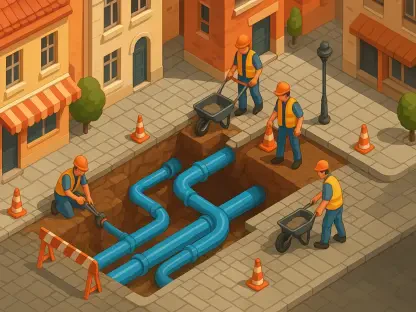
Modern hyperscale facilities have evolved from standalone structures into resource-intensive systems that place a significant strain on local utility networks. These buildings consume electricity at levels previously reserved for major industrial sectors, making the success of a project entirely dependent on the capacity of the regional power grid. This dependency creates a unique set of obstacles for developers, who must now secure long-term energy commitments much earlier in the design phase than was required for standard commercial real estate. The complexity of these power requirements is driving a shift toward integrated energy solutions, where data centers often include their own substations or microgrid components. Contractors are finding that their involvement must begin at the earliest stages of site selection to ensure that the necessary electrical infrastructure can actually be delivered. Failure to account for these utility constraints early on often leads to catastrophic delays and the eventual abandonment of high-value developments.
Environmental constraints are rapidly becoming the primary bottleneck for the continued expansion of digital infrastructure across several high-growth regions. Cooling the high-density server racks required for advanced processing involves either the consumption of millions of gallons of water or the installation of expensive, highly complex closed-loop systems. This operational reality has led to increased scrutiny from local residents and environmental advocacy groups who fear that industrial water use will deplete local aquifers. In response, lawmakers in various jurisdictions are considering protective measures to ensure that the rapid growth of the tech sector does not result in rising utility costs or resource shortages for the general public. Contractors must therefore become proficient in sustainable building practices, such as water recycling and heat recovery, to mitigate these concerns. The ability to present a project as a responsible consumer of local resources is becoming a competitive advantage for firms seeking to win large infrastructure contracts in water-stressed areas.
Advancing the Role of the Modern Contractor
To remain competitive in this shifting landscape, construction firms are finding it necessary to expand their professional scope to include holistic infrastructure management. The most successful organizations are those that can navigate the complexities of power integration and utility coordination from the very beginning of a project lifecycle. Expertise in electrical engineering and power distribution is no longer a niche requirement for specialty subcontractors but has become a core necessity for general contractors leading large-scale projects. This evolution is driven by the fact that the availability and reliability of power have become the primary determinants of project feasibility. Firms that can offer turnkey solutions—managing everything from high-voltage substation construction to internal server room cooling—are capturing the lion’s share of the market. This shift reflects a broader trend where the builder is viewed as a strategic partner capable of solving the physical challenges inherent in the expansion of the digital world.
Modern contractors are also expected to serve as the primary facilitators of community engagement and environmental stewardship during the construction process. By proactively addressing local concerns regarding land use, noise pollution, and resource depletion, firms can significantly reduce the risk of political opposition that might otherwise stall a project. This evolution requires a renewed focus on advanced fabrication techniques, such as modular assembly, to minimize on-site disruption and meet aggressive delivery timelines. Furthermore, the ability to provide infrastructure owners with predictive scenario planning for various “what if” situations has become a highly valued service. Contractors who utilize AI to model the impact of supply chain disruptions or local utility outages provide a level of security that traditional firms cannot match. By adopting these methods, the industry is moving toward a more resilient and socially conscious model of development that prioritizes the long-term health of the communities where these projects are located.
Regional Expansion: The Case of the Carolinas
The American Southeast, and specifically the Carolinas, currently represents a prime example of where these industrial and technological trends are converging most intensely. This region is experiencing a unique combination of rapid population growth, a surge in high-tech manufacturing, and an insatiable demand for data center capacity. This high-growth environment places a distinct premium on a contractor’s ability to balance the speed of development with the overall stability of the local power and water systems. Firms operating in this region have a unique opportunity to lead the global industry by perfecting the specialized infrastructure required to keep the digital world operational under heavy load. The construction of advanced substations, redundant power systems, and automated cooling plants has become the standard in this market. This regional boom serves as a blueprint for how other areas might manage the tension between industrial expansion and the preservation of public utilities, proving that strategic construction management is essential for growth.
Ultimately, the metric for success within the construction industry is moving away from simple technical execution toward a more sophisticated model of comprehensive project facilitation. The modern contractor is judged not only on their ability to follow a blueprint or manage a site but on their capacity to make a project viability within a complex web of resource limitations and social constraints. As artificial intelligence continues to drive the demand for specialized facilities, the industry must fully embrace its new identity as the architect of the digital world’s physical foundation. This involves bridging the gap between traditional building techniques and the strategic management of large-scale infrastructure systems. The transition marks a period of significant professional growth where the construction sector becomes the primary enabler of technological advancement. By mastering the intersection of digital efficiency and physical durability, firms are ensuring their place at the center of the global economy for the foreseeable future.
Establishing New Standards for Infrastructure Delivery
The industry successfully navigated this period of transformation by shifting its focus toward a proactive and holistic approach to infrastructure development. Stakeholders prioritized the integration of advanced digital tools with sustainable building practices, ensuring that the surge in data center demand did not compromise the stability of local utility networks. Forward-thinking firms adopted modularization and predictive analytics as standard operating procedures, which allowed them to deliver complex projects with unprecedented speed and accuracy. This transition demonstrated that the value of a contractor resided in their ability to manage not just the physical site, but also the environmental and social risks associated with large-scale growth. By investing in electrical expertise and community engagement strategies, the sector established a new benchmark for project viability and long-term resilience. The resulting facilities provided the necessary foundation for continued digital innovation while respecting the resource constraints of the regions they served.
This era of expansion required construction professionals to operate as strategic consultants rather than mere executors of architectural plans. Firms that thrived during this shift were those that recognized the importance of power scarcity and environmental stewardship as the primary drivers of project success. They developed internal competencies in high-voltage engineering and water management, which proved essential for the delivery of hyperscale digital hubs. By fostering strong relationships with utility providers and local governments, these contractors mitigated the risks of delay and cancellation that plagued less adaptive competitors. The industry moved toward a model where the physical durability of a structure was secondary to its operational efficiency and community alignment. As a result, the role of the contractor was permanently elevated within the global economic hierarchy, serving as the critical link between digital ambition and physical reality. This progress ensured that the infrastructure of the digital age was built on a foundation of responsibility and technical excellence.