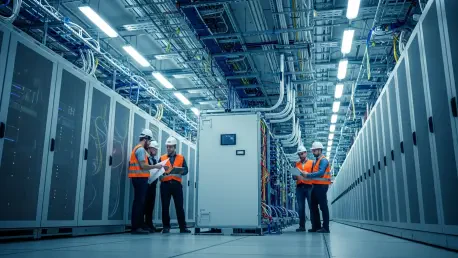

The exponential surge in generative artificial intelligence applications has fundamentally disrupted the global landscape of digital infrastructure, creating a voracious appetite for high-density computing power that legacy data centers simply cannot accommodate. This unprecedented demand is no longer just about storage; it is about the intense processing requirements of large language models and neural networks that generate heat and consume electricity at levels previously unseen. Consequently, the industry faces a critical bottleneck where traditional construction methods, which served the sector for decades, are proving too slow and inflexible to meet the current requirements of the market. Projects that once took several years to complete are now being squeezed into timelines of eighteen months or less, necessitating a total rethink of the design-to-delivery lifecycle. If the digital economy is to continue its current trajectory, the physical foundations of the internet must evolve from slow, bespoke projects into streamlined manufacturing outputs.
The Limitations of Conventional Building
Part 1: Addressing Inherent Delays in Traditional Methods
Traditional “stick-built” construction is an inherently linear process that frequently falls victim to the unpredictable nature of on-site variables, making it increasingly unsuitable for the fast-paced technology sector. In these conventional projects, construction follows a strict chronological order where the foundation must be completed before the structural frame begins, and the envelope must be sealed before delicate electrical and cooling systems can be installed. This dependency creates a massive vulnerability; a single delay caused by inclement weather or a local labor strike can trigger a cascading ripple effect that pushes the entire completion date back by several months. Furthermore, the reliance on field-installed components increases the likelihood of human error during the assembly of complex cooling loops and high-voltage power distribution systems. Such mistakes are often not discovered until the final testing phase, leading to expensive retrofits and technical failures that jeopardize the stability of the entire facility.
Part 2: Mitigating Financial Risks Through Faster Delivery
Beyond the logistical headaches of physical delays, the slow pace of legacy construction creates significant financial exposure for data center operators and their investors. In the hyper-competitive market for cloud services and AI training capacity, the ability to bring a facility online even ninety days earlier can translate into tens of millions of dollars in additional revenue. Conversely, when a project stalls, the capital tied up in the land and partially completed structure remains unproductive, dragging down the overall return on investment for the developer. Hyperscale tenants, who require immediate capacity to launch new AI services, are increasingly unwilling to wait for the lengthy permits and unpredictable timelines associated with traditional builds. As a result, developers who fail to accelerate their delivery speeds risk losing major contracts to more agile competitors who have embraced industrialized methods. This financial pressure has turned rapid deployment into a core requirement rather than a luxury.
The Shift to Industrialized Construction
Part 3: Improving Efficiency Through Offsite Manufacturing
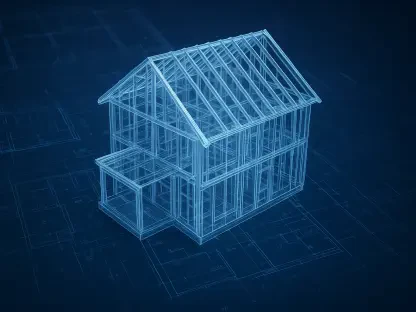
The adoption of industrialized construction allows for a fundamental shift in the project timeline by enabling parallel workflows that were previously impossible in a field-only environment. While civil engineering teams are clearing the land and pouring concrete foundations on the physical site, mechanical and electrical modules are being precision-engineered in a controlled factory setting miles away. This manufacturing-led approach ensures that the most complex components of the data center, such as power skids and modular cooling units, are built to exact specifications without the interference of rain, wind, or extreme temperatures. By moving the bulk of the labor into a factory, companies also bypass the chronic shortages of specialized tradespeople that plague many local construction markets. Once the site is ready, these prefabricated units are shipped and assembled in a matter of days, drastically reducing the “on-site” time and ensuring that the high-density infrastructure is ready for testing immediately.
Part 4: Implementing Precise Design for Assembly Strategies
Maximizing the benefits of this shift requires the rigorous application of Design for Manufacturing, Logistics, and Assembly (DfMLA) principles from the very beginning of the architectural phase. In this framework, every structural beam, cooling pipe, and server rack mounting point is designed not just for its final function, but for how it will be transported and lifted into place. This level of foresight ensures that every module fits perfectly onto a standard flatbed truck and can be maneuvered by a crane with minimal clearance, eliminating the need for expensive custom transport solutions. Furthermore, the standardization of these components allows for a “kit-of-parts” approach, where the same high-quality modules can be deployed across different global regions with only minor adjustments for local regulations. This consistency not only speeds up the initial assembly but also simplifies the long-term maintenance of the facility, as technicians can work with familiar, standardized systems regardless of the location.
Future-Proofing Digital Infrastructure
Part 5: Building for Long-Term Scalability and Flexibility
Modern data center buildings must function as living organisms that can adapt as rapidly as the silicon chips they house, which means the underlying infrastructure needs built-in flexibility. Prefabricated and modular systems are uniquely positioned to handle the evolving requirements of AI hardware, such as the sudden transition from air cooling to advanced liquid-to-chip cooling technologies. Because these buildings are constructed using standardized, interchangeable modules, operators can swap out outdated power distribution units or upgrade cooling capacity without needing to demolish major structural elements. This modularity provides a level of future-proofing that is impossible with permanent, monolithic structures where every upgrade requires a disruptive and dusty renovation. As AI power densities continue to climb, the ability to scale up cooling and electrical infrastructure in discrete increments ensures that the data center remains viable for much longer, protecting the massive capital investment.
Part 6: Establishing New Standards for Global Infrastructure
The industry successfully recognized that the old ways of building were no longer compatible with the breakneck speed of the artificial intelligence revolution. Operators moved toward a unified strategy that integrated manufacturing precision with on-site assembly, effectively decoupling the facility’s construction from the unpredictable nature of local environments. By standardizing the design of core infrastructure modules, companies reduced the time required for commissioning and ensured that new capacity arrived exactly when the market demanded it. This shift toward an industrialized model allowed for a more sustainable and predictable growth pattern, where the focus remained on optimizing performance rather than managing construction delays. Strategic planners prioritized the use of adaptable components that could be upgraded as hardware evolved, ensuring that digital infrastructure stayed ahead of the technological curve. These actions secured the necessary foundations for a new era of computing and established a blueprint for development.