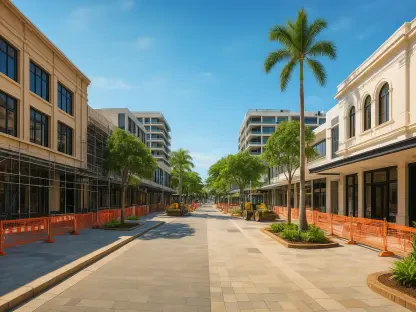

Nashville and Austin continue to solidify their status as top-tier development hubs by maintaining positions within the five largest hotel pipelines in the country. This surge is part of a broader national trend where urban centers are reinventing their skylines through aggressive hospitality investments, yet one city consistently outpaces the rest. Dallas currently stands at the pinnacle of this growth, shattering previous records with a volume of rooms under development that reflects both local economic resilience and a high level of developer confidence. The shift in market dynamics indicates that high-growth regions are prioritizing long-term infrastructure over short-term gains, particularly as corporate relocations to the Sun Belt continue to drive demand for premium lodging. While other metropolitan areas are navigating varying degrees of stabilization, the momentum in North Texas appears unrelenting, signaling a significant period of expansion that redefines the competitive landscape for major hotel brands.
Regional Dominance: Lone Star State Dynamics
The expansion in Dallas is not merely about sheer numbers; it is defined by the high concentration of projects currently in the early planning stages, which suggests that the development cycle will remain active for several years. Major players like Marriott International and Hilton Worldwide are leading this charge, focusing heavily on upper-midscale and upscale segments that cater to both business travelers and the growing leisure market. This strategic focus aligns with the city’s role as a primary logistical and financial hub, where the need for versatile meeting spaces and modern amenities is at an all-time high. Furthermore, the integration of mixed-use developments is becoming a standard practice, where hotels serve as the anchor for retail and residential projects. This holistic approach to urban planning ensures that new properties are not just standalone buildings but integrated components of a thriving community, thereby reducing the risks associated with market saturation.
Beyond the Dallas city limits, the broader Texas market continues to exhibit remarkable strength, with Houston and San Antonio also contributing significant numbers to the regional pipeline. The synergy between these markets creates a robust environment for developers who are looking to capitalize on the state’s business-friendly climate and growing population. Interestingly, the trend toward conversion and renovation projects has seen a slight uptick, as owners of older properties look to upgrade their assets to meet the evolving expectations of the modern traveler. However, the primary driver remains new construction, which accounts for the vast majority of the rooms currently in the pipeline. This preference for ground-up development highlights a belief in the sustained profitability of the Texas market, where land availability and favorable zoning regulations facilitate large-scale projects. As these developments move from the planning phase to active construction, the regional impact remains a driver.
National Resilience: Strategy and Market Evolution
Looking at the national landscape, the United States hotel construction pipeline has reached a record-breaking total of projects, reflecting a widespread recovery across diverse market tiers. Markets such as Atlanta and Los Angeles are also reporting significant activity, though they follow closely behind the leaders in the Sun Belt. A notable shift in this cycle is the distribution of projects across various stages; while the number of rooms currently under construction remains steady, the volume of projects scheduled to start in the next twelve months has seen a substantial increase. This indicates that the industry is preparing for a new wave of openings that will enter the market within the 2026 to 2028 window. Developers are increasingly utilizing advanced modular construction techniques and sustainable building materials to offset rising costs and meet stricter environmental standards. This technological adaptation is crucial for ensuring that new hotels remain competitive in an increasingly cost-sensitive market.
The record-setting growth observed across major American cities throughout the recent cycle demonstrated that the hospitality sector possessed a profound capacity for adaptation and structural evolution. Developers and stakeholders who focused on diversifying their portfolios across different price points were able to mitigate localized risks and capitalize on shifting consumer behaviors. The success of markets like Dallas and Nashville served as a clear indicator that regional economic health remained the most reliable predictor of long-term hotel performance. To sustain this momentum, successful firms prioritized data-driven site selection and leaned into digital transformation to optimize guest experiences and operational efficiency. Future considerations involved a stronger emphasis on flexible property designs that could pivot between different service models as market needs changed. By maintaining a balance between aggressive expansion and prudent financial management, the industry ensured its long-term stability and growth.