
By incorporating rigorous limits on embodied carbon from construction materials, the new standard moves beyond simple operational energy metrics to address the full lifecycle of emissions. For too long, the United Kingdom’s real estate sector operated in a fragmented environment where sustainability claims were often as ethereal as the carbon they promised to mitigate. Developers and investors navigated a landscape cluttered with inconsistent terminology, making it nearly impossible to distinguish between genuine environmental stewardship and sophisticated marketing strategies. This lack of a unified methodology created a crisis of credibility that threatened to undermine the very transition to a low-carbon economy. The arrival of the UK Net Zero Carbon Buildings Standard provides the definitive benchmark required to stabilize the market. It introduces a technical rigor that demands more than just hopeful architectural renderings; it requires empirical proof that a building aligns with the nation’s legally binding climate objectives and global carbon budgets.
Transitioning from Pilot Projects to Verifiable Performance Standards
As the industry moves through the middle of 2026, the transition from voluntary pilot schemes to a functional, verification-based implementation marks a watershed moment for commercial and residential developers alike. This shift effectively ends the era of theoretical ambition by replacing it with a standardized verification process that buildings must undergo to achieve “Net Zero Carbon Aligned” status. Previously, an organization might have claimed a project was “carbon neutral” based on various internal metrics or the purchase of questionable offsets, but the new standard eliminates this ambiguity by enforcing a single, industry-led methodology. By requiring assets to demonstrate adherence to strict energy use intensity targets and embodied carbon limits, the standard ensures that the label of sustainability is earned through technical excellence rather than creative copywriting. This systematic approach provides the market with the clarity needed to reward truly efficient buildings.
The implementation of independent verification acts as a primary defense against the practice of greenwashing, which has historically diluted the value of green building certifications. Under this new regime, claims of carbon alignment must be backed by a transparent audit trail that is accessible to lenders, tenants, and institutional investors. This objective oversight is critical for restoring trust in a market where marketing assertions have not always been backed by empirical data. As more assets undergo this rigorous vetting process, a clear divide is emerging between high-performing properties and those that merely utilize sustainable aesthetics. This transparency forces companies to be more cautious and precise with their environmental disclosures, as any discrepancy between stated goals and verified performance could lead to significant reputational damage. Consequently, the standard serves as a catalyst for a more honest and data-driven dialogue regarding the environmental impact of the built environment.
Complementing Global Sustainability Frameworks and Certification Systems
A fundamental aspect of the UK Net Zero Carbon Buildings Standard is its strategic integration with existing environmental frameworks like BREEAM, LEED, and NABERS UK. Rather than attempting to replace these established systems, the new standard functions as a specialized layer that specifically addresses the carbon-related gaps found in broader sustainability assessments. While BREEAM and LEED remain the gold standards for evaluating a building’s holistic environmental footprint—including water conservation, biodiversity, and material toxicity—they do not always provide the granular focus on carbon alignment required for modern climate targets. The UK NZCBS fills this void by providing the precise technical requirements for fossil fuel elimination and energy efficiency. This synergy allows developers to utilize a multi-layered certification strategy that demonstrates a commitment to both broad ecological health and specific, measurable carbon reduction milestones.
The emerging consensus among market leaders suggests that top-tier assets will eventually require a combination of these certifications to maintain their competitive advantage and asset value. A property that holds an “Outstanding” BREEAM rating while also being verified under the UK NZCBS represents the pinnacle of contemporary real estate responsibility, appealing to the most discerning institutional tenants. This approach allows the industry to move toward a more sophisticated understanding of sustainability where different certifications provide different types of value. For instance, while NABERS UK focuses heavily on operational energy performance in use, the new standard extends that scrutiny to the carbon footprint of the construction process itself. By aligning these various metrics, the industry creates a comprehensive roadmap for developers to follow, ensuring that no aspect of a building’s lifecycle is ignored in the pursuit of a sustainable future.
Mitigation of Transition Risks and the Reshaping of Asset Liquidity
The activation of the new standard has profound strategic implications for the financial stability of real estate portfolios across the country. Investors are increasingly using the UK NZCBS as a primary tool for assessing “transition risk,” which refers to the potential for asset devaluation as the economy moves toward lower carbon intensities. Properties that fail to meet these new benchmarks are at risk of becoming “stranded assets”—buildings that are no longer economically viable due to high operational costs, potential regulatory penalties, or a lack of tenant demand. Conversely, assets that achieve verified alignment are seeing enhanced liquidity and more favorable financing terms from major lenders. This shift in the financial landscape means that carbon performance is no longer just an environmental concern but a core component of fiduciary duty and risk management for institutional asset managers.
In response to these evolving market dynamics, many asset owners have initiated comprehensive audits of their existing holdings to identify which properties are “verification-ready” and which require immediate intervention. Retrofitting older buildings to meet the strict energy use intensity targets of the standard is becoming a primary focus for the industry, as the cost of inaction far outweighs the capital expenditure required for upgrades. These interventions often involve deep energy retrofits, such as the installation of high-efficiency heat pumps, advanced building envelopes, and smart energy management systems. By future-proofing their portfolios in this manner, investors are not only contributing to climate goals but are also insulating themselves from future carbon taxes and rising energy prices. The standard provides the clear technical criteria necessary for these investments to be made with confidence, ensuring that capital is allocated efficiently.
Eliminating the Performance Gap through Empirical Operational Data
One of the most significant contributions of the UK NZCBS to the real estate industry is its focus on the “performance gap,” the persistent disparity between a building’s designed energy performance and its actual energy consumption. For decades, the sector relied on theoretical modeling that often failed to account for the complexities of real-world occupancy and mechanical system management. The new standard addresses this by prioritizing measured, in-use data as the final arbiter of carbon alignment. This requirement forces a transition toward empirical accountability, where architects, engineers, and contractors must remain engaged with a project long after the keys are handed over. This shift ensures that the low-carbon intent of the design stage is actually realized during the building’s operation, providing a level of reliability that was previously missing from the market.
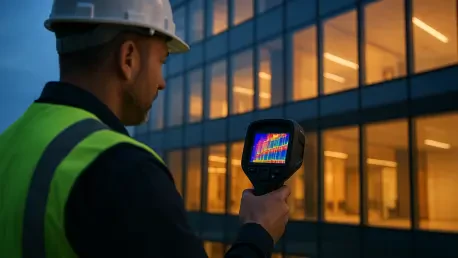
To meet these rigorous data requirements, developers are increasingly integrating advanced Building Management Systems (BMS) and Internet of Things (IoT) sensors throughout their properties. These technologies allow for the real-time monitoring of energy consumption, air quality, and occupancy patterns, providing the granular data necessary for independent verification. This emphasis on performance monitoring has also led to a change in procurement and construction management practices. Contractors are now held to higher standards regarding the “as-built” quality of building envelopes and the commissioning of HVAC systems, as any failure to meet performance targets could jeopardize the building’s net zero status. By making performance visible and measurable, the standard encourages a culture of continuous improvement and operational excellence that benefits both the environment and the building’s occupants over the long term.
Practical Roadmaps for a Carbon-Conscious Real Estate Future
The implementation of the standard effectively dismantled the culture of ambiguity that previously defined the green building sector. By establishing a clear hierarchy of carbon performance, the framework allowed the industry to move past performative environmentalism and toward a model based on measurable impact. Asset managers who prioritized immediate energy audits and integrated low-carbon procurement protocols early in the cycle were able to secure a significant competitive advantage. These organizations demonstrated that aligning with the UK NZCBS was not merely a regulatory hurdle but a strategic opportunity to enhance building resilience and attract premium tenants. The standard successfully provided a universal language that translated complex climate goals into actionable technical specifications, enabling developers to design with confidence and investors to allocate capital with greater precision.
Moving forward, the industry adopted a more holistic view of the building lifecycle, where the selection of low-carbon materials like cross-laminated timber or recycled steel became standard practice. The focus on embodied carbon encouraged a resurgence in circular economy principles, leading to more innovative renovation projects rather than the traditional cycle of demolition and reconstruction. Stakeholders realized that the long-term viability of the real estate market depended on its ability to contribute positively to the global carbon budget. By adhering to the rigorous benchmarks set by the standard, the sector transformed itself into a leader in the green transition. This evolution proved that when given clear, data-driven guidelines, the real estate industry possessed the ingenuity and resources to achieve true sustainability, eventually ending the practice of greenwashing and setting a new global precedent for carbon accountability.