
Mortenson’s regional revenue surged by 27 percent between 2024 and 2025, reaching a total of approximately 932 million dollars across the Washington and Oregon markets. This impressive financial trajectory is not merely a byproduct of a booming construction sector but rather the result of a deliberate, multi-decade transformation within the organization’s Pacific Northwest operations. For over forty-five years, the firm has painstakingly built a reputation that transcends the typical role of a general contractor, transitioning into a sophisticated strategic partner capable of navigating the region’s most intricate development hurdles. By moving away from the rigid silos of traditional project delivery, the company has embraced a philosophy that prioritizes collective success over individual profitability. This shift has redefined how large-scale infrastructure and commercial projects are executed in cities like Seattle and Portland. The organization’s ability to adapt its internal culture to match the shifting demands of modern urban development has positioned it as a dominant force. As the industry moves further into 2026, the company’s influence is felt not just in the sheer volume of its projects, but in the collaborative standards it has set for the entire building community in the Northwest, proving that institutional longevity requires constant reinvention and a willingness to challenge the status quo.
Adopting the Progressive Design-Build Philosophy
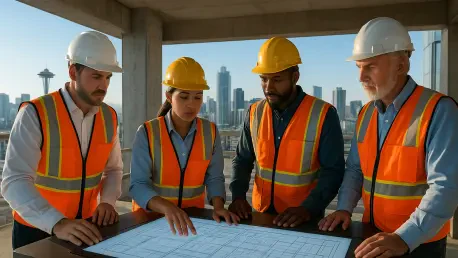
The core of the organization’s evolution lies in its decisive move away from the adversarial nature of traditional lump-sum bidding toward a progressive design-build model. In the past, the industry often functioned within a system where architects, owners, and builders operated in separate silos, frequently leading to misaligned incentives and costly delays. By contrast, the design-build approach places the contractor at the absolute center of a unified, collaborative team from the very beginning of the pre-construction phase. This arrangement ensures that every stakeholder, from structural engineers to financial planners, remains perfectly aligned with the overarching project goals. It removes the friction that typically arises when a builder is handed a finished design that may not be feasible within a specific budget or timeframe. Instead, the firm integrates its expertise during the design process itself, allowing for real-time cost analysis and logistical planning. This method has not only reduced project risk but has also accelerated delivery timelines, a critical factor for clients in the fast-paced markets of the Northwest. By championing this model, the firm has successfully moved from being a participant in a project to being the primary architect of its success.
Beyond the legal and structural frameworks of these contracts, this model is built upon a foundation of deep-seated trust that the firm has cultivated with its regional partners over several decades. Leadership within the organization emphasizes a shift in perspective, viewing clients as long-term strategic partners rather than just temporary customers or transactional entities. This philosophy is operationalized through extreme transparency in budgeting and procurement, which allows clients to see exactly where their investments are going and how decisions impact the bottom line. By operating with this level of openness, the firm can better align its construction strategies with the broader business objectives of its clients, whether those involve hitting a specific opening date for a hospital or meeting stringent sustainability targets. This alignment results in significantly smoother project execution and a dramatic reduction in the legal disputes that often plague the construction industry. As trust becomes a quantifiable asset, the firm has found that repeat business is more frequent, as clients recognize the value of a builder that prioritizes their long-term viability over short-term project gains. This trust-based approach is now a defining characteristic of their market leadership.
Expanding Presence Through Regional Synergy
With a robust presence established in both Seattle and Portland, the organization has meticulously tailored its services to meet the specific local demands of each city while maintaining a unified and cohesive corporate culture. The Seattle office has traditionally focused its efforts on large-scale healthcare facilities and complex higher education projects, areas where technical precision and long-term planning are paramount. Meanwhile, the Portland team has carved out a specialized niche in advanced manufacturing and critical public infrastructure. This dual-office strategy has been a primary driver behind the nearly 30 percent increase in regional revenue observed over the last year. By allowing each branch to develop localized expertise, the firm can address the unique regulatory environments and labor markets of both Washington and Oregon with high efficiency. However, the true strength of this geographical spread is not in its division, but in its ability to leverage resources across state lines. This regional synergy ensures that a project in one city can draw on the specialized technical insights or specialized equipment of the other, creating a versatile and highly responsive operation that can handle diverse challenges simultaneously.
Despite the distinct focuses of the two major offices, the teams work in close concert, sharing personnel and deep intellectual capital to tackle high-stakes projects that require a multi-disciplinary approach. This internal cooperation allows the firm to apply specialized knowledge, such as aviation logistics or renewable energy solutions, across the entire Northwest region regardless of where the specific experts are physically based. When a project in Portland requires the specific healthcare technicalities honed in Seattle, the transition of knowledge is seamless. This synergy is fostered through a culture that discourages internal competition between offices and instead rewards the collective wisdom of the entire organization. Such a unified front provides a significant competitive advantage, as it allows the firm to bid on massive, multifaceted contracts that smaller, localized contractors might find overwhelming. By functioning as a single, well-oiled machine across the Pacific Northwest, the company has created a model for regional expansion that prioritizes operational fluidity and shared success. This interconnectedness has been vital for maintaining service quality during periods of rapid growth and high market volatility.
Leading in Healthcare and Sustainable Innovation
Healthcare construction has emerged as a cornerstone of the firm’s diverse portfolio, highlighted by its remarkable ability to rescue and complete massive hospital expansions that had previously faced significant hurdles. Taking a proactive approach rather than a reactive one, the team does not simply follow provided blueprints but actively seeks creative engineering solutions to maximize value for healthcare providers. For instance, the firm has been recognized for its ability to expand emergency departments and specialized care units within existing budgets by identifying efficiencies in the early construction phases. This level of dedication has earned the firm widespread praise for its technical proficiency and its ability to maintain the continuity of care during complex renovations. Building in active hospital environments requires a meticulous focus on safety and noise control, and the firm’s success in these high-pressure settings has made it a preferred partner for the region’s largest medical networks. The reliability shown in these projects has solidified its status as a leader in the sector, where the margin for error is virtually nonexistent and the impact on the community is immediate.
In the higher education sector, the firm is currently recognized as a pioneer in green construction, particularly through its work on carbon-neutral and net-zero energy projects. By experimenting with sustainable materials like mass timber and educating clients on the long-term financial benefits of new building technologies, the organization has set a new standard for environmental responsibility in the Northwest. This willingness to take calculated risks with unconventional materials and energy systems demonstrates a profound commitment to the future of the construction industry. These sustainable projects often serve as living laboratories for universities, and the firm’s role in realizing these visions has positioned it at the forefront of the global push for decarbonization. Beyond just meeting current environmental codes, the company actively pushes for designs that will remain relevant and efficient for decades to come. This forward-thinking mindset resonates strongly with the values of the Pacific Northwest, where environmental stewardship is often a primary consideration for public and private developers alike. By aligning its technical capabilities with these regional values, the firm has secured its place as an innovator in sustainable development.
Navigating Complex Logistics and Iconic Renovations
The organization’s versatility is most evident in its management of sports and public infrastructure projects, where the team often serves as a strategic advisor rather than just a builder. From performing complex value engineering on new professional ballparks to upgrading mission-critical electrical systems in active international airports, the company excels at managing projects characterized by high technical barriers and intense public scrutiny. The ability to solve complex logistical problems without interrupting daily operations is a key differentiator in the competitive Northwest market. For example, performing major structural work at an airport while thousands of passengers move through the terminal requires a level of coordination that few firms can master. The team utilizes advanced modeling and simulation tools to plan every phase of construction, ensuring that the impact on the public is minimized. This expertise in strategic logistics has made the firm indispensable for municipal governments and private entities looking to modernize the region’s most vital transportation and entertainment hubs without sacrificing operational efficiency.
The company also demonstrates a unique ability to blend modern engineering with historic preservation, a skill set that was on full display during the renovation of iconic landmarks such as the Portland Art Museum and the Climate Pledge Arena. Successfully constructing state-of-the-art facilities beneath or within historic facades requires a level of precision and care that few other contractors are equipped to provide. These projects often involve digging new foundations under existing walls or integrating modern seismic upgrades into century-old structures. Such tasks are fraught with risk, yet the firm’s methodical approach to risk management and structural engineering has allowed it to deliver these projects with exceptional quality. These achievements showcase the firm’s unique ability to handle the region’s most challenging and prestigious construction tasks while respecting the architectural heritage of the Northwest. By modernizing these historic sites, the firm is not just building new spaces but is also preserving the cultural fabric of the cities it serves. This balance of innovation and preservation has cemented its reputation as a firm that understands the nuances of urban development and the importance of community legacy.
Future-Proofing Through Institutional Agility: Lessons from the Northwest
The firm established its market dominance by fundamentally shifting how it viewed the relationship between the contractor and the project owner. In the years leading up to 2026, the organization abandoned the outdated model of conflict-driven construction and instead focused on total integration across all phases of development. It prioritized the recruitment of specialists who understood that the technical aspects of building were only as strong as the communication strategies supporting them. This past commitment to internal training and the adoption of cutting-edge digital twins and real-time data analytics allowed the firm to anticipate supply chain disruptions and labor shortages before they could impact the bottom line. By investing in its people and its processes simultaneously, the company created a resilient structure that could withstand regional economic shifts. This historical emphasis on agility meant that when new environmental regulations or technological standards emerged, the firm was already equipped to implement them, rather than struggling to catch up with the competition.
For other industry leaders looking to maintain a competitive edge in 2026 and beyond, the primary takeaway from this evolution is the necessity of institutional transparency. The firm proved that by opening its books and its planning processes to its partners, it could actually increase its profitability through efficiency rather than through high-margin change orders. Actionable next steps for the industry involve the deeper adoption of progressive design-build frameworks and the cultivation of regional synergy that allows for the sharing of specialized knowledge. Companies should focus on becoming strategic advisors who provide value long before the first shovel hits the ground. Furthermore, the success seen in the Northwest suggests that a commitment to sustainable innovation is no longer optional but a core requirement for securing high-value contracts. As the market continues to demand smarter, greener, and more complex structures, the builders who succeed will be those who view every project as a collaborative investment in the future of the community. The path forward requires a move away from isolated project management toward a more holistic, integrated approach to regional development.