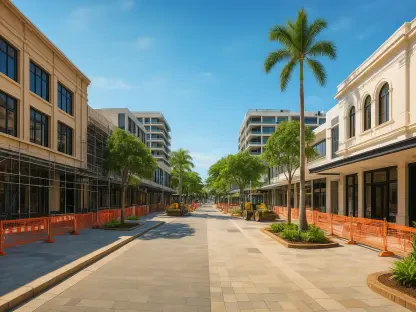

The intricate economic bond between the vast Canadian wilderness and the bustling suburban construction sites represents one of the most critical pillars of national financial stability in the current landscape. This relationship functions as a symbiotic two-way street where logging operations and sawmills depend heavily on a continuous stream of new residential projects to remain solvent, while developers require a reliable supply of affordable dimensional lumber to keep project costs within reasonable limits. When a disruption occurs in the housing market, the shockwaves are felt immediately in remote rural towns where the local economy is built entirely around the timber harvest. A single North American home typically requires more than 15,000 board feet of lumber, alongside specialized engineered wood products and panels, making the residential sector the largest single consumer of forest outputs. Without this demand, inventory surpluses lead to price crashes that threaten the survival of mills and transportation networks alike.
Narrowing the Gap in Housing Availability
Scaling Production: Meeting National Demand
Canada currently grapples with a staggering housing deficit that has reached a critical tipping point, directly impacting the long-term viability of the national forestry sector. To restore equilibrium to a market defined by scarcity and skyrocketing rents, economic analysts suggest that the country must drastically increase its construction output to approximately 480,000 units annually for at least the next decade. Achieving such a high volume of production is not merely a social necessity but an industrial requirement to ensure that domestic sawmills have a consistent outlet for their products. From 2026 to 2030, the push to add millions of new homes to the national stock will serve as the primary engine for the logging industry, provided that the construction pipeline remains unobstructed by labor shortages or logistical bottlenecks. Without this sustained surge in building activity, the forestry sector faces a precarious future characterized by reduced shifts and permanent facility closures.
Economic Resilience: Supporting Remote Communities
The ripple effects of a stagnating housing market extend far beyond the urban centers, reaching into the heart of northern communities where the forest is the primary source of livelihood for thousands of families. When residential starts decline, the resulting surplus of wood products causes a sharp drop in market prices, often falling below the cost of production for many independent mill operators. This economic downturn forces a reduction in logging quotas, which subsequently hits the trucking and heavy equipment industries that move raw materials from the bush to the processing plants. Stability in these resource-dependent communities is inextricably linked to the success of urban developers who turn standing timber into the framing for high-density apartments and single-family dwellings. Consequently, any policy aimed at addressing the housing crisis must also be viewed through the lens of industrial preservation for the forestry workers, as their economic survival depends on a robust construction market.
The High Cost of Government Taxes and Fees
Financial Obstacles: Assessing Sustainable Development
Identifying the core reasons for the current slowdown reveals that the primary obstacle to meeting national housing goals is a prohibitive financial environment largely dictated by government-imposed fees rather than a lack of raw materials. In provinces like Ontario, the cumulative impact of various taxes, levies, and municipal charges can now account for more than thirty percent of the final purchase price of a new residence. This fiscal burden adds hundreds of thousands of dollars to the cost for prospective buyers, effectively pricing out a significant portion of the population and cooling the demand for new construction. When families find it impossible to qualify for mortgages due to these inflated costs, the number of new housing starts inevitably drops, creating a direct and negative impact on the sawmills that supply essential building materials. The forestry industry suffers not because of a lack of trees, but because the end product has become too expensive for the average citizen to afford.
Municipal Levies: Impacting the Building Pipeline
Municipal development charges have surged to become a primary hurdle for builders, frequently exceeding six-figure sums per unit in major metropolitan areas where the demand for density is highest. While these fees are traditionally intended to fund essential infrastructure like sewage systems, roads, and community centers, they have increasingly placed a disproportionate financial burden on new homeowners instead of the broader tax base. This lopsided approach creates a significant barrier to entry for developers who must weigh the potential profit of a project against the massive upfront costs required to break ground. When these charges make a development project financially unviable, companies are forced to abandon their plans, leading to a precipitous drop in orders for lumber and engineered wood. This decline in demand triggers a chain reaction throughout the supply chain, as forestry companies are forced to scale back operations in response to the shrinking building pipeline across the entire country.
Legislative Reforms and Market Solutions
Policy Innovation: Driving Supply Chain Efficiency
To combat these systemic challenges, federal and provincial programs have begun to offer targeted infrastructure funding to municipalities that agree to reform or reduce their development fees. These initiatives represent a necessary first step toward lowering the cost of entry for new residents and stimulating the demand for high-quality Canadian timber. Beyond simple financial incentives, long-term stability for both the housing and forestry sectors requires deeper structural changes to the way projects are approved and taxed. Implementing permanent tax relief on new residential builds and streamlining the bureaucratic approval process would help ensure that construction remains a predictable and profitable venture. By reducing the time it takes to move from a blueprint to a finished structure, the government can facilitate a more responsive supply chain that benefits both the urban dweller in search of a home and the rural worker in the forest who provides the necessary materials for its construction.
Future Frameworks: Ensuring Lasting Industrial Health
The resolution of the housing crisis required a multifaceted approach that went beyond mere rhetoric and addressed the underlying cost structures of the construction and forestry sectors. Stakeholders successfully advocated for the removal of redundant regulatory barriers that had previously stifled the delivery of new units and depressed the demand for domestic wood products. By shifting the focus toward integrated supply chain management and fiscal reform, policymakers ensured that the abundance of natural resources translated into affordable shelter for the growing population. Future considerations focused on the adoption of advanced mass timber technologies and prefabricated wood components to further decrease construction timelines and increase the utilization of forest outputs. The transition toward a more collaborative framework between builders and resource managers proved essential for maintaining industrial health. These actions established a blueprint for sustainable growth that prioritized economic accessibility for all citizens.