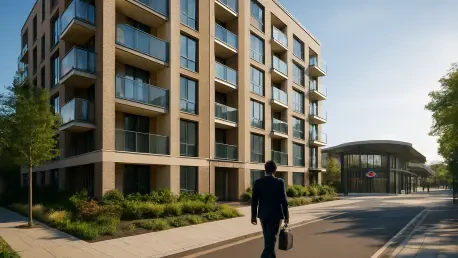

The persistent mismatch between soaring property valuations and the actual living requirements of the modern workforce has triggered a pivotal shift in how institutional investors approach the London residential market. This evolution is most evident in the rise of co-living, a sector that prioritizes community and operational excellence over mere square footage. DFI, a prominent pan-European private equity firm, has recently underscored this trend by committing £80 million to a forward-funded development in Kingston upon Thames. This move represents a strategic attempt to bridge the gap between high-quality housing and the lifestyle preferences of a professional demographic.
Strategic Capital Injection Into Kingston’s Urban Housing Market
The Kingston project is designed to deliver 200 modern en-suite studio apartments, providing a much-needed influx of supply into one of Greater London’s most supply-constrained submarkets. By focusing on a lifestyle-brand approach, the investment targets a demographic that increasingly values flexibility and professional management over traditional property ownership. This specific deal structure allows DFI to capture value at an early stage, ensuring the project meets institutional standards from the ground up. The injection of capital at this scale signals a growing confidence in the resilience of flexible housing models within the broader economic landscape.
The Evolution of Co-Living and the London Housing Crisis
Historically, the London rental market has been characterized by high barriers to entry and a chronic undersupply of high-quality, managed housing. While traditional models have existed for decades, the institutional co-living sector remained in its infancy until recent years, with only a few thousand beds available across the capital. This scarcity has been exacerbated by rising costs and shifting regulatory environments that have slowed traditional developments. DFI’s entry into this niche market is a calculated response to these pressures, leveraging their established experience in the European living sector to address a specific void in the residential market.
Addressing Demand Through Strategic Location and Infrastructure
Proximal Connectivity and Corporate Relocation Trends
One of the most critical aspects of this development is its strategic positioning adjacent to Kingston Train Station. With a 30-minute commute to Central London, the project taps into the needs of young professionals who require rapid access to the city’s core while seeking an integrated lifestyle elsewhere. Furthermore, the local area has become a magnet for major corporate headquarters, such as Unilever. This corporate influx creates a sustainable demand tailwind, ensuring a steady pipeline of tenants ranging from graduate employees to established professionals who prioritize proximity to their workplace.
All-Inclusive Lifestyle Model: A Market Differentiator
The project, managed by Viewranks Estates, moves beyond the standard rental agreement by offering an all-inclusive structure that simplifies the tenant experience. This model covers utilities and high-speed internet while providing access to premium communal facilities that would be unaffordable for most individual renters. The inclusion of co-working spaces, a fitness studio, and a cinema caters to the evolving preferences of modern renters. By integrating these amenities, DFI is not just providing a room but is curating an environment that addresses the social isolation often associated with traditional private rentals.
Technical Viability: The Gateway 2 Regulatory Framework
A significant hurdle for modern developments in London is navigating the increasingly complex regulatory and planning environment. This project successfully secured full planning permission and Gateway 2 approval, allowing construction to commence without the delays that often plague large-scale urban developments. The involvement of professional advisors, including Savills and PwC, underscores the institutional rigor applied to the deal. This level of preparation mitigates planning risks and ensures that the project meets the latest building safety and sustainability standards required for long-term ownership.
Technological and Economic Shifts in Institutional Housing
Looking toward the rest of the decade, the co-living sector is poised to benefit from broader economic shifts and technological innovations in property management. As the generation rent cohort matures, there is an increasing demand for professionalized management and tech-enabled living experiences. Future developments are likely to integrate smarter building systems to optimize energy consumption—a vital factor in all-inclusive rent models—and digital platforms for community engagement. As more institutional capital enters the space, co-living is expected to move from a niche asset class to a defensive staple in diversified real estate portfolios.
Implementing the Co-Living Model for Future Growth
For investors and developers, the Kingston project serves as a blueprint for success in undersupplied urban submarkets. The primary takeaway is the importance of a defensive deal structure combined with operation-led asset management. To replicate this success, stakeholders should prioritize sites with exceptional transport links and proximity to corporate hubs. Furthermore, the focus must remain on the user experience, ensuring that communal spaces are functional rather than just aesthetic. By bridging the gap between design and the practical needs of renters, firms can capture a larger share of the growing flex-housing market.
Sustaining Momentum in the London Residential Sector
The DFI transaction in Kingston established a clear precedent for how institutional capital successfully navigated the complexities of the London housing shortage. Investors focused on operational excellence and strategic site selection to mitigate the risks associated with high-density urban developments. This project demonstrated that bridging the gap between professional management and community-focused design was essential for long-term value creation. Stakeholders moved forward by prioritizing regulatory compliance and technological integration, which ensured that the next generation of urban housing was both sustainable and economically viable.