
The industrial sector is currently facing a transformative period where the intersection of high-stakes operational demands and a tightening labor market necessitates a radical shift in how personnel are prepared for the field. At the CONEXPO-CON/AGG 2026 event in Las Vegas, the unveiling of advanced training technologies signaled a definitive departure from traditional classroom methods toward immersive, high-fidelity digital environments. Industrial Training International, a subsidiary of Interplay Learning, introduced a suite of upgrades designed to help construction and industrial employers mitigate operational risks while accelerating worker readiness. This strategic pivot highlights a growing reliance on virtual reality to bridge the widening gap between novice capabilities and the complex requirements of modern jobsites. By integrating sophisticated software with tactile hardware, organizations are now able to provide trainees with an unprecedented level of exposure to hazardous scenarios without the physical risks that once defined high-level technical training.
Immersive Simulations and Hardware Integration
Advancing Crane Operations Through Virtual Reality
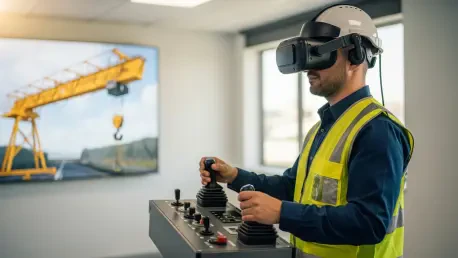
The cornerstone of the latest advancements in industrial education is the significant expansion of simulation capabilities, particularly for heavy machinery operations in the manufacturing and fabrication sectors. A major highlight in 2026 is the upgraded VR Crane Simulator, which now incorporates a 10-ton overhead crane simulation specifically tailored for staging and fabrication environments. This enhancement brings the total capacity of the platform to ten distinct crane types, offering a massive library of over 1,200 unique training scenarios. Such a vast array of digital environments allows operators to encounter rare but critical events that would be nearly impossible to replicate safely in a live setting. By providing a safe space to fail and learn, these simulations ensure that when a worker eventually steps into a real operator cabin, they have already navigated hundreds of hours of complex maneuvers. This depth of training was recently recognized as a finalist for the CONEXPO Next Level Awards, emphasizing its industry-wide impact.
The effectiveness of these virtual environments is significantly amplified by the deliberate focus on the physical sensations associated with heavy equipment operation and mechanical control. To bridge the gap between digital simulation and actual field performance, the industry has seen a push toward integrating authentic hardware, such as the Magnetek XLTX Bellybox Transmitter from Columbus McKinnon. This specific hardware integration allows learners to develop essential muscle memory by using the exact same wireless control technology found on active industrial jobsites. Instead of relying on generic gaming controllers, trainees manipulate the actual switches, toggles, and weight-bearing controls they will use during their daily shifts. This tactile feedback is crucial for developing the intuitive reflexes required to manage heavy loads under pressure. The combination of high-definition visual feedback and realistic physical inputs creates a comprehensive learning loop that drastically reduces the learning curve for new hires while refining the skills of veteran staff.
Expanding Specialized Industrial Applications
Beyond general machinery operation, specialized training modules are being developed to address the unique complexities of specific construction methods, such as concrete tilt-up construction. This process requires extreme precision and rigorous safety management to handle massive concrete panels, making it one of the more dangerous aspects of commercial building projects. New VR modules focus specifically on the nuances of these lifts, allowing site supervisors and riggers to practice coordination and load management in a controlled digital space. By simulating the specific challenges of commercial staging and tilt-up maneuvers, firms can identify potential bottlenecks or safety hazards before a single piece of equipment is deployed. This proactive approach to risk management not only protects the workforce but also ensures that project timelines remain on track by minimizing the likelihood of onsite accidents or equipment damage. This level of specialization demonstrates how VR is evolving into a surgical tool for industrial skill development.
The integration of these specialized scenarios into the broader training ecosystem allows for a more granular assessment of worker competency across different project types. As industrial projects become more complex, the ability to train for specific environmental conditions—such as high winds, tight urban spaces, or low-visibility settings—becomes a competitive advantage. The software now allows instructors to customize variables within the 1,200 existing scenarios to match the specific geographic or structural challenges of an upcoming project. This means a team preparing for a commercial build in a dense city center can practice those specific crane lifts in a virtual replica of the site long before the foundation is poured. This shift toward project-specific simulation represents a major leap forward in how construction firms approach workforce readiness and operational planning. By removing the guesswork from high-stakes maneuvers, technology is effectively raising the baseline for safety and efficiency across the entire industrial landscape.
Modernizing Workforce Development Models
Hybrid Approaches to Technical Certification
Addressing the persistent skilled labor shortage requires more than just better software; it necessitates a fundamental restructuring of the educational pathways leading to professional certification. A “blended learning” model is currently being championed for tower crane operators, which strategically combines the accessibility of online coursework with the intensity of VR simulation and instructor-led training. This hybrid methodology offers a flexible and scalable pathway for workers to achieve certification regardless of their physical proximity to a major training center. By completing the theoretical components and initial simulation hours remotely, trainees can maximize the efficiency of their time when they eventually meet with an instructor for hands-on evaluation. This model is particularly effective for large-scale industrial firms that need to maintain standardized training protocols across multiple geographic locations. It ensures that every operator, whether in a rural facility or a metropolitan site, adheres to the same safety standards.
The scalability of this approach is further supported by the expansion of technical catalogs that cover a wider range of maintenance and troubleshooting skills. For instance, the online maintenance catalog has grown to include more than 100 video- and simulation-based courses, covering everything from basic mechanical repairs to advanced electrical systems. A newly introduced program on Electrical Fundamentals and Troubleshooting focuses on giving workers the diagnostic skills necessary to maintain sophisticated industrial machinery. In an era where downtime can cost a company thousands of dollars per hour, the ability to quickly identify and fix electrical faults is an invaluable asset. This curriculum uses VR to place workers inside complex electrical panels where they can safely test circuits and practice troubleshooting procedures that would otherwise carry a high risk of arc flash or equipment damage. This focus on “time-to-competency” is a direct response to the industry’s need for a versatile and technically proficient workforce.
Strategic Implementation and Operational Impact
The strategic implementation of these digital tools is ultimately measured by their ability to provide data-driven solutions that prioritize both worker safety and overall productivity. By utilizing AI-powered simulations, firms can now track the progress of each individual trainee with extreme precision, identifying specific areas where a worker might be struggling before they ever set foot on a jobsite. This data allows for a more personalized approach to professional development, where training can be adjusted in real-time to address specific skill gaps. Furthermore, the use of VR for high-risk training—such as complex multi-crane lifts or hazardous material handling—has a direct impact on the bottom line by potentially reducing insurance premiums and worker compensation claims. Firms that adopt these technologies are finding that they can shorten the total training time while simultaneously improving worker retention, as employees feel more confident and better prepared for the realities of their daily tasks.
The modernization of industrial education through these scalable solutions represents a unified effort to solve the most pressing challenges of the current era. With nearly 600,000 individuals trained globally through the Interplay Learning ecosystem, the sheer volume of data being generated is helping to refine the training modules even further. This iterative process ensures that the simulations are constantly evolving to reflect the latest safety regulations and technological advancements in the field. As industrial systems become more interconnected and automated, the need for a workforce that is comfortable navigating digital-physical interfaces will only continue to grow. The current shift toward immersive training is not just about replacing old manuals; it is about creating a more resilient, capable, and safety-conscious industrial workforce that is equipped to handle the demands of a rapidly changing global economy. This proactive embrace of digital transformation is setting a new standard for excellence in industrial workforce development.
To ensure long-term success in this new landscape, organizations prioritized the integration of virtual simulation into their existing safety cultures rather than treating it as a standalone novelty. Managers and safety officers identified specific high-risk maneuvers within their operations and mapped them directly to available VR scenarios to create a more relevant training experience. By mandating regular “digital refreshers” for experienced operators, companies maintained a high baseline of proficiency and caught potential bad habits before they led to incidents. The transition to these advanced platforms was facilitated by investing in mobile VR units that traveled between worksites, ensuring that the technology remained accessible to all levels of the organization. Ultimately, the industry moved toward a more proactive stance on workforce development, where technical mastery was achieved through repeated, safe exposure to complex environments. This shift proved that the most effective way to protect the modern industrial worker was to give them the tools to master their craft in a world where the stakes were digital, but the skills were undeniably real.