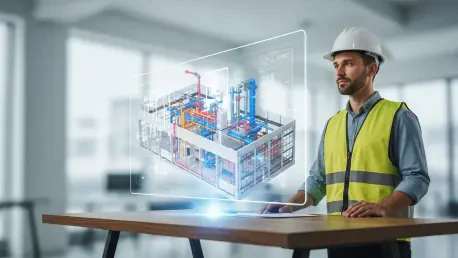

The construction landscape in 2026 is defined by a sophisticated synthesis of physical reality and digital precision, fundamentally altering how architects and engineers approach the renovation of existing structures. The industry has historically struggled with a lack of precise as-built documentation, but the widespread adoption of Scan to BIM has effectively bridged this critical data gap by turning the documentation of the built environment into a highly accurate science. By employing advanced laser scanning hardware to capture a building’s current state and converting that data into a high-fidelity Building Information Model, project teams have found a way to resolve the “documentation gap” that previously plagued older assets. This process has successfully transitioned from a specialized, niche application used only on high-budget landmarks into a foundational industry standard across the United States, the United Kingdom, Europe, and Australia. As urban centers prioritize the rehabilitation of existing stock over new builds, the ability to generate a precise digital foundation is now considered a non-negotiable prerequisite for any serious redevelopment. This transformation reflects a broader shift toward data-centric project management.
Technical Precision through Digital Reality Capture
The technical journey of this methodology begins with the strategic deployment of terrestrial or mobile laser scanners that utilize light detection and ranging to measure millions of points. These devices emit light pulses to calculate distances with sub-millimeter accuracy, resulting in a dense dataset known as a point cloud, which serves as a mathematically precise digital representation of the physical structure. In 2026, these point clouds are far more than just visual references; they are the literal structural DNA of a building, capturing every subtle deviation in wall thickness, floor levelness, and pipe placement. Because these scans capture the environment exactly as it exists, they eliminate the risk of relying on outdated paper blueprints that may not reflect decades of undocumented renovations or structural settling. This level of granular detail allows engineers to work with a degree of certainty that was previously unattainable in historical contexts, ensuring that every design decision is based on verified physical facts.
Once the point cloud is finalized, it is imported into sophisticated modeling environments like Autodesk Revit to be transformed into intelligent, three-dimensional objects that carry extensive metadata. Modern software in 2026 has integrated automated feature recognition tools that utilize artificial intelligence to identify standard architectural elements like floors, walls, and ceilings with minimal manual input. This automation has drastically reduced the time required to convert raw scan data into a functional BIM, though professional oversight remains a critical necessity to ensure the model’s structural integrity. These intelligent models do not merely represent geometry; they include detailed information about material properties, structural load capacities, and system specifications. The resulting digital asset provides a comprehensive view of the building’s internal systems, allowing for a level of coordination that prevents the common errors associated with traditional 2D drafting methods, thereby streamlining the entire construction lifecycle.
Standardizing Reliability through Levels of Development
A central pillar of the Scan to BIM transformation is the universal adoption of the Level of Development framework, which provides a shared language for all project stakeholders. This system ensures that every participant, from the lead architect to the plumbing subcontractor, understands the specific reliability and intended use of the digital model at any given stage. By 2026, the industry has standardized three primary tiers—LOD 200, LOD 300, and LOD 350—to manage expectations and project budgets effectively. LOD 200 serves as the baseline, offering approximate geometry that is ideal for initial feasibility studies and early-stage design concepts where exact precision is not yet required. This tiered approach allows project owners to scale the complexity of the digital documentation based on the specific needs of the renovation, ensuring that resources are allocated efficiently while still maintaining a clear “source of truth” for the team, regardless of the complexity involved.
For the actual execution of construction and engineering tasks, the industry relies heavily on the higher fidelity found in LOD 300 and LOD 350. LOD 300 provides specific geometry with accurate dimensions and positioning, acting as the primary standard for creating construction documents and planning significant structural modifications to existing shells. In 2026, the push for even greater precision has made LOD 350 a standard requirement for complex urban retrofits where multiple systems must occupy tight spaces. This level includes the critical interfaces and connections between different building systems, such as how a new HVAC duct interacts with an existing structural beam. By modeling these details, teams can perform exhaustive clash detection, identifying physical conflicts in the virtual world before they cause delays or expensive rework on the actual job site. This proactive approach has significantly lowered the financial risks inherent in modernizing old buildings while increasing the speed of delivery.
Strategic Benefits for Project Stakeholders
The utility of Scan to BIM is evident across the entire architecture, engineering, and construction spectrum, providing specialized benefits to each distinct discipline involved in a project. Architects now use these perfect digital replicas to eliminate the guesswork and “hidden surprises” that often characterize older structures, allowing for design solutions that are perfectly tailored to the building’s unique constraints. Structural and mechanical engineers similarly rely on these models to integrate modern infrastructure into historical shells, ensuring that new systems are compatible with the existing structural load and spatial layout. In 2026, the ability to coordinate new electrical or plumbing systems against a verified structural model is a standard requirement for any complex urban redevelopment. This seamless integration ensures that the aesthetic vision of the architect is supported by the technical reality of the building, reducing the likelihood of mid-project design changes.
General contractors have embraced Scan to BIM as a primary risk-mitigation tool that identifies potential construction conflicts long before the first worker arrives at the job site. This pre-construction verification allows for a smoother workflow, where materials can be prefabricated off-site with the confidence that they will fit perfectly into the existing structure. Beyond the construction phase, the digital model continues to provide immense value as a Digital Twin for facility managers who oversee the building’s long-term operations. These living virtual assets assist in managing complex maintenance schedules, space planning, and energy efficiency targets throughout the building’s entire lifecycle. By turning static physical structures into data-rich digital environments, Scan to BIM has redefined the concept of asset management, allowing for more sustainable and cost-effective operations that extend the functional life of the built environment for many decades to come while supporting modern environmental standards.
Economic Drivers and Global Adoption Trends
The global transition toward digital reality capture is heavily fueled by the economic necessity of adaptive reuse, particularly in major urban centers across the United States. There is currently a massive push to convert vacant commercial assets, such as underutilized office buildings, into modern residential or mixed-use spaces to meet evolving housing demands. These complex conversions are nearly impossible to execute profitably without the high-accuracy data provided by Scan to BIM, as old buildings rarely align with their original blueprints. Using laser scanning allows developers to assess the true condition of a building’s core and shell, enabling more accurate cost estimations and faster project timelines. By minimizing the uncertainty of the existing conditions, developers can secure financing more easily and reduce the contingency funds typically required for renovation projects, making the revitalization of aging urban infrastructure a more attractive investment for the private and public sectors.
Alongside economic drivers, regulatory mandates in the United Kingdom and across Europe have played a pivotal role in solidifying Scan to BIM as a standard practice for all public works. Governments are increasingly requiring high-fidelity digital models to ensure long-term safety, structural transparency, and operational efficiency in the public sector. This top-down pressure has coincided with a significant increase in technological accessibility, as the cost of high-end laser scanning hardware has reached a tipping point for smaller firms. Furthermore, the rise of cloud-based data management in 2026 has solved the challenges of handling the massive datasets generated by point clouds, allowing global teams to collaborate on the same digital model in real-time. This combination of government regulation, lower hardware costs, and improved software connectivity has made digital documentation an accessible and essential tool for the modern construction professional worldwide, creating a unified global standard.
Strategic Implementation and Operational Readiness
Organizations that successfully integrated Scan to BIM into their core workflows experienced a significant reduction in project volatility and an overall increase in profit margins. The shift required a commitment to retraining staff and investing in cloud-ready infrastructure to handle the influx of data, but the long-term benefits clearly outweighed the initial transition costs. Moving forward, firms must prioritize the development of clear internal standards for data capture and model management to maintain consistency across various project types. The focus shifted toward creating a unified digital strategy where the model serves as the single source of truth from the initial site survey through to the final decommissioning of the building. By establishing these protocols, companies ensured that they remained competitive in a market that now demands digital transparency as a standard deliverable. The industry moved beyond simple 3D visualization to embrace truly data-driven construction.
To maintain this momentum, stakeholders should look toward the integration of real-time sensor data with their existing BIM models to create even more responsive Digital Twins. This evolution will allow for predictive maintenance where the building itself can alert managers to potential system failures before they occur, further enhancing the value of the original scan. Investors and project owners must continue to advocate for high LOD standards in their contracts to ensure the longevity and utility of the digital assets they are funding. As the industry continues to evolve from 2026 to 2028, the emphasis will remain on the quality of data and the ability to turn raw information into actionable insights that drive sustainable building practices. Embracing this digital transformation is no longer just a technical upgrade; it is a strategic imperative for any organization looking to thrive in an increasingly complex and data-oriented architectural landscape, ensuring that every project starts with a perfect digital foundation.