
The dream of a fully automated living space often collides with the harsh reality of expensive subscription models and proprietary hardware that requires a constant influx of cash to remain functional. While the tech industry pushes for newer, faster, and more specialized gadgets, a growing number of homeowners are discovering that their drawers full of “obsolete” devices hold the key to a more robust and private automation system. Instead of purchasing a dozen single-purpose motion sensors or door contacts, individuals are leveraging open-source platforms like Home Assistant to breathe new life into retired hardware. This shift is not merely about saving money; it represents a fundamental change in how users perceive electronic waste and data sovereignty. By utilizing local-first processing, these DIY systems ensure that sensitive household data never leaves the premises, providing a level of security that commercial “black boxes” simply cannot match in an era defined by frequent cloud-based privacy breaches.
Repurposing Microphones and Laptops
Standard PC or Bluetooth microphones, which often sit idle after a hardware upgrade, possess a latent capability to function as high-fidelity security sensors without the need for additional specialized purchases. By connecting an always-on computer to one of these peripherals, users can employ digital signal processing and machine learning models to identify specific acoustic signatures. This technique allows a standard microphone to recognize the distinct, high-frequency pitch of a smoke detector or the unique percussive crash of breaking glass, effectively replacing several expensive commercial sensors. Furthermore, these systems can be tuned to ignore common household noises while remaining alert for anomalies like a dog barking or a baby crying. Because the processing happens on a local server rather than in the cloud, the latency is significantly reduced, and the privacy of the household remains intact. This approach transforms a discarded accessory into a sophisticated monitoring hub that offers greater customization than any off-the-shelf product.
Laptops offer another layer of untapped potential through their internal hardware components, such as the Hall effect sensors used to detect the magnetic field of the lid when it is closed. When these devices are integrated into a smart home network via protocols like MQTT, the physical state of the laptop becomes a powerful automation trigger for the entire home office environment. Opening a laptop lid at the start of the morning can automatically signal the central hub to activate desk lighting, start a space heater, and switch on peripheral monitors, creating a seamless transition into the workday. Conversely, closing the device can initiate an “end of day” routine that shuts down non-essential electronics and sets the house to a more relaxed lighting state. This method utilizes the native functionality of the machine to track user presence and activity cycles with precision, eliminating the need for invasive infrared sensors to determine if a desk is occupied. It demonstrates how existing design features can be creatively recontextualized to serve the needs of a modern household.
Visual and Mobile Device Transformations
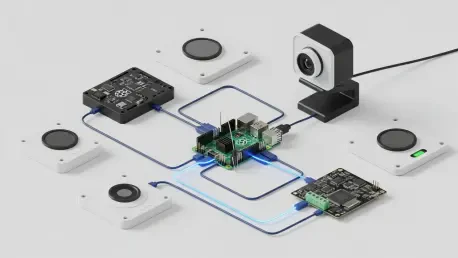
Electronic waste remains a critical environmental issue, yet old USB webcams that are frequently discarded are still perfectly capable of performing advanced motion detection tasks. When these cameras are repurposed by connecting them to a central server or a low-power device like a Raspberry Pi, software such as MotionEyeOS can monitor the video stream for specific changes in pixel data between frames. This visual-based approach often proves more reliable than the inexpensive passive infrared sensors typically found in smart home starter kits. Users can define specific detection zones within the camera’s field of view, ensuring that an alert is only triggered if someone walks through a designated doorway while movement from a swaying tree or a passing car in the background is ignored. This level of granular control allows for a sophisticated security perimeter that is both highly accurate and free of cloud-based vulnerabilities. By keeping the video feed local, users gain visual monitoring without exposing private spaces to external servers.
The retired Android smartphone is perhaps the most versatile “Swiss Army Knife” in the entire ecosystem of repurposed hardware, containing a dense array of high-quality sensors within a single unit. These devices come equipped with accelerometers, gyroscopes, magnetometers, and ambient light sensors, all of which can be integrated into a smart home hub using applications like Tasker or the Home Assistant Companion app. A wall-mounted phone can serve as a permanent light-level sensor that adjusts room brightness based on natural sunlight, or its accelerometer can be used to detect the vibrations of a laundry machine to notify the household when a cycle is finished. Because these smartphones already possess robust Wi-Fi and Bluetooth connectivity, they function as sophisticated, multi-purpose hubs that can replace hundreds of dollars worth of specialized equipment. This transformation saves money and extends the functional life of a device that would otherwise sit in a drawer, providing a level of automation flexibility rarely matched by proprietary hardware.
Tactile Controls and Sustainable Integration
While many automation enthusiasts focus on voice commands or mobile applications, there is an enduring value in tactile, physical controls that video game peripherals can provide at no extra cost. Controllers from older consoles, such as the Nintendo Wii or PlayStation, are designed for extreme durability and offer a wide range of ergonomic inputs that can be mapped to smart home actions through platforms like Node-RED. A discarded Bluetooth gamepad resting on a coffee table provides a discrete and intuitive way to manage a media center, dim the lights for a movie, or adjust window blinds without needing to unlock a phone or speak to a voice assistant. This tactile interface is particularly useful for complex scenes where multiple devices need to be adjusted simultaneously with a single button press. By mapping these physical inputs to specific home states, users can create a “no-look” control system that is more responsive and satisfying to use than modern touchscreens. This creative reuse provides a professional-grade control surface that replaces expensive smart buttons.
The movement toward repurposing existing electronics established a clear alternative to the cycle of constant consumption that defined the early years of the smart home industry. By choosing to investigate the potential of hardware already in their possession, homeowners successfully built systems that were more flexible, secure, and environmentally friendly than those relying on proprietary ecosystems. The transition to this DIY model required a shift in perspective, where “obsolete” was viewed as an opportunity for customization rather than a reason for disposal. Moving forward, the most effective strategy for any aspiring smart home enthusiast involved auditing their current inventory of unused devices before investing in new sensors. This approach proved that the true intelligence of an automated home resided in the ingenuity of its configuration rather than the price tag. By prioritizing local control and creative integration, users took back ownership of their data and environments, extending the functional life of electronics through software innovation.