
The dream of a truly autonomous commercial environment has often been deferred by the sheer technical complexity of merging legacy infrastructure with cutting-edge sensing technology. For years, facility managers have struggled to reconcile the robust but rigid Building Management Systems used for climate control with the flexible, data-rich world of the Internet of Things. This digital divide has created a landscape of siloed information where valuable insights about air quality, occupancy, and energy waste remain trapped in proprietary software environments. However, the recent introduction of the MultiTech Niagara Driver for the Tridium Niagara Framework marks a significant turning point in this evolution. By providing a direct software bridge that allows LoRaWAN sensors to communicate natively within a primary management platform, the industry is witnessing the removal of the final technical barriers to comprehensive building intelligence. This development allows for a seamless flow of data that was previously impossible without expensive custom coding.
Overcoming the Persistent Integration Tax in Facilities
Commercial real estate professionals have long dealt with a hidden cost known as the integration tax, which encompasses the specialized labor and hardware required to make different technologies talk to one another. While traditional building systems rely on hardwired protocols like BACnet or Modbus for essential operations, modern IoT devices utilize wireless networks that operate on entirely different architectural principles. In many current installations, this discrepancy forces property owners to implement complex middleware layers or maintain separate MQTT pipelines just to see sensor data on their main dashboard. Such configurations are inherently fragile; every time a new sensor is added or a device is replaced, the entire data mapping process must be manually updated by a specialist. This creates a significant long-term maintenance burden that discourages many organizations from scaling their smart building initiatives beyond small, isolated pilot programs. The resulting data silos prevent a holistic view of facility performance and hinder the achievement of sustainability goals.
MultiTech addresses these structural inefficiencies by moving the integration logic away from external gateways and placing it directly within the Niagara environment. This architectural shift enables the software to treat every LoRaWAN sensor as a native data point, effectively removing the distinction between a wireless air quality monitor and a hardwired HVAC controller. By eliminating the need for external brokers or proprietary configuration tools, the solution significantly reduces the number of failure points in the system. Technicians can now onboard and manage devices through the same interface they use for daily operations, which streamlines the workflow and ensures data consistency across the enterprise. Furthermore, this normalization of data allows building logic—such as automated alarming and scheduling—to be applied to IoT telemetry using familiar drag-and-drop tools. The result is a unified operational plane that simplifies the digital infrastructure of a facility while drastically lowering the total cost of ownership for advanced sensing deployments.
Bridging the Gap: Operational Technology and Wireless Sensing
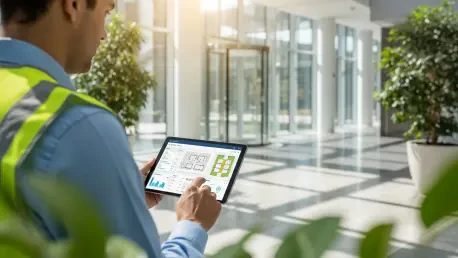
One of the most significant impacts of this integration is the redistribution of technical responsibility from specialized IT departments back to traditional building automation engineers. Historically, the deployment of wireless sensor networks required a deep understanding of network protocols and cloud APIs, which often put these projects out of reach for standard facility management teams. By embedding LoRaWAN management into the Tridium Niagara Framework, the complexity of the wireless network is abstracted away, allowing those who understand the building’s physical systems best to take the lead. This democratization of technology ensures that smart building upgrades are driven by operational needs rather than IT constraints. When building engineers can easily add sensing capabilities for desk occupancy or leak detection without calling for outside consultants, the speed of innovation within a facility increases. This shift represents a broader trend in the Operational Technology sector where software simplicity is becoming the primary driver for technological adoption in the built environment.
The strategic value of a unified management platform extends to all levels of the commercial real estate ecosystem, from system integrators to property owners. For integrators, the ability to offer a repeatable and standardized LoRaWAN solution reduces project risk and labor costs, transforming what was once a bespoke engineering challenge into a scalable service offering. Property owners see a more direct path to return on investment as they can leverage their existing investments in Niagara hardware to gain granular insights into energy usage and tenant comfort. Additionally, IT departments benefit from a simplified security perimeter, as there are fewer external servers and third-party APIs to vet and monitor. Because LoRaWAN technology provides exceptional range and battery life, it serves as an ideal extender for the building management system, reaching into areas where traditional wiring would be cost-prohibitive. This flexibility allows for the rapid expansion of environmental monitoring across large campuses or historical structures without the disruption of major renovations.
Future Directions: Unified Intelligence and Actionable Operations
The industry consensus suggested that interoperability was no longer an optional feature but a fundamental requirement for the next generation of smart buildings. Leadership within the LoRa Alliance identified this type of software integration as a critical catalyst for the widespread adoption of wireless standards in the commercial sector. By making the driver easily accessible through the Tridium Marketplace, MultiTech removed the traditional procurement friction that often stalled digital transformation projects. This move encouraged facility managers to view wireless sensors as a natural extension of their existing toolkit rather than a separate, competing technology. As building codes and sustainability reporting requirements became more stringent through the current decade, the ability to quickly deploy and integrate high-density sensing arrays became a competitive necessity. The successful merging of these two previously siloed ecosystems provided a blueprint for how other emerging technologies could be brought into the fold of centralized management without increasing operational complexity or security risks.
The transition toward a unified building management model was completed when the distinction between traditional automation and modern IoT effectively disappeared. Decision-makers who prioritized architectural simplicity found that they could respond more dynamically to changing tenant needs and environmental regulations. Moving forward, property managers evaluated their current digital infrastructure to identify where the integration tax was draining resources and slowing innovation. Implementing native drivers and standardized communication protocols allowed for a more resilient and adaptable facility that was capable of evolving alongside new sensing technologies. The strategic integration of LoRaWAN into the Niagara Framework proved that the complexity of the Internet of Things was tamed when the technology was designed to behave as a native part of the building’s brain. Ultimately, the industry moved away from fragmented systems in favor of cohesive environments where data served the needs of the occupants and the efficiency of the asset, rather than the limitations of hardware protocols.