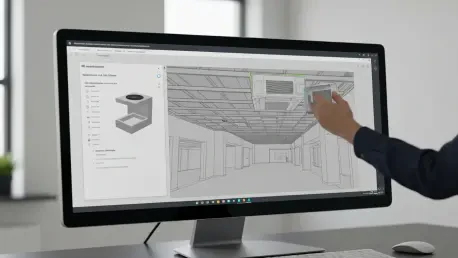

The long-held misconception of Building Information Modelling as merely a sophisticated tool for creating three-dimensional digital blueprints is rapidly dissolving across the construction industry, giving way to a more profound understanding of its role as a fundamental collaborative process. Recent industry data reveals a dramatic evolution in how professionals perceive and utilize this technology, marking a pivotal transition from viewing BIM as a piece of software to embracing it as an essential methodology for managing information throughout a project’s entire lifecycle. This maturation signifies more than just a change in terminology; it reflects a deeper integration of digital workflows into the core fabric of designing, constructing, and operating built assets. The industry is no longer just adopting BIM; it is internalizing its principles, moving the focus from initial implementation to the strategic optimization of established digital frameworks for greater efficiency, collaboration, and commercial success. This widespread shift confirms that digital construction has come of age, establishing a new baseline for best practices.
The Evolution of BIM in Practice
A Paradigm Shift in Professional Perception
The construction sector has undergone a definitive change in its fundamental understanding of Building Information Modelling, moving away from a tool-centric view toward a process-oriented one. A recent study highlights this transformation, showing a remarkable 42% decrease in professionals who define BIM as simply ‘3D models with data.’ This perspective, which was held by a quarter of the industry in 2023, has fallen to just 15% in 2025, a clear indicator that the technology’s identity has evolved beyond its most visible output. This change signals a collective realization that the model itself is not the end goal but rather a component within a much larger, more complex system of information management. This maturing viewpoint encourages stakeholders to look beyond the geometry and appreciate the rich, non-graphical data embedded within the model, which is crucial for everything from cost estimation and scheduling to long-term facility management. The industry is now framing BIM not by the software used to create models, but by the collaborative outcomes it enables across diverse project teams.
This evolving perception is further solidified by a growing alignment with international standards, which provide a common language and framework for digital collaboration. In place of a simple modeling definition, nearly one in three industry professionals now associate BIM with the principles outlined in the BS EN ISO 19650 series of standards, a significant increase from just one in five in the previous year. This indicates a strong movement toward institutionalizing BIM as a structured methodology rather than an informal practice. Adherence to these standards ensures a consistent approach to information management, defining how data is created, shared, and maintained throughout an asset’s lifecycle. It standardizes protocols for collaboration, data security, and information exchange, reducing ambiguity and fostering a more reliable and predictable project environment. This consensus demonstrates that the industry is not just using BIM but is actively seeking to standardize its application to maximize its benefits and ensure that all stakeholders are operating from a shared set of rules and expectations.
From Adoption Metrics to Implementation Quality
For nearly a decade, the rate of Building Information Modelling adoption within the construction industry has remained remarkably consistent, with seven out of ten professionals regularly utilizing it in their projects. This prolonged stability is not a sign of stagnation but rather an indication of market saturation and the successful establishment of BIM as an indispensable digital infrastructure. The era of evangelizing for initial adoption has largely passed, as the technology is now considered a standard component of modern project delivery. As a result, the industry’s collective focus has pivoted from the question of if to use BIM to the more nuanced and critical question of how well it is being implemented. The conversation has advanced beyond basic uptake metrics and now centers on optimizing workflows, improving data quality, and leveraging the full spectrum of capabilities that a mature BIM process offers. This shift marks a new phase of digital maturity, where firms are less concerned with simply having the technology and more focused on extracting its maximum strategic and operational value.
Improving the quality of BIM implementation involves a multifaceted approach that extends far beyond the creation of an accurate 3D model. It demands a rigorous focus on the “Information” component of the acronym, ensuring that the data embedded within models is structured, consistent, and useful for various applications throughout the project lifecycle. High-quality implementation means achieving seamless interoperability between different software platforms used by architects, engineers, and contractors, preventing data loss or corruption during information exchanges. It also involves establishing robust data governance protocols to maintain the integrity of the single source of truth that BIM provides. The strategic advantages of this focus are immense, enabling advanced applications such as 4D scheduling, 5D cost estimation, and lifecycle analysis for facility management. By concentrating on the quality and depth of implementation, the industry is unlocking a new tier of efficiencies, enhancing collaboration, and making more informed, data-driven decisions from the initial design concept through to demolition.
The Commercial Imperative of Digital Integration
The Supply Chain as a Catalyst for Change
The commercial significance of Building Information Modelling has been cemented by its widespread adoption throughout the construction supply chain, particularly among manufacturers. There has been a substantial increase in support from this segment, with nearly three-quarters (73%) of manufacturers now providing BIM objects or digital product data for at least some of their offerings. This represents a significant jump from 56% in 2023, signaling a crucial tipping point where digital product information is becoming the market standard. This trend is driven by clear commercial demand; architects, engineers, and contractors increasingly specify products that can be easily integrated into their digital models. Providing high-quality, data-rich BIM objects is no longer a value-added service but a competitive necessity. Manufacturers recognize that being “BIM-ready” is essential for gaining visibility in the design phase, streamlining the specification process, and ultimately securing sales. This integration of the supply chain transforms BIM from an internal design and construction process into a comprehensive, interconnected commercial ecosystem.
The momentum behind this integration shows no signs of slowing, underscoring its long-term impact on the industry. Looking ahead, an additional 16% of manufacturers have stated their intention to begin providing BIM objects within the next three years, which will bring the total to nearly 90% of the supply chain. This forward-looking commitment indicates a widespread acknowledgment that digital assets are as critical as physical products in today’s market. This proliferation of manufacturer-specific data creates a virtuous cycle: as more high-quality, standardized BIM objects become available, design models become more accurate and detailed. This, in turn, enhances the value of the BIM process for contractors and owners, further increasing the demand for such digital content. Consequently, BIM’s role as a vital commercial tool is solidified, directly connecting design decisions with procurement and solidifying its position as a central pillar of the industry’s digital and commercial future.
Unlocking Strategic Business Advantages
With a mature understanding of its principles, stable adoption rates, and robust supply chain integration, Building Information Modelling has transcended its operational roots to become a powerful platform for strategic business intelligence. The consistent, structured data generated through a well-implemented BIM process offers far more than just project-level efficiencies. Companies are now leveraging this information to inform broader business strategies, from more accurate and competitive bidding to enhanced risk management. By analyzing data from past projects, firms can identify patterns, refine cost estimates, and better predict potential challenges, leading to more profitable and successful outcomes. Furthermore, the detailed information within a BIM model provides a clear and verifiable record of a project’s development, which is invaluable for demonstrating compliance with regulations and contractual obligations. This elevates BIM from a project management tool to a corporate asset that directly supports a company’s financial health, operational resilience, and long-term market position.
The industry’s journey with Building Information Modelling culminated in a crucial transformation that unlocked unprecedented value. By moving past the initial definition of BIM as a technology and embracing it as a comprehensive, information-centric process, firms established a new foundation for project delivery. This evolution was not merely semantic; it represented a fundamental shift in mindset that prioritized collaborative workflows and data integrity over isolated digital tasks. This mature approach enabled the construction sector to realize the full potential of digital construction, turning theoretical advantages into tangible commercial successes. The consistent data and standardized procedures fostered by this process-driven methodology ultimately underpinned more intelligent decision-making, improved project predictability, and created a more integrated and efficient ecosystem for building the future.