
As global urban populations continue to swell at an unprecedented rate, a critical question emerges: how can our cities possibly grow without buckling under the immense strain on resources and infrastructure? The answer may very well lie within the evolution of our most fundamental structures, transforming them from passive, resource-intensive buildings into what is now being termed “Smart Buildings 2.0.” This new generation of infrastructure moves far beyond simple automation, leveraging a sophisticated, interconnected network of sensors, artificial intelligence (AI), and the Internet of Things (IoT) to create dynamic ecosystems that effectively “think.” These buildings are designed to anticipate human needs, predict systemic failures before they occur, and adapt to changing environmental conditions in real time, positioning themselves not just as shelters, but as essential, active components for a truly sustainable and livable urban future.
The Blueprint for Urban Resilience
From Energy Hogs to Intelligent Hubs
A primary driver for this architectural evolution is the urgent and undeniable need for greater efficiency in resource management. With buildings accounting for approximately 30% of global energy consumption according to the International Energy Agency, smart systems offer a direct and powerful solution. They can slash energy usage by an impressive 20-30% through dynamic technologies like adaptive lighting, which automatically dims or switches off in empty rooms, and intelligent HVAC systems that respond to real-time occupancy levels and external weather data, thereby eliminating the bloated utility bills characteristic of conventional infrastructure. Furthermore, these intelligent buildings are revolutionizing operational protocols by shifting the paradigm from a reactive maintenance model—fixing things only after they break—to a proactive, predictive one. Sophisticated AI algorithms continuously analyze vast data streams from embedded sensors to identify subtle patterns that precede system failures, allowing maintenance teams to address a “finicky heater” or a potential water leak long before it escalates into a costly and disruptive emergency. This predictive capability can trim operational downtime by as much as half, translating into significant savings and vastly improved reliability.
The Technology Powering the Transformation
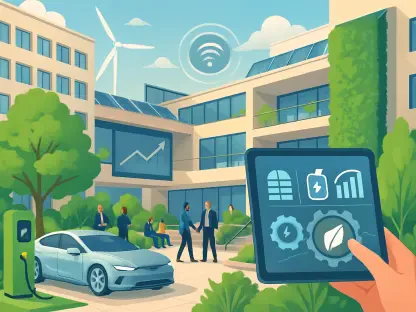
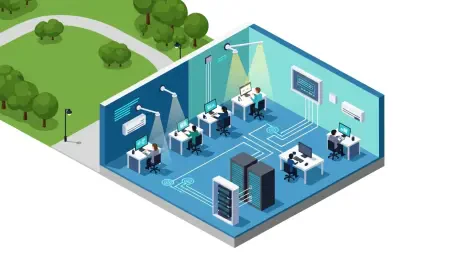
This profound intelligence is not magic; it is built upon a powerful and increasingly accessible technological backbone that functions much like a biological organism. Innumerable sensors act as the building’s distributed nervous system, gathering constant, granular data on everything from ambient temperature and air quality to human occupancy and light levels. Artificial intelligence and machine learning algorithms serve as the centralized brain, processing this torrent of information to identify trends, make autonomous decisions, and learn over time to refine performance. This core is supported by integrated Building Management Systems (BMS), which act as the central command unit to orchestrate disparate systems—like HVAC, security, elevators, and lighting—into a single, cohesive, and responsive whole. High-speed 5G connectivity provides the low-latency network required for seamless communication between thousands of devices. Perhaps one of the most transformative innovations in this space is the “digital twin”—a meticulously detailed virtual replica of the physical building. This simulation tool allows owners and managers to test upgrades, model energy consumption scenarios, and run complex “what-if” analyses without the cost or risk of physical implementation, optimizing performance to its absolute peak before a single physical change is made.
More Than Just Bricks and Mortar
A Human-Centric and Profitable Revolution
Beyond the significant operational gains and energy savings, smart buildings deliver profound human-centric benefits that redefine the occupant experience. By continuously monitoring indoor air quality for pollutants like CO2 and volatile organic compounds, these buildings can automatically increase ventilation rates to create healthier and more breathable environments, which has been directly linked to improved cognitive function and well-being. They also enhance comfort and productivity by tailoring lighting and temperature to individual presence and stated preferences, eliminating the “one-size-fits-all” approach that often leaves occupants too hot or too cold. Importantly, this evolution is not merely a green initiative but a financially sound one. Despite the initial upfront costs associated with retrofitting or new construction, a comprehensive report from Deloitte suggests a remarkably rapid payback period of just three to five years. This positions the investment as a strategic business decision that quickly transforms a capital expenditure into a long-term source of operational savings and increased asset value, making the adoption of smart technology a compelling proposition for property owners and developers alike.
Global Icons Leading the Charge
This forward-looking vision is not a distant, futuristic concept; it is already a functioning reality, embodied in landmark structures around the globe that serve as powerful proof-of-concept. Amsterdam’s The Edge, often cited as the world’s smartest building, utilizes an astonishing 28,000 sensors to manage its environment, achieving a 98% green rating from BREEAM and slashing its power consumption by over 70% compared to conventional office towers. In New York, the iconic Empire State Building demonstrates the immense viability of retrofitting older structures, having successfully cut its annual energy use by 38% through a series of smart upgrades. This is a truly global trend, further exemplified by the predictive mechanical maintenance systems in Dubai’s Burj Khalifa, which preempt failures in critical systems, and the hyper-connected, fully integrated infrastructure of Singapore’s Capital Tower, which has earned green platinum status for its efficiency. These high-profile case studies provide definitive and inspiring proof that smart building technology is a scalable, effective, and globally applicable solution for the challenges of modern urbanization.
Navigating the Hurdles to a Smarter Future
The path toward a universally smarter urban landscape, however, is not without its significant challenges that require careful consideration and proactive solutions. The vast quantities of granular data collected by these buildings—from occupancy patterns to personal temperature preferences—raise legitimate privacy concerns, demanding robust, GDPR-style governance, transparent data-use policies, and end-to-end encryption to build and maintain public trust. As highly connected digital assets, these buildings also become attractive potential targets for sophisticated cyberattacks, which could disrupt essential services or compromise sensitive information. This necessitates a “secure smarter than you build” approach, embedding zero-trust architectures, regular security audits, and continuous threat monitoring into the very foundation of the building’s design. Finally, high initial implementation costs and the inherent complexity of integrating cutting-edge technology into aging, legacy structures remain significant practical barriers for many property owners. Overcoming these hurdles will often require pragmatic strategies such as phased rollouts, government incentives, and smaller-scale pilot projects to demonstrate value and de-risk the investment.