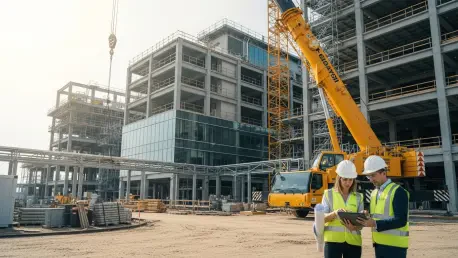

The industrial landscape of Port Talbot is currently undergoing a significant transformation as construction officially commences on a specialized facility designed to redefine how heavy manufacturing operates within a carbon-constrained world. This £28 million project, known as the South Wales Industrial Transition from Carbon Hub (SWITCH), is being developed by Morgan Sindall on a strategic brownfield site at Harbourside. By focusing on the energy-intensive steel and metals sectors, the hub aims to bridge the gap between theoretical research and practical industrial application. It functions as an open-access innovation center where academic researchers, government officials, and industrial leaders work in tandem to accelerate the adoption of low-carbon processes. This initiative is not merely a local construction project; it is a critical component of the national strategy to achieve net-zero ambitions through the implementation of circular economy models and cutting-edge metallurgical science that addresses the urgent need for sustainable production methods.
Specialized Infrastructure and Collaborative Innovation
The physical layout of the SWITCH facility is meticulously planned to support a diverse range of technical activities, including mechanical testing zones, advanced welding workshops, and specialized laboratories. Beyond these technical spaces, the hub provides modern office environments designed to facilitate the constant exchange of ideas between research teams and their industrial partners. This integrated approach ensures that technological breakthroughs in clean steel production do not remain confined to academic papers but are tested and scaled in real-world scenarios. This facility serves as a cornerstone for a broader regional investment program exceeding £100 million, which targets emerging sectors like offshore wind and hydrogen energy. By locating these resources in a single collaborative environment, the project effectively reduces the barriers to entry for companies seeking to modernize their operations. This synergy between various engineering disciplines and policy frameworks is essential for maintaining the competitive edge of the regional industrial base while simultaneously reducing its total environmental footprint.
Strategic Pathways for Industrial Revitalization
The establishment of the SWITCH hub provided a clear roadmap for other industrial regions to follow when addressing the complex requirements of the green transition. Stakeholders recognized that long-term economic prosperity depended on the successful integration of high-level professional skills development and localized job creation. By positioning Port Talbot as a premier center for clean industrial growth, the project demonstrated how traditional manufacturing hubs could be successfully revitalized through targeted research-led innovation. Practical pathways for heavy industry were established, allowing companies to transition toward sustainable models without sacrificing global competitiveness. Future considerations focused on expanding these collaborative frameworks to include emerging renewable energy technologies and carbon capture systems. The success of this facility offered a template for international cooperation, proving that industrial decarbonization required a unified front. Moving forward, the emphasis shifted toward ensuring that the technical expertise gained at the hub was shared across other global markets.