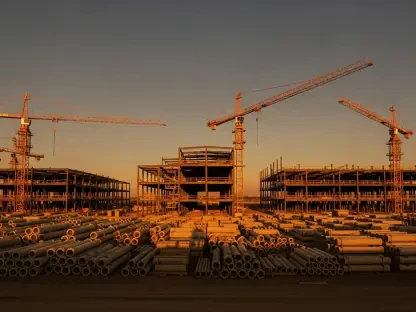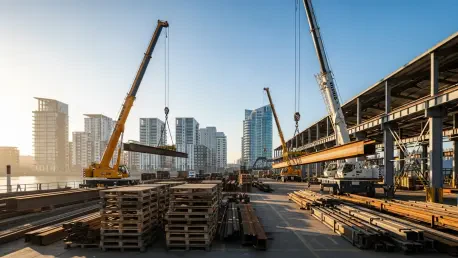

The transformation of London’s skyline has reached a pivotal turning point with the official opening of the United Kingdom’s first Circular Construction Hub in the historic Royal Docks. This groundbreaking facility represents the initial phase of a visionary “Circular Economy Village” in the London Borough of Newham, signaling a decisive move toward the city’s goal of reaching net-zero carbon emissions by 2030. Championed by the Mayor of London, Sadiq Khan, in a close partnership with the Mayor of Newham, Rokhsana Fiaz, and the charity Tipping Point East, the hub functions as a catalyst for a new era of urban metabolism. By reimagining how building materials are sourced and managed, the initiative positions the British capital as a preeminent global leader in green industrial innovation. It is not merely a localized endeavor but a scalable prototype designed to become the largest facility of its kind across Europe, effectively setting a new standard for how metropolitan areas balance rapid development with necessary environmental stewardship in the current landscape.
Revolutionizing Resource Management and Urban Growth
Mitigating Environmental Impact Through Circularity
The traditional construction industry has long operated on a linear model that prioritized speed and cost over long-term sustainability, leading to a massive environmental toll. Within the United Kingdom, the construction, demolition, and excavation sector remains the primary contributor to the nation’s waste stream, accounting for approximately 62 percent of total waste and generating over 100 million tons of debris annually. Despite advancements in standard recycling practices, millions of tons of high-value materials are still diverted to landfills each year, where they degrade local ecosystems and exacerbate the depletion of finite natural resources. The new hub disrupts this cycle by functioning as a sophisticated recovery center where materials are captured, meticulously refurbished, and reintegrated into the active supply chain. By prioritizing the reuse of “embodied carbon” already present in existing structures, the facility is projected to divert at least 950 tons of material from landfills over its initial five-year operational period.
Transitioning to a circular framework requires more than just logistical changes; it demands a fundamental shift in how developers perceive waste as a potential resource. The facility in the Royal Docks provides the necessary physical infrastructure to facilitate this transition, offering a centralized location for the sorting and processing of timber, steel, and aggregates. This systemic approach ensures that materials maintain their highest value for as long as possible, reducing the demand for virgin raw materials and the energy-intensive processes required to produce them. Furthermore, by localizing the supply of reclaimed building components, the hub significantly lowers the carbon emissions associated with the transport and logistics of heavy construction goods. This model demonstrates that ecological preservation is not a hindrance to industrial progress but rather a necessary evolution that enhances the resilience of the urban built environment while addressing the urgent climate pressures facing global cities today.
Strategic Redevelopment and Housing Solutions
The selection of the Royal Docks as the site for this pioneering facility was a deliberate strategic choice rooted in the area’s unique industrial heritage and its current status as a focal point for massive urban regeneration. As one of London’s most significant development corridors, the region is currently slated to deliver approximately 36,000 new homes and 55,000 jobs, creating a high-demand environment for sustainable building solutions. The hub is perfectly positioned to serve as a primary resource for these large-scale projects, ensuring that the growth of East London does not come at the expense of the environment. A prime example of this synergy is found in the Silvertown development, a major project led by Lendlease with support from the Crown Estate and the local council. This particular development is designed to provide 7,000 new residences, with a strong commitment to ensuring that at least 30 percent of these units are designated as affordable housing for the community.
Integrating circularity into housing projects of this scale provides a practical solution to the dual challenges of the housing crisis and the climate emergency. By utilizing reclaimed materials and innovative modular construction techniques facilitated by the hub, developers can meet increasingly stringent environmental standards without compromising on the quality or volume of new builds. This approach allows for the creation of high-density residential areas that are inherently low-carbon, paving the way for a future where urban living is synonymous with sustainability. The proximity of the hub to major development sites in the Royal Docks also fosters a closed-loop system where waste from one construction site can be processed and utilized in another project just a few miles away. This localized efficiency serves as a blueprint for other global cities looking to densify their populations while simultaneously drastically reducing their overall ecological footprint through smarter resource allocation.
Aligning Policy, Education, and Social Equity
Strengthening Regulatory Frameworks and Green Skills
London’s commitment to circularity is deeply embedded in its overarching planning policies, specifically within the strategic framework known as the London Plan. These regulations now mandate that all major development applications include a detailed circular economy statement, demonstrating how the project will minimize waste and maximize the reuse of existing materials from the outset. The Circular Construction Hub provides the essential physical infrastructure that allows developers to comply with these rigorous policy requirements in a practical and cost-effective manner. Beyond the regulatory aspect, the initiative is bolstered by a strong focus on human capital through the Mayor’s Green Skills Academy. This educational arm is tasked with training the local workforce in specialized areas such as high-tech retrofitting, deconstruction techniques, and sustainable material management. By aligning vocational training with the needs of the emerging green economy, the city is effectively future-proofing its labor market.
Addressing the long-standing labor shortages in the construction sector requires a modern approach that appeals to a new generation of workers interested in environmental impact. The Green Skills Academy ensures that residents are not just bystanders in the green transition but active participants who possess the expertise required for 21st-century building practices. This integration of education and industry creates a self-sustaining ecosystem where the demand for circular construction is met by a highly skilled local workforce. Furthermore, the specialized nature of these roles often leads to higher-quality employment opportunities and better long-term career prospects compared to traditional construction labor. As the hub scales its operations to become a larger Circular Economy Village, the demand for these specialized skills will only increase, further cementing the link between environmental policy and economic opportunity. This holistic strategy ensures that the infrastructure for a net-zero city is supported by the social and intellectual infrastructure necessary for its success.
Promoting a Just Transition for Local Communities
The leadership behind the Royal Docks initiative has consistently emphasized the importance of a “Just Transition,” a concept that ensures the move toward a sustainable economy is inclusive and equitable. Mayor Rokhsana Fiaz has highlighted that this project is about more than just carbon reduction; it is about creating tangible benefits for the people of Newham and the wider East London community. By embedding circular processes directly into the local industrial landscape, the project generates accessible career paths and fosters social mobility within areas that have historically faced economic challenges. The hub serves as a practical manifestation of the idea that green growth can be a powerful engine for social equity, providing high-quality jobs that contribute to the collective well-being of the city. This community-centric approach helps to build public trust and support for ambitious climate policies, as residents can see the direct positive impact on their local economy and environment.
The facility also functions as a radical “Climate Futures” center, as described by George Massoud of Tipping Point East, where the theory of material reuse is translated into large-scale industrial reality. It provides a space where researchers, architects, and community members can collaborate on new ways to handle urban resources, turning the hub into a center for social and technical innovation. This collaborative environment ensures that the transition to a circular economy is a shared journey involving diverse stakeholders rather than a top-down mandate. By demonstrating that material reuse can work at an industrial scale while providing social value, the hub proves that the path to net-zero can also be a path to a fairer society. The success of this model in the Royal Docks suggests that the most effective climate solutions are those that are deeply rooted in the needs and aspirations of the local population, ensuring that the green revolution is a benefit for all.
Establishing a Global Blueprint for Resilient Cities
The establishment of the Circular Construction Hub in the Royal Docks successfully demonstrated how metropolitan areas could integrate advanced logistics with social equity to solve the environmental crises inherent in modern development. This initiative proved that the “take-make-waste” model was no longer a viable or necessary path for urban growth, provided that government and private sectors collaborated on shared infrastructure. By transforming construction debris into a valuable asset, the project secured a sustainable supply chain for the thousands of new homes required to meet London’s housing targets. The hub also established a replicable framework for other international cities, showing that localized material recovery could significantly reduce a city’s carbon footprint while simultaneously stimulating the local economy. It underscored the fact that the transition to a zero-carbon future required physical hubs where the abstract goals of climate policy could be turned into practical, everyday industrial activities.
Moving forward, the lessons learned from the initial phases of the hub’s operation offered clear actionable steps for global policymakers and urban planners. The integration of the Green Skills Academy showed that workforce development must happen in tandem with technological investment to prevent labor bottlenecks in the green sector. Additionally, the project highlighted that successful circularity required a shift in procurement standards, where the use of reclaimed materials became the default rather than the exception. Future urban centers must prioritize the creation of similar regional hubs to manage the massive material flows generated by constant renovation and building. As the Royal Docks facility expanded into a full-scale Circular Economy Village, it provided the essential data and proof-of-concept needed to attract further private investment into sustainable infrastructure. The project ultimately showed that the path toward ecological regeneration was through innovation, equity, and a fundamental respect for the value of the materials that build our world.