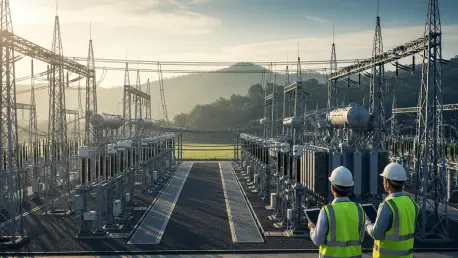

The massive $1 trillion infrastructure deficit currently facing the nation stands as a stark testament to years of inefficient planning and chronic underinvestment in the very systems that sustain modern economic life. Although the country has historically outpaced most OECD counterparts in terms of raw public infrastructure expenditure, the actual return on these investments remains significantly lower than global standards. This efficiency gap has created a paradox where high spending fails to translate into high-quality public assets, leaving a substantial portion of the national portfolio in a state of advanced decay. Infrastructure New Zealand’s latest manifesto identifies that the core of this crisis lies not in the availability of capital but in the fragmented and politicized nature of the project pipeline. For decades, the lack of a coherent long-term strategy has forced engineers and planners to work within a reactive framework that prioritizes short-term political wins over sustainable growth.
Policy Framework: Establishing Long-Term Stability and Standards
The prevailing culture of stop-start project cycles has fundamentally undermined the stability of the local construction sector for a quarter of a century. Whenever a new administration takes office, existing priorities are often scrapped or delayed, leading to massive wasted costs in planning and design. To resolve this instability, the manifesto proposes a National Economic Growth Strategy coupled with a mandatory 12-year funded infrastructure program. This initiative would require an amendment to the Public Finance Act to allow for a decade-long funding envelope that remains insulated from the usual three-year electoral volatility. By creating a predictable roadmap, the government can finally provide the private sector with the confidence needed to invest in specialized machinery and workforce development. Without this certainty, firms are hesitant to commit to long-term hiring or technological upgrades, which keeps productivity stagnant across the entire industry.
Professionalism in asset management has reached a critical low point compared to international peers, with current renewals for state highways falling well below their annual depreciation values. More than half of the nation’s public infrastructure is now approaching the end of its intended operational lifespan, yet there is no unified plan for their systematic renewal or decommission. The proposed solution involves the creation of a $100 million capability fund designed to upskill local authorities and government agencies in modern maintenance techniques. Legislative mandates would also be introduced to ensure that the preservation of existing assets takes precedence over the ribbon-cutting ceremonies associated with new developments. This shift toward resilience planning acknowledges that maintaining current networks is far more cost-effective than allowing them to fail and rebuilding from scratch. It represents a fundamental move toward a stewardship model rather than acquisition.
Financial Innovation: Reforming Funding Mechanisms and Delivery Models
Relying solely on the traditional tax base to fund massive capital works is no longer a viable strategy in a modern economy facing rapid urbanization and aging demographics. The manifesto advocates for the establishment of a Growth Infrastructure Fund, which would be managed by an autonomous entity to protect it from being diverted toward general government spending. This fund would champion the concept of asset recycling, where mature public assets are sold or leased to private investors, with the proceeds immediately reinvested into new, high-priority projects. Public-private partnerships would also be leveraged more aggressively to bring in external expertise and share the financial risks associated with complex developments. By diversifying the capital base, the nation can ensure that critical infrastructure projects proceed even during periods of fiscal constraint. This approach ensures that the debt burden is spread more equitably across the generations that will benefit from the assets.
The current landscape of project delivery is marred by a fragmented procurement process that leads to inconsistent quality and inflated costs for taxpayers. A centralized procurement agency would be established to handle all large-scale projects, allowing for better benchmarking and performance evaluation across the board. This agency would also work to reform local government finances by providing councils with new fiscal tools to manage regional growth. For instance, allowing local authorities to retain a portion of the construction-related tax revenue generated within their borders would incentivize them to support new developments. Additionally, the implementation of congestion charging in major urban centers would provide a dual benefit: managing traffic flow and generating a dedicated revenue stream for local transport improvements. These reforms seek to empower local leaders with the financial autonomy required to address the specific needs of their communities without total reliance on central government.
Oversight Systems: Securing Essential Utilities and Accountability
Water and energy systems are currently facing an investment requirement totaling hundreds of billions of dollars to meet future demand and environmental standards. The manifesto stresses the urgency of appointing technical leadership to provide dedicated stewardship over the nation’s water infrastructure. This oversight is necessary to bridge the gap between current operational failures and the high-quality services required for public health and environmental protection. In the energy sector, reforms to the Commerce Act are proposed to allow for investment ahead of demand in the national power grid. Current regulations often restrict utilities from upgrading capacity until a clear need is demonstrated, which creates bottlenecks for rapid electrification and hinders progress toward decarbonization goals. By shifting the regulatory focus toward proactive investment, the energy sector can facilitate a smoother transition to renewable sources. This strategic foresight is essential to prevent power shortages as the economy moves away.
The implementation of this systemic reform roadmap required a rigorous accountability framework to ensure that promised changes resulted in tangible improvements. Progress reports were scheduled for publication at specific intervals throughout the parliamentary term, providing a transparent mechanism for monitoring the performance of government agencies. These documents offered a detailed analysis of whether the proposed funding shifts and legislative amendments were meeting their intended targets for efficiency and resilience. Strategic leaders focused on the necessity of prioritizing national stability over the short-term incentives that often dictated political decision-making in the past. By establishing these clear benchmarks, the government provided a pathway for the construction sector to align its long-term investments with public policy objectives. The shift toward a unified procurement model and diversified funding sources established a foundation for a more resilient and productive national infrastructure system.