
A quiet but powerful transformation is taking root across the nation, not in the high-stakes world of global energy conglomerates but within the walls of local libraries, the foundations of private homes, and the collaborative planning sessions of neighboring towns. This grassroots movement is reshaping how Americans think about and consume energy, demonstrating a collective pivot towards sustainability, efficiency, and self-reliance. Communities and individuals are no longer passive consumers but active architects of their own energy destinies, implementing a diverse array of strategies that range from straightforward equipment upgrades to sophisticated renewable energy installations. While the initial steps often require an investment, the proven long-term financial savings and profound environmental benefits are creating an undeniable case for change, paving a clear and actionable path toward a more resilient and secure energy landscape for generations to come.
Practical Pathways to Power Savings
The Power of Efficiency
The journey toward a sustainable energy future often begins with the most logical and accessible step: eliminating waste. At the Meadville Public Library in western Pennsylvania, a thorough energy audit became a hunt for so-called “energy vampires”—appliances that stealthily consume excessive power. The primary culprits were two aging, inefficient dehumidifiers that were silently costing the library hundreds of dollars every month in electricity bills. The solution was not a complex, multi-million-dollar overhaul but a simple, targeted replacement. By substituting the two outdated units with a single, modern, and far more efficient small cube dehumidifier, the library achieved immediate and significant monthly savings. This experience serves as a powerful testament to the impact of energy auditing. It illustrates that for many community institutions, the most effective initial action is to first identify and then eradicate sources of energy waste, a strategy that requires minimal upfront investment but yields substantial and immediate financial returns, freeing up crucial funds for core public services.
This principle of “efficiency first” extends far beyond a single library and represents a foundational strategy for community-wide energy management. For countless public buildings, commercial properties, and private residences, significant savings are locked away in outdated infrastructure. Inefficient heating, ventilation, and air conditioning (HVAC) systems, poor insulation, single-pane windows, and antiquated lighting all contribute to a continuous and unnecessary financial drain. By conducting comprehensive energy audits, communities can create a strategic roadmap for upgrades, prioritizing the changes that offer the greatest return on investment. Replacing fluorescent lighting with modern LEDs, sealing air leaks in building envelopes, and upgrading to high-efficiency HVAC units can collectively slash energy consumption by a significant margin. This proactive approach does more than just lower utility bills; it enhances the comfort and health of building occupants, reduces maintenance costs on aging equipment, and fortifies the community against the volatility of future energy price hikes, making it a cornerstone of smart, resilient civic planning.
Harnessing Renewable Resources
As communities gain control over their energy consumption through efficiency, many are taking the next step by generating their own clean power. In Daleville, the presence of solar panels near the First Baptist Church is a clear visual marker of this shift, symbolizing the integration of renewable energy into the very fabric of the community. This move toward decentralized power generation reduces reliance on a distant, centralized grid and the fossil fuels that power it. It is a tangible commitment to a cleaner environment and greater energy independence. The choice to install solar panels in such a public and central location sends a powerful message, inspiring other residents and organizations to consider their own potential for renewable energy production. It transforms a community landmark into a beacon of progress, demonstrating that the transition to sustainable energy is not an abstract concept but a practical and achievable goal that can be realized right in one’s own neighborhood, contributing to both local resilience and global climate solutions.
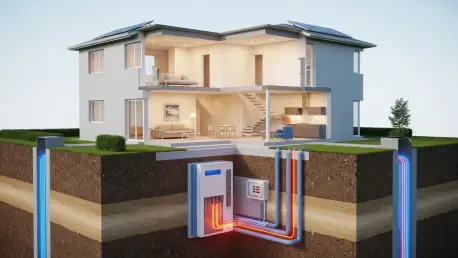
This transition to self-sufficient, clean energy is also taking place on a deeply personal level, as exemplified by the forward-thinking investment of Tony Filipovitch and Kathy Brynaert in west Mankato. Sixteen years ago, they installed a geothermal system in their home, a technology that harnesses the Earth’s constant subterranean temperature. Their system utilizes five wells, each drilled 150 feet deep, where the ground remains a stable 55 degrees Fahrenheit year-round. Air is drawn from this depth, piped into a heat exchange unit in their basement, and then efficiently warmed to a comfortable 75 degrees for distribution throughout the house. While the initial installation cost was substantial, the couple confirms that over the system’s lifespan, it has proven to be more economical than a conventional furnace. Furthermore, they note that the technology has advanced significantly since their installation; modern heat exchange units are now more affordable, more efficient, and better designed to perform in colder climates, making geothermal a more viable and compelling option for homeowners today than ever before.
Building a Resilient Future Together
The Strength of Strategic Collaboration
The most ambitious and impactful energy initiatives are often those that recognize that climate and energy challenges do not adhere to municipal boundaries. In Massachusetts, an innovative partnership exemplifies this forward-thinking approach. Neal Duffy, the director of sustainability and resilience for the city of Salem, is spearheading the “Resilient Together” initiative, a landmark collaboration with the neighboring city of Beverly. This joint effort moves beyond isolated, city-specific projects to create a unified regional climate action plan. By pooling their resources, sharing critical data, and combining their expertise, the two cities can address shared vulnerabilities, such as rising sea levels or grid instability, with a much more comprehensive and effective strategy. This model of inter-community collaboration allows for the development of larger-scale solutions that would be out of reach for a single municipality, fostering a more robust and resilient region prepared to face future environmental challenges together.
Such collaborative frameworks represent a critical evolution in how communities approach sustainability and resilience planning. Instead of competing for limited grants or developing redundant programs, cities like Salem and Beverly are creating a blueprint for regional cooperation that maximizes impact and efficiency. This approach allows for strategic planning on a broader scale, such as coordinating green infrastructure projects across watersheds, developing regional renewable energy purchasing agreements to lower costs, or creating unified emergency response plans for climate-related events. By working in tandem, communities can leverage their collective strengths, share the financial burden of large-scale investments, and ensure that their individual actions contribute to a cohesive and powerful regional vision. This shift from isolated efforts to integrated, collaborative action is essential for building a truly sustainable and resilient future that benefits all residents across an entire geographic area.
A New Chapter in Energy Stewardship
The proactive steps taken in places like Meadville, Daleville, Mankato, and Salem collectively paint a clear picture of a decentralized energy revolution. They reveal that the path to a sustainable future is not a single, monolithic solution but a dynamic mosaic of interconnected strategies. Through a combined focus on aggressive energy efficiency, investment in localized renewable generation, and the formation of strategic regional partnerships, these communities have fundamentally altered their relationship with energy. They have moved from being passive consumers at the mercy of a distant grid to becoming active stewards of their own resources, building a more secure, affordable, and environmentally responsible energy landscape from the ground up and proving that meaningful change can begin in the heart of any community.Fixed version:
A quiet but powerful transformation is taking root across the nation, not in the high-stakes world of global energy conglomerates but within the walls of local libraries, the foundations of private homes, and the collaborative planning sessions of neighboring towns. This grassroots movement is reshaping how Americans think about and consume energy, demonstrating a collective pivot towards sustainability, efficiency, and self-reliance. Communities and individuals are no longer passive consumers but active architects of their own energy destinies, implementing a diverse array of strategies that range from straightforward equipment upgrades to sophisticated renewable energy installations. While the initial steps often require an investment, the proven long-term financial savings and profound environmental benefits are creating an undeniable case for change, paving a clear and actionable path toward a more resilient and secure energy landscape for generations to come.
Practical Pathways to Power Savings
The Power of Efficiency
The journey toward a sustainable energy future often begins with the most logical and accessible step: eliminating waste. At the Meadville Public Library in western Pennsylvania, a thorough energy audit became a hunt for so-called “energy vampires”—appliances that stealthily consume excessive power. The primary culprits were two aging, inefficient dehumidifiers that were silently costing the library hundreds of dollars every month in electricity bills. The solution was not a complex, multi-million-dollar overhaul but a simple, targeted replacement. By substituting the two outdated units with a single, modern, and far more efficient small cube dehumidifier, the library achieved immediate and significant monthly savings. This experience serves as a powerful testament to the impact of energy auditing. It illustrates that for many community institutions, the most effective initial action is to first identify and then eradicate sources of energy waste, a strategy that requires minimal upfront investment but yields substantial and immediate financial returns, freeing up crucial funds for core public services.
This principle of “efficiency first” extends far beyond a single library and represents a foundational strategy for community-wide energy management. For countless public buildings, commercial properties, and private residences, significant savings are locked away in outdated infrastructure. Inefficient heating, ventilation, and air conditioning (HVAC) systems, poor insulation, single-pane windows, and antiquated lighting all contribute to a continuous and unnecessary financial drain. By conducting comprehensive energy audits, communities can create a strategic roadmap for upgrades, prioritizing the changes that offer the greatest return on investment. Replacing fluorescent lighting with modern LEDs, sealing air leaks in building envelopes, and upgrading to high-efficiency HVAC units can collectively slash energy consumption by a significant margin. This proactive approach does more than just lower utility bills; it enhances the comfort and health of building occupants, reduces maintenance costs on aging equipment, and fortifies the community against the volatility of future energy price hikes, making it a cornerstone of smart, resilient civic planning.
Harnessing Renewable Resources
As communities gain control over their energy consumption through efficiency, many are taking the next step by generating their own clean power. In Daleville, the presence of solar panels near the First Baptist Church is a clear visual marker of this shift, symbolizing the integration of renewable energy into the very fabric of the community. This move toward decentralized power generation reduces reliance on a distant, centralized grid and the fossil fuels that power it. It is a tangible commitment to a cleaner environment and greater energy independence. The choice to install solar panels in such a public and central location sends a powerful message, inspiring other residents and organizations to consider their own potential for renewable energy production. It transforms a community landmark into a beacon of progress, demonstrating that the transition to sustainable energy is not an abstract concept but a practical and achievable goal that can be realized right in one’s own neighborhood, contributing to both local resilience and global climate solutions.
This transition to self-sufficient, clean energy is also taking place on a deeply personal level, as exemplified by the forward-thinking investment of Tony Filipovitch and Kathy Brynaert in west Mankato. Sixteen years ago, they installed a geothermal system in their home, a technology that harnesses the Earth’s constant subterranean temperature. Their system utilizes five wells, each drilled 150 feet deep, where the ground remains a stable 55 degrees Fahrenheit year-round. Air is drawn from this depth, piped into a heat exchange unit in their basement, and then efficiently warmed to a comfortable 75 degrees for distribution throughout the house. While the initial installation cost was substantial, the couple confirms that over the system’s lifespan, it has proven to be more economical than a conventional furnace. Furthermore, they note that the technology has advanced significantly since their installation; modern heat exchange units are now more affordable, more efficient, and better designed to perform in colder climates, making geothermal a more viable and compelling option for homeowners today than ever before.
Building a Resilient Future Together
The Strength of Strategic Collaboration
The most ambitious and impactful energy initiatives are often those that recognize that climate and energy challenges do not adhere to municipal boundaries. In Massachusetts, an innovative partnership exemplifies this forward-thinking approach. Neal Duffy, the director of sustainability and resilience for the city of Salem, is spearheading the “Resilient Together” initiative, a landmark collaboration with the neighboring city of Beverly. This joint effort moves beyond isolated, city-specific projects to create a unified regional climate action plan. By pooling their resources, sharing critical data, and combining their expertise, the two cities can address shared vulnerabilities, such as rising sea levels or grid instability, with a much more comprehensive and effective strategy. This model of inter-community collaboration allows for the development of larger-scale solutions that would be out of reach for a single municipality, fostering a more robust and resilient region prepared to face future environmental challenges together.
Such collaborative frameworks represent a critical evolution in how communities approach sustainability and resilience planning. Instead of competing for limited grants or developing redundant programs, cities like Salem and Beverly are creating a blueprint for regional cooperation that maximizes impact and efficiency. This approach allows for strategic planning on a broader scale, such as coordinating green infrastructure projects across watersheds, developing regional renewable energy purchasing agreements to lower costs, or creating unified emergency response plans for climate-related events. By working in tandem, communities can leverage their collective strengths, share the financial burden of large-scale investments, and ensure that their individual actions contribute to a cohesive and powerful regional vision. This shift from isolated efforts to integrated, collaborative action is essential for building a truly sustainable and resilient future that benefits all residents across an entire geographic area.
A New Chapter in Energy Stewardship
The proactive steps taken in places like Meadville, Daleville, Mankato, and Salem collectively paint a clear picture of a decentralized energy revolution. They reveal that the path to a sustainable future is not a single, monolithic solution but a dynamic mosaic of interconnected strategies. Through a combined focus on aggressive energy efficiency, investment in localized renewable generation, and the formation of strategic regional partnerships, these communities have fundamentally altered their relationship with energy. They have moved from being passive consumers at the mercy of a distant grid to becoming active stewards of their own resources, building a more secure, affordable, and environmentally responsible energy landscape from the ground up and proving that meaningful change can begin in the heart of any community.