
Luca Calarailli is a seasoned veteran in the construction and architectural landscape, known for his forward-thinking approach to large-scale urban development. With a career spanning decades of design innovation, he focuses on how massive housing projects can rejuvenate regional economies while maintaining ecological integrity. As Southend-on-Sea prepares for a transformative expansion involving thousands of new homes, he provides a masterclass on balancing high-density living with community-centric infrastructure.
Large-scale developments often promise significant economic injections, such as £18.75 million in infrastructure funding and 10,000 new jobs. How should these funds be prioritized between healthcare and schools, and what steps are necessary to ensure the local workforce is prepared for these upcoming opportunities?
Prioritizing the £18.75 million requires a holistic look at the social backbone of this new 3,000-home community. We see education and health as the dual pillars; without them, the 10,000 jobs generated by this growth won’t have the local stability to flourish. Preparing the workforce involves creating localized training hubs that align with the construction phases, ensuring that residents are active participants in building their own neighborhoods. By directing these funds into both primary schools and healthcare facilities, we ensure that the influx of new residents doesn’t overwhelm existing services but instead strengthens the city’s overall resilience.
Creating interconnected villages requires a delicate balance between housing density and a 10% biodiversity net gain. What specific design strategies allow nature-led spaces to flourish alongside 3,000 new homes, and how will public transport be integrated to minimize the impact on existing highway networks?
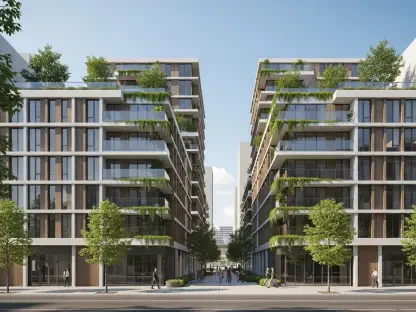
Designing for 3,000 homes while exceeding a 10% biodiversity net gain demands a shift from traditional plot-based thinking to a nature-first grid. We utilize green corridors that weave through the two interconnected villages, allowing wildlife to move freely while providing residents with immediate access to natural light and fresh air. To mitigate the impact on the existing highway network, we are integrating multi-modal public transport links that prioritize walkability and cycling over car dependency. These specific design strategies allow the built environment to breathe, creating a sensory-rich landscape where the urban footprint feels secondary to the surrounding ecology.
With over 1,600 households on waiting lists and hundreds more in temporary housing, the pressure to build is immense. How does the distribution of affordable versus market-rate homes help solve this crisis, and what metrics will you use to track the project’s success?
The reality of 1,600 households on waiting lists and 400 families in temporary housing highlights a desperate need for a diverse housing mix. By blending affordable options with market-rate homes, we provide a ladder for young professionals to remain in the communities where they grew up rather than being priced out. Success metrics for this project go beyond mere construction; we track the reduction in the city’s overall housing deficit towards the 24,000-home target for 2040. Addressing this crisis isn’t just about speed; it’s about creating a sustainable community where quality housing acts as a foundation for long-term social mobility.
An Environmental Impact Assessment Scoping Opinion is the first technical step in a complex planning process. What are the most common hurdles encountered during this initial stage, and how can developers ensure that the resulting framework effectively manages long-term environmental effects for the community?
The primary hurdle at this stage is establishing a framework that satisfies both the Southend-on-Sea City Council and Rochford District Council while maintaining the project’s ambitious timeline. We ensure success by being transparent about the technical data from the start, allowing the scoping opinion to serve as a roadmap rather than a barrier. This initial stage is crucial because it sets the rigorous standards for managing environmental effects, ensuring that the development respects the land it occupies for decades. It provides a clear, documented promise to the community that the growth will be managed with technical precision and care.
New local centers often feature a mix of retail units and modern workspaces to promote self-sustainment. How do you determine the right ratio of commercial to residential space, and what specific amenities are required to prevent these new villages from becoming mere commuter hubs?
Determining the ratio of commercial space is about creating active streets where retail units and modern workspaces provide a heartbeat to the neighborhood. We want to avoid the “dormitory town” syndrome by offering spaces that support local entrepreneurship, ensuring many of the 10,000 jobs are based right here. Essential amenities like vibrant coffee shops, flexible co-working hubs, and essential retail transform these villages from simple commuter stops into self-sustaining ecosystems. This approach fosters a deep sense of belonging and ensures that residents can work and socialize without ever needing to leave their immediate community.
What is your forecast for the housing market in the Southend and Rochford areas?
I forecast that the Southend and Rochford areas will become a blueprint for strategic regional growth in the coming years. As we push toward the wider 10,000-home strategic allocation, we will see a shift toward higher design standards and a more integrated approach to nature and infrastructure. This development is not just about meeting a 24,000-home target by 2040; it is about redefining what it means to live in a modern, connected coastal city. I expect to see property values stabilize as supply finally begins to meet the overwhelming demand, creating a more accessible market for the next generation.