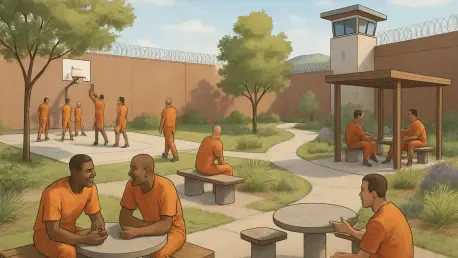

A stark, empty field enclosed by high concrete walls often symbolizes the punitive nature of incarceration, but a group of university students is challenging that perception by reimagining such a space as a catalyst for rehabilitation and well-being. As a key component of a service-learning project, undergraduate landscape architecture students at Washington State University have produced a comprehensive redesign for the exercise yard at the Washington State Penitentiary’s minimum-security unit in Walla Walla. This ambitious undertaking, guided by Assistant Professor Dan Cronan, aligns directly with the Washington State Department of Corrections’ progressive “Washington Way” initiative. This broader strategy is focused on infusing a sense of normalcy into the prison environment to better prepare incarcerated individuals for their eventual return to society. The project moves beyond theoretical classroom exercises, placing students at the forefront of a real-world effort to humanize correctional facilities and foster positive outcomes for both the incarcerated population and the staff who oversee them.
The Philosophy of Normalization
At the heart of the “Washington Way” initiative is the guiding principle of “normalization,” a concept aimed at structuring aspects of prison life to more closely mirror life in the outside world. This approach is specifically designed for individuals who are approaching the end of their sentences and have demonstrated a commitment to their rehabilitation. The consensus among corrections professionals, including Associate Superintendent Bradley Bowman, is that creating a more humane and normalized environment offers profound benefits that extend throughout the facility. It is believed to significantly improve the often stressful and demanding working conditions for corrections officers, who experience high rates of work-related stress. Furthermore, by providing a setting that encourages positive social interaction and personal growth, the initiative aims to increase the likelihood that incarcerated individuals will successfully reintegrate into their communities upon release, a critical factor in the overarching goal of reducing recidivism and breaking cycles of incarceration.
Transforming this vision into a tangible plan required students to address a series of unique and complex challenges far beyond those of a typical academic assignment. The initial canvas was a “bare-bones field,” a desolate and uninspiring space that offered little more than open ground. The task was to convert this area into a versatile, multi-use environment complete with greenery, designated walking paths, athletic fields for physical activity, and various seating areas to encourage social engagement. To achieve this, students first had to obtain security clearances to visit the penitentiary. This access was crucial, as it allowed them to engage directly with both inmates and corrections staff, gathering invaluable firsthand feedback and insights that would inform their designs. Their creative process was also bound by strict security constraints, such as the need to maintain clear and unobstructed lines of sight across the entire yard and the prohibition of dense plantings or tall trees that could potentially be used to conceal contraband or obscure surveillance.
A Blueprint for Change
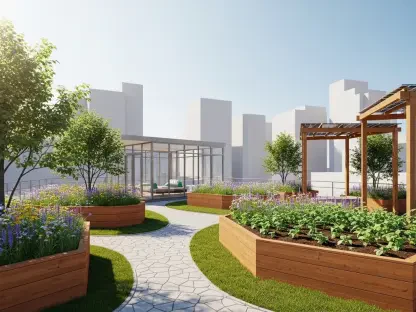
The design ultimately chosen by penitentiary officials was an innovative plan developed by student Ella Roney, which expertly balances the need for security with a focus on adaptability and human well-being. Her proposal introduces a variety of functional zones, including paved gathering places for social interaction, a multiuse sports field and courts to promote physical health, and a dedicated running and walking path for exercise. A key feature of her design is the inclusion of modular planters, which contain greenery but can be easily repositioned as needed, offering flexibility for the space. Perhaps the most transformative element is the plan to incorporate large-scale murals on the towering concrete walls, which would be painted by the inmates themselves. This not only introduces color and art into a monotonous environment but also provides a powerful outlet for creative expression and fosters a sense of personal investment in the yard’s improvement. The proposal further advocates for utilizing inmate labor during the construction phase, a strategy intended to instill a sense of stewardship and ownership over the newly created space.
The students’ dedicated work and thoughtful collaboration left a lasting impression on corrections officials, who were reportedly “blown away” by the professional quality and depth of the proposals. The department’s enthusiasm was so great that it presented Roney’s design to corrections experts in Norway, a country internationally recognized for its humanistic approach to incarceration that has yielded remarkably low rates of prison violence and recidivism. While state funding for the full-scale implementation of the project remained a potential hurdle, officials expressed a firm commitment to pursuing the transformative goal. The project also had a profound impact on the students. Their initial academic indifference evolved into a passionate conviction after their direct interactions with the inmates and staff at the prison. Their shift in perspective was powerfully summarized by one student, who reflected on the group’s change in attitude by stating, “Hey, we have to do this. They need this.”