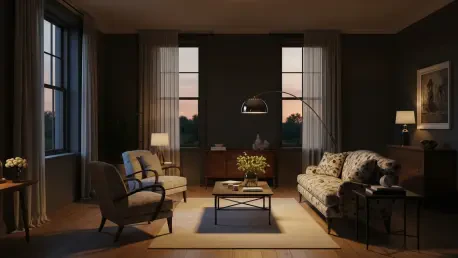

A profound transformation is currently reshaping the landscape of interior design, signaling a collective departure from fleeting, mass-market fads in favor of creating homes that are deeply personal, enduring, and curated over time. For years, the pursuit of the “of-the-moment” look dominated decorating choices, but now, a more thoughtful philosophy prevails. The most forward-thinking spaces of 2026 are not defined by a single, rigid style but by an eclectic and layered mix of furniture that balances aesthetic appeal with genuine comfort and longevity. This movement champions personality-driven decorating, where an individual’s taste and story take precedence over prescriptive trends. While this guide explores specific furniture styles that designers are advising new buyers to reconsider, the ultimate principle is that a piece you truly love will always have a place in your home.
Scandinavian Style Evolves
The Decline of Serious Minimalism
The stark, austere interpretation of Scandinavian minimalism, long celebrated for its clean lines and serene, light-filled aesthetic, is seeing its influence wane significantly. This design philosophy rose to prominence as an antidote to visual clutter, resonating with a desire for simplicity and calm in a complex world. Its emphasis on functionality and a pared-back palette of whites, grays, and pale woods became a go-to formula for modern living. However, the very ubiquity that made it so popular has led to its decline. The market became saturated with generic, mass-produced versions of this style, causing many interiors to feel indistinguishable and devoid of personal history. As noted by designer Kailee Blalock of House of Hive Design Co., the strict adherence to this aesthetic can render a home impersonal, resembling a “showroom rather than a space with personality.” The result is often an environment that, while clean, feels sterile and emotionally distant, lacking the warmth and character essential for a true sanctuary.
The psychological impact of residing in an overly minimalist space is also a key factor in this stylistic shift. While intended to be calming, a relentlessly uniform and pale environment can feel monotonous and uninspiring over time. Human beings are inherently drawn to texture, color, and objects that tell a story—elements often stripped away in the pursuit of absolute minimalism. This starkness can inhibit the cozy, inviting atmosphere that encourages relaxation and social connection. The core tenets of Scandinavian design, such as quality craftsmanship, functionality, and a connection to nature, remain highly valued. What is being rejected is the rigid, formulaic application that sacrifices individuality and comfort for a purely ascetic look. The trend is moving away from spaces that feel like a blank canvas and toward interiors that are rich with personal narratives and tactile comfort, reflecting a more holistic approach to well-being at home.
The Rise of Folk-Inspired Scandi
Emerging from the shadow of stark minimalism is a vibrant and character-rich evolution of Nordic design: the folk-inspired or “Scandi maximalist” aesthetic. This approach represents a return to the historical roots of Scandinavian craftsmanship, celebrating heritage, artistry, and the beauty of handmade imperfections. Instead of uniformity, it champions pieces that tell a story, featuring unique details like whimsical curves, hand-painted patterns, and the rustic charm of reclaimed materials. This style draws inspiration from traditional Alpine and Nordic folk art, embracing a more decorative and textural approach. Furniture like the “Tyrolean Wooden Accent Chair,” with its homage to folk designs, or the “Butler Perna Hand Painted Chest,” with its unique boho pattern, exemplifies this shift. These pieces serve not only a functional purpose but also act as focal points of personality, infusing a room with a sense of history and soul that mass-produced minimalist items cannot replicate.
This updated take on Scandi design encourages a layered and collected interior, where modern heirloom-quality pieces coexist with vintage finds. The emphasis is on creating a space that feels both timeless and deeply personal. For instance, a chair like the “Lottie Chair in Blue Reina Climbing Floral” perfectly captures this spirit, blending a classic cottage aesthetic with its carved spindle legs and charming upholstery with a modern sensibility. This style invites a thoughtful curation of objects, textiles, and furniture that reflect individual taste and a passion for craftsmanship. It moves beyond the simple dichotomy of old versus new, instead fostering a dialogue between different eras and styles. The result is a home that is not only visually interesting and warm but also feels authentic and lived-in, providing a rich backdrop for everyday life that is both comforting and stimulating.
Upholstery’s New Look and Feel
The Oversaturation of Bouclé
The once-reigning champion of textured fabrics, bouclé, is officially past its peak. For several years, this nubby, looped yarn material was inescapable, gracing everything from plush accent chairs and sprawling sofas to ottomans and decorative pillows. Its appeal was undeniable: it offered a potent combination of visual softness and tactile warmth, instantly making any piece of furniture seem more inviting. However, as is often the case with wildly popular trends, its own success became its downfall. Designer Jennifer Davis points out that the “heavy saturation has made it feel less special.” When a material becomes so ubiquitous that it appears in nearly every showroom and design feed, it loses its sense of novelty and distinction. Consumers and designers alike are now looking beyond this trend, seeking upholstery options that offer a more timeless quality, enhanced durability, and greater versatility to blend seamlessly into a curated, long-lasting home environment.
The decline of bouclé also highlights a broader shift in consumer priorities toward longevity and practicality in home furnishings. While undeniably cozy, certain formulations of bouclé can be challenging to maintain, showing wear or dirt more readily than other textiles. As homeowners increasingly view their furniture as long-term investments, the focus is shifting to materials that are not only beautiful but also resilient enough to withstand the rigors of daily life. This has led to a renewed appreciation for classic, high-performance fabrics that offer both sophisticated texture and proven durability. The move away from bouclé is not a rejection of texture itself, but rather a desire for more nuanced and enduring options. Designers are now championing a wider array of materials that provide rich tactile experiences without being tied to a specific, fleeting moment in design history, ensuring that major investments like a sofa will remain stylish and cherished for years to come.
The Embrace of Timeless Textures and Softer Silhouettes
In response to the waning popularity of sharp, minimalist forms and singular fabric trends, the design world is wholeheartedly embracing softer silhouettes and a diverse palette of timeless textures. The focus has shifted decisively toward creating spaces that prioritize genuine, livable comfort without sacrificing style. This means selecting furniture with gentle curves, plush cushions, and inviting forms that encourage relaxation. Pieces that “look good but also feel good” are paramount, especially for foundational items like sofas and beds. This philosophy is perfectly embodied by designs like the “Magnus Chair in Bolton Pewter Faux Shearling,” which features exaggerated curves ideal for curling up in, paired with a warm, earthy texture that feels both modern and comforting. The goal is to curate an environment that serves as a true refuge, where every piece contributes to a sense of ease and well-being.
This new direction celebrates a rich variety of materials that offer both tactile interest and lasting appeal. In place of the once-dominant bouclé, designers are turning to textured linens, luxurious mohair, durable wool blends, and sophisticated performance fabrics that age gracefully. These textiles bring depth and character to a room while standing the test of time. The “Colby Blue Faux Mohair Accent Chair,” for example, illustrates a perfect marriage of form and fabric, blending an elegant, antique-inspired solid oak frame with the plush comfort of a faux mohair seat. Furthermore, accessories like the “Plaid Wool Pouf” introduce classic patterns and cozy, handwoven textures in a versatile form. This approach encourages mixing and matching different materials to create a layered, sensory-rich interior that feels thoughtfully collected and deeply personal, moving far beyond monolithic trends to build a home with enduring style and substance.
The Living Room Seating Shake-Up
The Departure from the Dominating Sectional
One of the most notable shifts in living room design is the move away from the large, neutral sectional sofa, a long-standing fixture of the relaxed, “California casual” style. For years, the sectional was praised for its practicality, offering ample seating for families and guests in a single, cohesive piece. However, its dominance is now being challenged as designers and homeowners seek more unique and sophisticated arrangements. The primary criticism, as voiced by designer Mary Beth Sullivan, is that a “big, neutral sectional” can make a room look generic and reminiscent of a “big-box store.” These oversized pieces have a tendency to completely command a space, dictating the layout and leaving little room for creativity or personalization. Their sheer scale can overwhelm a room’s architecture and prevent the creation of a more dynamic, layered, and interesting furniture scheme that reflects individual taste.
The critique extends beyond just the size to specific design features that are falling out of favor. Sofas that are exceptionally low and deep, with seat heights below 18 inches, are being reconsidered for their lack of ergonomic comfort for all ages. Similarly, models with wide-track arms, while offering a modern look, contribute to a bulky profile that can make a room feel smaller and less agile. The fundamental issue is that relying on a single, massive piece of furniture to solve all seating needs is an inherently limiting design strategy. It discourages the art of collection and curation, which is central to the current design ethos. Instead of a “one-stop shop” solution, the trend is moving toward more flexible and visually engaging arrangements that allow for greater expression of personality and a more balanced distribution of form and function throughout the living space.
The Move Toward a Collected Look
The contemporary vision for the living room is one that feels thoughtfully curated and assembled over time, rather than furnished in a single transaction. This “collected look” stands in direct opposition to the reliance on a single, dominant sectional. Mary Beth Sullivan advises against the “one-stop shop” method, instead championing the artful mixing of mismatched yet harmonious pieces to achieve a more tasteful and layered result. This approach allows for a greater degree of personalization, enabling homeowners to blend different styles, eras, and textures in a way that tells a unique story. It might involve pairing a sleek, modern sofa with a pair of vintage armchairs, or placing a classic settee opposite a contemporary chaise lounge. The goal is to create a dynamic composition of forms and materials that is visually interesting from every angle and provides a variety of seating experiences, from formal perching to casual lounging.
Achieving this curated aesthetic requires a more considered approach to furnishing. It is about seeing the living room as a collection of individual elements that work together to create a cohesive whole. This strategy encourages a slower, more intentional process of acquisition, where each piece is chosen for its specific character, comfort, and contribution to the overall design scheme. This might mean investing in a beautifully crafted accent chair now and waiting to find the perfect sofa later, rather than buying a matching set. This method not only results in a more authentic and personal space but also promotes sustainability by encouraging investment in quality pieces that will be cherished for years. The collected look is less about following a specific trend and more about developing a personal style, creating a living room that is not just a showcase but a true reflection of its inhabitants’ lives and tastes.
Proportional Pieces with Personality
At the heart of the new approach to living room seating is a focus on proportion and personality. Instead of one oversized piece, the ideal arrangement involves a balanced mix of better-proportioned seating that incorporates a variety of shapes, colors, and patterns. This strategy allows for more flexibility in arranging the room and creates a more sophisticated, “old meets new” atmosphere. The goal is to select individual pieces that each have their own character but contribute to a unified and inviting whole. For those who still need a primary sofa, an elegant option like the “Nora Camille Sofa” offers a distinctive floral pattern and refined silhouette that serves as a beautiful centerpiece without overwhelming the space. This type of statement sofa immediately elevates a room beyond the neutral, moving it toward a more expressive and design-forward aesthetic.
Complementing a statement sofa with unique accent pieces is key to perfecting the collected look. A subtle yet chic item like the “Philippa Fringed Armless Settee” can introduce restful stripes and a touch of fringe detail, making it a versatile piece for a formal living area or a cozy reading nook. For adding a dose of pattern and history, vintage-inspired seating like the “Slipper Accent Chair” is a designer favorite. Its unique armless silhouette allows it to fit into smaller spaces while bringing a sense of traditional charm and character. By thoughtfully combining these distinct elements—a statement sofa, an elegant settee, and character-filled accent chairs—one can craft a living space that feels dynamic, stylish, and deeply reflective of a personal design sensibility. This method ensures the room is not only beautiful but also functional, offering varied and comfortable seating for any occasion.