
The enduring frustration for many designers and homeowners often begins with a beautifully finished interior that, within a few years, shows signs of premature failure—a warped cabinet door in a humid bathroom, a delaminating kitchen countertop, or a scuffed wall panel that can’t withstand daily life. This common scenario highlights a fundamental disconnect in traditional interior design: the separation of aesthetic surface choices from the structural materials that lie beneath. As the industry moves forward, a more sophisticated, integrated approach is emerging, one that views interior elements not as separate components but as complete, engineered systems. This holistic philosophy, often termed the “substrate-to-surface” model, promises to redefine our expectations for durability, performance, and cohesive design by ensuring that the hidden foundation is as meticulously specified as the visible finish. It marks a significant shift from mere decoration to the creation of truly resilient and harmonized living spaces built to last.
The Rise of a Holistic Design Philosophy
A fundamental shift is underway in the specification of interior materials, moving away from fragmented decision-making toward a unified, systems-based approach. This evolution recognizes that the longevity and performance of any surface are inextricably linked to the quality of its underlying structure. By considering the substrate and the surface as a single, integrated unit, designers can mitigate common points of failure and create environments that are both aesthetically pleasing and exceptionally functional. This cohesive strategy ensures that the visual appeal of a high-end finish is not undermined by an inadequate foundation, thereby protecting the design intent and the client’s investment over the long term.
Beyond Surface-Level Aesthetics
For decades, the selection of interior finishes has often been treated as a final, decorative layer, chosen independently of the structural core it adorns. This fragmented approach frequently leads to a mismatch in performance characteristics, where a premium laminate or veneer might be applied to a substrate that lacks the necessary moisture resistance or dimensional stability for its intended environment. The consequences are predictable: warping in humid conditions, swelling from moisture ingress, or poor screw retention in cabinetry, all of which compromise the integrity and appearance of the final product. This not only results in costly repairs and replacements but also undermines the very aesthetic the designer sought to achieve. The pursuit of beauty without a corresponding commitment to foundational strength creates a fragile interior that cannot withstand the rigors of everyday use, ultimately proving to be an unsustainable model for modern living and commercial spaces.
The integrated “substrate-to-surface” philosophy directly addresses these shortcomings by mandating that the foundation and finish be specified in tandem. This approach ensures that the performance attributes of both components are perfectly aligned to meet the demands of the application. For instance, in a high-moisture area like a kitchen or utility room, a high-gloss, stain-resistant laminate is paired with a structural board engineered for exceptional moisture tolerance and stability. This synergy creates a complete system where each part supports the other, resulting in furniture, cabinetry, and panels that maintain their form and finish for years. This method elevates the design process from simple material selection to a more thoughtful practice of engineering cohesive, high-performance interior elements. As industry leaders have noted, this reflects how future spaces will be planned, offering a harmonious blend of structure and surface to meet modern demands.
Engineering the Unseen Foundation
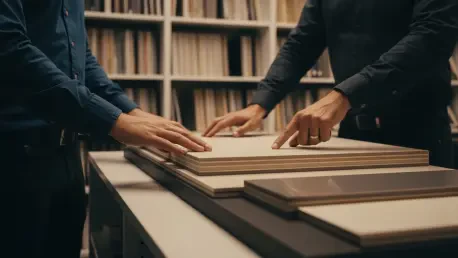
The cornerstone of this integrated approach is the high-performance substrate, a material engineered to provide unwavering stability and resilience in even the most demanding environments. Unlike standard particleboard or MDF, these advanced structural boards are designed with specific performance criteria in mind. Key attributes include exceptional moisture resistance throughout the core, often capable of withstanding prolonged exposure to humidity and even boiling water without delaminating or swelling. This is achieved through proprietary manufacturing techniques and specialized resin formulations. Furthermore, superior dimensional stability and uniform density provide excellent load-bearing capacity and strong screw-holding capabilities, which are critical for the long-term integrity of cabinetry and furniture. These substrates are also frequently treated to resist termites and borers, adding another layer of durability. This unseen foundation is the bedrock upon which lasting interiors are built.
Beyond its structural benefits, the choice of a premium substrate has significant implications for both long-term value and indoor environmental quality. By preventing common failures like warping and moisture damage, these advanced boards protect the significant investment made in premium surface finishes, effectively eliminating the need for premature and costly repairs. This focus on durability aligns with growing consumer demand for sustainable and long-lasting products. Moreover, a critical consideration in modern design is the health of the indoor environment. Leading structural boards are compliant with stringent low-emission standards, such as E1 grade, which limits formaldehyde off-gassing. This contributes to healthier indoor air quality, a crucial factor in residential and commercial spaces where people spend the majority of their time. The selection of such a foundation is, therefore, not merely a technical decision but a commitment to creating safer, more reliable, and more sustainable interiors.
Redefining the Visual and Tactile Experience
While the substrate provides the essential structural integrity, the surface layer defines the aesthetic and sensory character of a space. Modern surface materials are no longer just decorative veneers; they are highly engineered products designed to deliver both stunning visuals and robust performance. From deep, reflective high-gloss finishes that amplify light and create a sense of spaciousness to a wide array of contemporary colors and textures, these surfaces offer designers unparalleled creative freedom. The emphasis is on creating a holistic experience where the look and feel of the space are seamlessly integrated with its functional demands.
The Modern High-Performance Surface
Today’s advanced laminates are engineered to offer a sophisticated visual experience without compromising on resilience. A key characteristic is a superior high-gloss finish, which often exceeds a gloss level of 110, creating a deep, mirror-like reflection that enhances visual clarity and makes spaces feel larger and more luminous. This aesthetic is particularly sought after in contemporary design, where clean lines and light play are paramount. However, this beauty is matched by formidable durability. These surfaces are engineered with high resistance to abrasion, scuffs, and marring, ensuring they maintain their pristine appearance even in high-traffic areas. Furthermore, they boast excellent stain resistance, capable of repelling common household and commercial spills, and can withstand heat up to 180 degrees Celsius, making them ideal for demanding applications like kitchen countertops and cabinetry.
The versatility of these high-performance surfaces extends to their wide design palette, which empowers architects and designers to realize diverse creative visions. Available in an extensive range of solid contemporary shades, from bold, expressive hues to subtle, minimalist tones, these materials can be adapted to any design concept. This breadth of choice allows for the creation of cohesive interiors where furniture, wall panels, and cabinetry share a consistent and refined aesthetic. Crucially, these surfaces also feature excellent color fastness, preventing fading from exposure to light and ensuring that the intended design scheme remains vibrant and true over time. This combination of aesthetic flexibility and enduring performance allows for the creation of spaces that are not only visually striking upon completion but also retain their beauty and functionality through years of use, representing a true synthesis of form and function.
A Blueprint for Future Interiors
The movement toward integrated substrate-and-surface systems represented a crucial evolution in interior design philosophy. It acknowledged that true quality and longevity were achieved not through isolated components but through a holistic understanding of how materials work together. This approach has led to the development of spaces that were more resilient, sustainable, and better aligned with the functional demands of modern life. By specifying the unseen foundation with the same rigor as the visible finish, designers created interiors that performed as beautifully as they looked. This thoughtful, systems-based methodology established a new standard, ensuring that the environments we inhabit were built on a foundation of integrity, ready to withstand the tests of time and daily use.