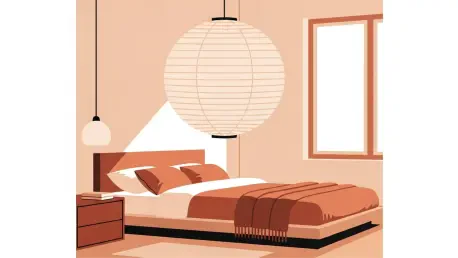

Once dismissed as a temporary fixture for dorm rooms and first apartments, paper lighting is undergoing a remarkable transformation, shedding its humble reputation to become a coveted element in high-end interior design. This resurgence is not merely a fleeting trend but a sophisticated reinterpretation of a timeless form, with its popularity expected to hold strong through 2026. Drawing deep inspiration from the delicate artistry of 16th-century Japanese lanterns and the iconic mid-century modern Akari lamps designed by Isamu Noguchi, this new wave honors its heritage with a fresh perspective. Contemporary designers are embracing the medium for its ability to introduce a soothing, sculptural presence that feels both intentional and effortlessly chic. The paper lantern has evolved from a placeholder into a purposeful statement, completing a room with its gentle, atmospheric glow and signaling a deliberate move toward more thoughtful, serene living spaces.
A Shift Toward Softer Sanctuaries
The rising popularity of paper lighting is intrinsically linked to a broader cultural shift in interior design, where the creation of soft, cozy, and inviting sanctuaries has become a primary goal for homeowners. According to Joelle Kutner and Jesse Rudolph, co-founders of the design studio Ome Dezin, there is a distinct movement away from the cold, hard lines and industrial finishes that have dominated recent years. Clients are now seeking to infuse their homes with a palpable sense of tranquility and comfort. In this context, the paper lantern serves as an ideal tool. When these simple, organic forms are thoughtfully placed within considered spaces and juxtaposed with richer materials like wood, stone, and plush textiles, their inherent simplicity is elevated. It transforms from a sign of impermanence into a conscious design choice that communicates a “spectacle-averse” sensibility. This approach prioritizes a warm and welcoming atmosphere over overt glamour or ostentation, creating environments that feel both curated and deeply personal.
This embrace of understated materials signals a return to interiors that value feeling and function over mere aesthetics. Designer Megan Schlabaugh of Megan Lynn Interiors notes that “paper lanterns bring warmth and softness back into the conversation,” effectively counteracting the austerity that can sometimes characterize modern design. Their lightweight, ethereal quality introduces a visual gentleness that is difficult to achieve with metal or glass fixtures. The use of raw and natural elements has become a hallmark of sophisticated design, and paper lighting fits seamlessly into this philosophy. It speaks to a desire for authenticity and a connection to craft, turning a simple light source into a piece of functional art. By integrating these fixtures, designers are crafting spaces that are not just beautiful to look at but are also profoundly comforting to inhabit, proving that true luxury often lies in simplicity and the careful cultivation of a peaceful ambiance.
Illuminating Well-Being and Experience
Beyond its aesthetic appeal, the paper lighting trend is deeply connected to personal wellness and the creation of healthier living environments. The quality of light emitted by paper shades is a key factor in its calming effect. Michelle Accetta, founder of Michelle Accetta Home, explains that the softly diffused, non-centralized illumination has a measurably soothing impact on the human nervous system. Unlike harsh, direct overhead lighting, the gentle glow produced by a paper lantern helps to reduce stress and create an ideal atmosphere for unwinding at the end of a long day. This type of lighting can also play a crucial role in supporting the body’s natural circadian rhythms, signaling to the brain that it is time to relax and prepare for rest. This focus on the physiological benefits of design encourages a more intuitive and organic approach to creating a home, one that prioritizes well-being over the pressure to micromanage every single detail to perfection.
This trend also represents a philosophical return to a modernist and mid-century perspective where light was treated as an integral component of an experience, rather than as a mere utility. The designers from Ome Dezin emphasize this shift, framing the use of paper lighting as a way to add a layer of romanticism and experiential depth to any room. The light is not just for seeing; it is for feeling. It shapes the mood, defines the space, and transforms a simple room into a dynamic environment that changes throughout the day. This experiential approach moves beyond pure functionality to consider the emotional impact of a space. A glowing paper lantern can evoke a sense of warmth, intimacy, and wonder, encouraging a slower, more mindful way of living. It reasserts the idea that a home should be a place of restoration and personal expression, where every element, including the lighting, contributes to a holistic sense of peace and contentment.
The Art of Scale and Strategic Placement
While the aesthetic of paper lighting is inherently gentle, its successful application hinges on a bold and considered approach to scale and proportion. To make a significant impact, especially with overhead fixtures, designers universally advise against timidity. Nicola Crawford of Finch Interior Design suggests that deliberately oversizing a paper lantern can introduce the “right amount of drama,” transforming it from a simple light source into a commanding focal point that anchors the entire room. To remove the guesswork from this process, Megan Schlabaugh offers a practical rule of thumb for achieving the perfect balance: one should add the length and width of the room in feet, and that sum should become the fixture’s ideal diameter in inches. For instance, a room measuring 10 by 12 feet would be best served by a lantern with a 22-inch diameter. This calculated approach ensures that the fixture is substantial enough to hold its own without overwhelming the space, creating a look that is both intentional and harmonious.
Proper placement is equally critical to integrating these fixtures seamlessly into a design. For any overhead light that will be in a walkway, a non-negotiable rule is to ensure the bottom of the fixture hangs at least seven feet above the floor to provide adequate clearance and avoid creating an obstacle. When a lantern is positioned over a dining table or kitchen island, its scale should relate directly to the surface below it; its width should ideally be between one-half and two-thirds the width of the table. This guideline creates a pleasing visual connection and ensures the light is centered and functional for the space. In stark contrast to these structured rules for ceiling-mounted lights, floor-placed paper lamps offer a realm of creative freedom. Designers often capitalize on this flexibility by grouping them in artistic, multi-height clusters, creating a luminous installation that adds a soft, sculptural quality and an ambient glow at a lower level in the room.
An Accessible Trend with Enduring Appeal
One of the most compelling aspects of the paper lighting revival is its remarkable versatility and democratic appeal. The designers at Ome Dezin highlight that the wide availability of different sizes, prices, and shapes means that “really anyone is able to have one in their space.” This accessibility ensures the trend can be adopted across various budgets and design sensibilities. The market reflects this breadth, offering everything from the fan-favorite Gullsudare pendant at IKEA to more sculptural, budget-friendly options from retailers like H&M Home and HAY. At the higher end, a piece like the Cocoon suspension lamp by Otello Castiglioni offers an exaggerated, artistic form, while collaborations such as the CB2 x Kravitz Design flush mount demonstrate the trend’s adaptability by pairing fragile rice paper with unexpected materials like polished stainless steel. This vast range confirms that paper lighting can be interpreted to suit any decor style, from minimalist and Scandinavian to eclectic and even rock-and-roll.
The successful renaissance of this historically significant lighting form proved that the most enduring design ideas often possess a rich and meaningful history. The renewed appreciation for objects with a past, crafted from natural materials and designed with human experience in mind, suggested a broader shift in design values. This trend looked beyond fleeting novelty, instead finding beauty in objects that have stood the test of time. The widespread embrace of the paper lantern’s quiet elegance indicated that this appreciation for classic forms would naturally extend to other historical elements. It was anticipated that this movement would pave the way for the comeback of other timeless fixtures, such as the candle sconce, as designers and homeowners continued to seek out pieces that offered both beauty and a deep connection to design history in the coming years.