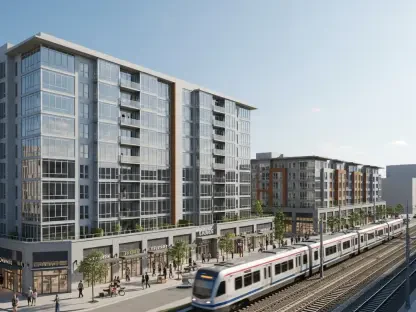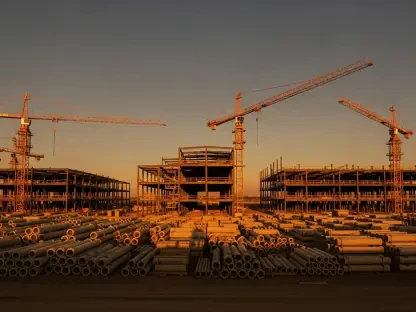

The American housing landscape is currently defined by a widening gap between the necessity of shelter and the staggering financial reality of construction, a crisis often blamed on land use but increasingly rooted in the technical fine print of building codes. A comprehensive report from California YIMBY, drawing upon extensive research from the UCLA Lewis Center for Regional Policy Studies, has cast a harsh light on the International Code Council, or ICC. This body oversees the standards that dictate nearly every facet of modern construction, yet its processes have evolved into a complex “black box” that prioritizes bureaucratic inertia over the public interest. While these regulations were originally conceived to ensure physical safety, they have morphed into a primary driver of housing scarcity. By layering mandate upon mandate without evaluating the cumulative economic burden, the current system effectively locks out innovative building techniques and prevents the development of affordable mid-rise housing that urban populations desperately require to thrive.
The Influence of the International Code Council
Institutional Capture: The Mechanics of Regulatory Bloat
The primary entity responsible for drafting the building standards used across the United States is the International Code Council, a private non-profit that operates with significant authority but often lacks the scientific rigor expected of a public regulatory body. Research indicates that the ICC is prone to a phenomenon known as “industry capture,” where specific interest groups and trade associations exert disproportionate influence over the code-writing process. This environment allows for the perpetual accumulation of regulations, creating a “ratchet effect” where new rules are added in response to specific events, but older, redundant mandates are rarely removed or even reassessed for their ongoing utility. Because the ICC does not operate under the same transparency requirements as federal agencies, many of its decisions occur behind closed doors without a mandatory cost-benefit analysis. This lack of accountability ensures that building standards continue to expand in complexity, regardless of whether they provide a measurable increase in safety for the residents.
Voting Inequities: The Divide Between Small Towns and Cities
Governance within the ICC is further complicated by a voting structure that significantly favors smaller jurisdictions over the dense urban centers where housing demand is most acute. Because code officials in small towns hold the same voting weight as those in major metropolitan areas, the resulting standards often reflect suburban preferences and rural constraints rather than the unique technical needs of high-density housing. Furthermore, specific side agreements within the council mandate that homebuilders hold a significant portion of the seats on residential code panels. This gives industry incumbents the power to block cost-saving innovations, such as mass timber construction or more efficient piping systems, which might threaten traditional business models or require specialized training. Consequently, the people most affected by the housing shortage—urban dwellers and low-income families—have the least amount of representation in the body that determines what kind of homes can be built and at what cost they can be delivered to the market.
The Economic Impact of Regulatory Accumulation
Financial Burdens: Comparing Global Construction Costs
The systemic lack of rigorous cost-benefit analysis has led to a reality where mid-rise construction in the United States is roughly 55 percent more expensive per square foot than single-family homes, a disparity that is rarely seen in other wealthy, high-income nations. This regulatory bloat is exemplified by astronomical installation fees for basic infrastructure; for instance, a four-stop elevator unit in New York City can cost upwards of $158,000, while a similar unit in Switzerland costs only $36,000 due to streamlined safety requirements. Furthermore, rigid mandates regarding dual staircases and specific corridor widths force developers to dedicate a vast percentage of a building’s footprint to circulation space rather than living areas. These idiosyncratic rules, which do not exist in many European or Asian markets with similar or better safety records, drive up the final price of every unit while offering diminishing returns on actual fire safety or structural integrity, ultimately pricing the middle class out of the urban core.
The Safety Paradox: The Hidden Human Cost of High Prices
There is a profound and often unacknowledged “safety cost” associated with high construction expenses that policymakers frequently ignore when implementing new mandates. When building codes make new housing prohibitively expensive, lower-income households are forced to remain in aging, dilapidated buildings that lack modern fire protection systems and seismic reinforcements. Research suggests that for every incremental increase in construction costs, a measurable number of premature fatalities occur as families divert essential funds away from healthcare, nutrition, and heating to cover their rent. This creates a paradox where “perfect” safety standards for new buildings actually decrease the overall public safety by slowing the replacement of the existing, dangerous housing stock. By insisting on the most expensive materials and designs for every project, the regulatory system ensures that only the wealthiest can afford to live in the safest environments, leaving the most vulnerable populations stuck in substandard conditions that the codes were intended to eliminate.
Strategies for Systemic Reform
Performance-Based Standards: A Shift Toward Flexibility
To address the current housing crisis, experts recommend a fundamental shift away from prescriptive mandates toward performance-based standards, similar to the Eurocodes utilized across the European Union. Rather than dictating the exact materials or specific dimensions an architect must use, performance-based codes focus on achieving defined safety outcomes, such as a building’s ability to withstand a specific fire duration or seismic load. This approach allows architects and engineers the flexibility to utilize more efficient materials and innovative designs, such as single-stairway configurations for small apartment buildings, which can maximize natural light and ventilation. Additionally, bifurcating the current code into essential “minimum safety standards” and voluntary “aspirational provisions” would prevent high-end features from becoming mandatory for every project. By decoupling luxury or environmental goals from basic safety requirements, developers could once again build simple, functional housing that meets the needs of a wider range of income levels.
National Uniformity: The Case for Federal Intervention
Because the internal culture of the International Code Council is deeply entrenched with industry influence and bureaucratic inertia, meaningful reform likely requires external legislative action to bypass the current system. Implementing a requirement for a mandatory, transparent cost-benefit analysis for every proposed code change would provide the public with a clear understanding of the financial trade-offs involved in new regulations. Furthermore, the federal government could condition housing assistance and infrastructure grants on the adoption of uniform national standards, which would help eliminate the current patchwork of over 20,000 local jurisdictions that each maintain their own unique set of requirements. By reclaiming building standards for the public good, the state ensured that codes promoted the production of abundant, safe, and affordable housing rather than serving as a barrier to it. This structural shift allowed for a more responsive construction industry that could finally begin to meet the housing needs of a growing population through evidence-based policy.