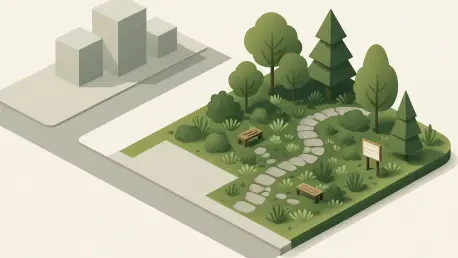

The concrete landscape of downtown Lawrence is witnessing a radical departure from conventional urban development as a standard commercial lot at Seventh and Rhode Island streets evolves into a thriving ecological sanctuary. This transformation, spearheaded by the regional telecommunications provider Midco in partnership with the Native Lands Restoration Collaborative, challenges the long-standing assumption that vacant city land must inevitably become a parking lot or a multi-story office building. By prioritizing environmental health over immediate commercial expansion, the project organizers are demonstrating that private enterprises can play a pivotal role in restoring local biodiversity while providing high-quality public amenities. This initiative represents a sophisticated blend of corporate philanthropy and scientific restoration, creating a space where the historical flora of Kansas can coexist with the modern demands of a bustling city center. The result is a multifaceted “urban prairie” that serves as both a carbon sink and a communal refuge.
Strategic Vision: From Corporate Land to Public Ecosystem
The conceptual foundation of this project was established when Midco CEO Pat McAdaragh recognized the untapped potential of a vacant lot adjacent to the company’s new facility, choosing to forgo traditional development in favor of a legacy project. Drawing from his own personal experiences with land restoration in Minnesota, McAdaragh envisioned a space that would celebrate the intrinsic, though often overlooked, beauty of the tallgrass prairie. Rather than attempting a simplified beautification project, Midco secured the expertise of Courtney Masterson, an ecologist and the executive director of the Native Lands Restoration Collaborative. This partnership granted the collaborative full creative and ecological autonomy, ensuring that the park would be designed with scientific integrity and a deep respect for the regional heritage of Douglas County. By providing the necessary financial backing without imposing restrictive commercial requirements, Midco has set a new standard for how corporations can engage with the physical environment of the communities they serve.
Building on this collaborative foundation, the design strategy for the Midco Prairie focuses on long-term ecological resilience and historical accuracy within a challenging urban microclimate. Because downtown environments often suffer from the “heat island” effect, characterized by elevated temperatures and rapid moisture evaporation, the plant selection process prioritized species capable of thriving in harsh, dry conditions. Masterson, in coordination with Sur Landscape Architecture, selected native grasses such as blue grama and sideoats grama, which are renowned for their extensive root systems that can penetrate several feet into the soil. These biological features allow the landscape to remain vibrant with minimal supplemental irrigation once the plants have established themselves. Furthermore, the plan carefully integrates existing mature vegetation, such as a prominent pin oak tree, which provides immediate structural diversity and shade. This thoughtful approach ensures that the park is not merely a collection of plants, but a functional, self-sustaining ecosystem designed for the future.
Educational Integration: The Park as an Outdoor Classroom
Beyond its ecological benefits, the Midco Prairie is intentionally designed to serve as a vital educational resource for the residents of Lawrence and the surrounding region. Situated within walking distance of the Lawrence Public Library and several local schools, the park functions as a living laboratory where students and visitors can observe the complex interactions of a native landscape firsthand. To facilitate this learning process, the site features specialized thematic gardens, including sections dedicated to native dyes and traditional medicinal plants. These areas highlight the ethnobotanical history of the region, illustrating how indigenous populations and early settlers utilized local flora for pigments, healing, and sustenance. By placing these educational assets in a high-traffic urban setting, the project bridges the gap between modern city living and the natural world, fostering a deeper understanding of the environmental systems that support human life.
This focus on accessibility naturally leads to a broader community impact, as the park offers a rare opportunity for urban dwellers to experience a naturalized prairie without traveling to distant conservation areas. The design philosophy emphasizes “stewardship,” encouraging visitors to view themselves as active participants in the health of their local environment rather than passive observers. For Midco employees, the park provides a serene outdoor space for breaks and collaboration, while for the public, it offers a sanctuary that counters the stressors of urban life. The inclusion of bird and wetland gardens further enhances the site’s value by attracting local wildlife, creating a sensory experience that changes with the seasons. By transforming a private lot into a public ecological asset, the project organizers are proving that intentional design can satisfy human needs while simultaneously supporting the biodiversity that is essential for a healthy and sustainable urban future.
Artistic Collaboration: Crafting a Cultural Landmark
The identity of the Midco Prairie is further defined by the integration of local craftsmanship, ensuring that the space reflects the unique cultural character of the Lawrence community. Rather than relying on mass-produced park fixtures, the project features custom elements created by regional artisans who share a commitment to natural materials. For instance, local sculptor and stonemason Karl Ramberg is replacing outdated concrete structures with walls and ADA-compliant pathways constructed from native flagstone. His work includes hand-carved stone bowls designed to hold water for birds and insects, adding a layer of functional art to the landscape. Meanwhile, ceramicist Laura Ramberg is contributing sculptures of native prairie animals that are strategically hidden throughout the park to create an engaging scavenger-hunt experience. These artistic touches reinforce the idea that the prairie is a place of discovery, where human creativity and the natural world are inextricably linked through shared materials and forms.
This emphasis on high-quality, locally sourced infrastructure extends to the communal furniture designed to facilitate public gatherings and quiet reflection. Woodworker Tim O’Brien has been tasked with crafting custom signage and durable benches from regional timber, ensuring that every physical element of the park feels grounded in the Kansas landscape. These artisanal contributions serve a dual purpose: they provide the necessary utility for a public park while honoring the specific textures and tones of the prairie ecosystem. As the project moves toward its formal opening this fall, the organizers emphasize that the park is a long-term investment that will continue to evolve. Because a native prairie requires several years for its deep root systems to fully mature, the community will have the unique opportunity to witness the gradual stabilization of the landscape. This slow growth is a central part of the park’s narrative, teaching patience and highlighting the persistent strength of the native species that once covered the vast majority of the Great Plains.
Sustainable Progress: Future Considerations for Urban Design
The successful implementation of the Midco Prairie offers a clear roadmap for other municipalities and private entities looking to mitigate the environmental impacts of urban density. One of the most immediate next steps for city planners and business leaders is to evaluate existing vacant or underutilized land through the lens of ecological productivity rather than just financial return. This project demonstrates that the initial investment in native restoration pays dividends in the form of reduced maintenance costs, improved stormwater management, and enhanced community well-being. Organizations should consider forming partnerships with specialized ecological groups early in the development process to ensure that green spaces are functional habitats rather than merely decorative lawns. By prioritizing native species over exotic ornamentals, developers can create landscapes that require significantly less chemical intervention and water, aligning corporate sustainability goals with tangible local outcomes.
Looking toward the future of urban design, the Midco Prairie serves as a call to action for the integration of natural history into the modern built environment. Future projects should aim to expand on this model by creating interconnected corridors of native vegetation throughout urban centers, allowing wildlife to move safely between isolated green spaces. This “connectivity” is essential for maintaining genetic diversity in local species and for building urban resilience against climate-related challenges. Furthermore, incorporating citizen science programs within these parks can provide valuable data on how urban prairies influence local temperatures and pollinator populations. By treating these spaces as dynamic research sites, communities can continue to refine their restoration techniques and advocate for policies that protect regional biodiversity. Ultimately, the transition from grey to green infrastructure requires a shift in perspective that views every city lot as a potential site for restoration and a meaningful contribution to the global effort of environmental conservation.