
The completion of the extensive revitalization efforts in Gorton marks a pivotal turning point in Manchester’s broader urban planning strategy, signaling a definitive move toward reinforcing district centers rather than focusing exclusively on the primary city core. This project represents more than a simple aesthetic upgrade; it is a sophisticated integration of modern landscape architecture, community-centric infrastructure, and sustainable housing solutions designed to foster long-term economic resilience. By prioritizing the high street as a social and civic engine, the city council has established a tangible model for how local neighborhoods can be transformed into vibrant, self-sustaining hubs. The initiative successfully addresses the historical challenges of suburban decline by introducing high-quality public spaces that encourage foot traffic and private investment. As the final elements of the construction are signed off, the area stands as a testament to a “regeneration in the round” philosophy, where every physical change is intended to solve a specific socio-economic problem while enhancing the daily lives of residents who have long awaited such a focused investment.
This successful overhaul serves as a foundational blueprint that the city intends to replicate across other local districts, starting with Newton Heath in the immediate future. The methodology relies on a holistic view of urban health, recognizing that a high street cannot thrive through retail alone but must instead offer a multifaceted experience that includes recreation, essential services, and high-quality living environments. Officials have noted that the Gorton project was specifically designed to be scalable, providing a clear framework for balancing construction efficiency with deep social impact. By integrating the “Gorton Hub” service center with improved public realms and affordable housing, the project creates a cohesive ecosystem where residents can access everything they need within a short walk. This strategic shift reflects a modern understanding of urbanism that values neighborhood stability and local identity as much as regional economic growth, ensuring that the benefits of Manchester’s ongoing development are distributed more equitably across its diverse communities.
Designing for Inclusivity and Community Interaction
At the heart of this transformation is the newly expanded public square, which has been meticulously redesigned to function as a communal “living room” that invites people to linger rather than just pass through. A primary focus of the design team was the implementation of inclusive play areas, which include durable balance beams and a permanent, vibrant “snakes and ladders” game floor integrated directly into the paving. These features are not merely decorative; they represent a conscious effort to align Gorton’s physical environment with the city’s broader commitment to becoming a UNICEF-recognized Child-Friendly City. By creating a space where children can play safely in the middle of a commercial district, the project successfully breaks down the traditional barriers between “play zones” and “shopping zones,” making the high street a more welcoming destination for young families and multi-generational groups. The choice of materials and the layout of the play elements ensure that the square remains accessible to individuals with varying levels of mobility, reinforcing the idea that public infrastructure must serve every member of the population.
Beyond its role as a playground, the square has been engineered for maximum versatility to accommodate a rotating calendar of community-driven events. The open layout and integrated utility hookups allow the space to shift seamlessly from a quiet morning seating area to a bustling afternoon market or a weekend festival site. This flexibility is essential for modern high streets that are competing with the convenience of e-commerce, as it provides a unique “experiential” draw that cannot be replicated online. By increasing the “dwell time” of visitors—the amount of time people spend in the area—the project directly supports the local economy, as those who stay longer are more likely to frequent nearby shops and cafes. This shift from a purely transactional retail environment to a social and civic center helps to foster a deeper sense of neighborhood identity and pride. The square effectively acts as a stage for local life, providing the necessary infrastructure for neighbors to interact, celebrate, and build the social ties that are critical for community resilience.
Ecological Integration and Green Infrastructure
The Gorton project places a significant emphasis on environmental sustainability through the strategic deployment of green infrastructure and extensive new planting schemes. This commitment to urban greening goes far beyond simple beautification, as the selected plant species and their placement were chosen to perform specific ecological functions within the district center. Trees and shrubbery have been positioned to act as natural filters for air pollutants, which is particularly important in a high-traffic high street environment, while also providing essential shade to mitigate the urban heat island effect during warmer months. The integration of seating directly within these landscaped pockets allows residents to enjoy a moment of tranquility amidst the urban bustle, creating a “pocket park” feel that enhances the psychological well-being of the community. This approach acknowledges that high-quality greenery is not a luxury but a fundamental component of public health, making the outdoor environment more inviting and encouraging residents to choose walking over short car journeys.
Furthermore, the focus on ecological health serves as a catalyst for a more sustainable form of urbanism that rewards outdoor activity and social interaction. The landscaping is designed to be low-maintenance yet visually striking, using a palette of hardy plants that can thrive in a busy city environment while still providing seasonal interest and biodiversity. By creating a more comfortable microclimate through natural shading and cooling, the project ensures that the public realm remains usable throughout the year, even as weather patterns become more unpredictable. This dedication to green infrastructure reflects a forward-thinking urban strategy where environmental goals are inextricably linked to social and economic outcomes. A greener high street is inherently a more attractive place to do business and live, which in turn helps to stabilize property values and attract further private investment. The result is a more resilient and adaptable urban landscape that prioritizes the long-term health of both the planet and the local population, setting a high standard for future neighborhood-level interventions.
Residential Stability and Affordable Housing
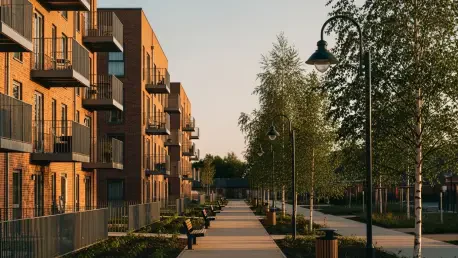
A defining characteristic of the Gorton regeneration is its rejection of the idea that high street improvements must lead to the displacement of existing residents. Instead, the project explicitly links public realm investment with residential stability through a critical partnership with the Clarion Housing Association. This collaboration has resulted in the delivery of 75 new homes across two key sites, ensuring that the revitalization of the area is underpinned by a permanent and growing local population. Crucially, these residences are designated for social rent and shared ownership, providing high-quality, secure housing options for those who might otherwise be priced out of a changing neighborhood. By embedding affordable housing directly into the regeneration plan, the city council has ensured that the people who currently live and work in Gorton are the ones who will benefit most from its transformation. This approach creates a virtuous cycle where a stable resident base supports local businesses, which in turn justifies further improvements to the public infrastructure.
The placement of these new homes in immediate proximity to the high street and the “Gorton Hub” community service center is a deliberate move toward creating a “15-minute neighborhood” dynamic. In this model, residents can access essential healthcare, education, retail, and public transport within a short, safe walk from their front doors. This synthesis of residential density and public realm investment is what distinguishes the Gorton blueprint from traditional, fragmented development schemes that often fail to connect housing with the services that people need. By reducing the reliance on cars and encouraging local foot traffic, the project promotes a more active lifestyle and reduces the carbon footprint of the community. This integrated planning strategy ensures that the regeneration is not just a surface-level upgrade but a fundamental restructuring of the neighborhood to make it more livable, equitable, and sustainable for the long term. It provides a clear demonstration that social equity and urban revitalization can, and should, go hand in hand to create truly thriving districts.
Collaborative Execution and Strategic Partnerships
The successful delivery of the Gorton regeneration project is the direct result of a highly coordinated, multi-disciplinary collaboration between the public sector and specialized private firms. Warden Construction acted as the primary delivery partner, managing the complex physical execution of the works to ensure that the ambitious designs were translated into durable, high-quality urban infrastructure. This phase of the project required careful management to minimize disruption to existing businesses while adhering to a strict timeline for completion. The architectural vision for the project was provided by Halliday Meecham, whose expertise ensured that the new structures and the public square were seamlessly integrated into the existing fabric of Gorton. Their design work focused on creating a sense of place that felt both modern and rooted in the local context, avoiding the “anywhere-anyplace” feel that often plagues generic urban renewals. This attention to architectural detail is what gives the revitalized high street its distinct character and professional finish.
Complementing the structural and architectural work, Deb Landscape Architecture played a vital role in designing the specific planting palettes and interactive play features that define the square’s unique identity. Their specialized knowledge allowed for the creation of a landscape that is not only beautiful but also functional, safe, and ecologically beneficial. This partnership highlights the inherent complexity of modern urban renewal, which demands a delicate balance between engineering efficiency, aesthetic appeal, and deep social insight. By bringing together experts from diverse fields—ranging from construction and architecture to landscape design and social housing—Manchester has demonstrated that the most effective regeneration occurs when professional expertise is aligned with a clear civic vision. With the Gorton project now serving as a successful proof of concept, the city is moving forward with confidence to apply these same principles to other neighborhoods. The transition to Newton Heath represents the next step in a broader movement to ensure that every corner of the city benefits from high-quality design and strategic investment, building a more resilient and interconnected urban future.