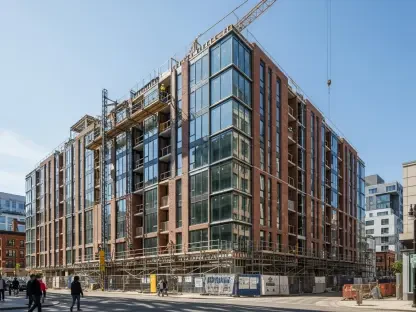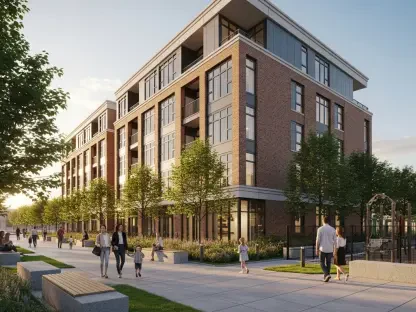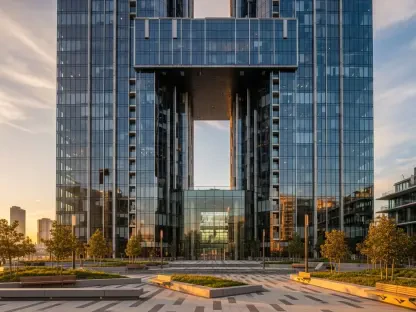

The transition from a local academic studio to managing sprawling international developments requires more than just technical proficiency; it demands a fundamental shift in how one perceives the built environment. In the current landscape of 2026, where “giga projects” define the urban fabric of the Middle East and East Asia, the educational background of landscape architects has never been more scrutinized. Jagger Javenes, a Vice President at the global planning firm EDSA and a graduate of the University of Connecticut, exemplifies how a specialized curriculum can bridge this gap. While many large-scale developers focus purely on infrastructure, the trajectory of Javenes illustrates that the most successful projects are those rooted in the granular, analytical techniques learned in an intimate academic setting. This educational paradox—where a large university provides a small, focused design community—serves as the catalyst for professionals who must eventually navigate the immense complexities of modern global architecture. By fostering a collaborative culture that mirrors the team-based dynamics of major design firms, this pedagogical approach prepares graduates to handle the logistical and creative pressures of projects that span thousands of acres and involve multi-billion-dollar investments.
Bridging the Gap Between Academia and Industry
The Paradox: Small Studios in Large Institutions
The architectural curriculum often thrives when it offers a “small-within-large” experience, allowing students to benefit from the resources of a major research university while maintaining the tight-knit mentorship of a boutique program. Within this environment, the studio functions as a microcosm of the professional world, where faculty members act less as lecturers and more as principal investigators or lead designers. This structure was pivotal for Javenes, as it encouraged a culture of constant critique and iterative development, which is essential for scaling design ideas to a global level. In the professional realm, particularly at a firm like EDSA, the ability to collaborate across disciplines is the primary driver of innovation. Students who are trained in high-touch, mentor-driven programs develop a unique sense of professional resilience and adaptability. This foundational experience ensures that when they eventually transition to high-stakes global environments, they possess the communication skills and technical confidence required to lead diverse teams of engineers, ecologists, and urban planners on projects that require seamless interdisciplinary coordination.
Visual Literacy: The Power of the Analytical Eye
A defining moment in the development of a landscape architect is the shift from a passive observer to an analytical designer, a transformation often catalyzed by immersive study. During a formative architectural study trip to Europe, Javenes transitioned from seeing urban spaces through the lens of a tourist to understanding them through sketching and diagramming. This rigorous process of documenting the mechanics of historical plazas and modern streetscapes established a “design eye” that functions at every scale of development. In 2026, as digital tools like parametric modeling and generative design become standard, the ability to manually analyze and deconstruct a space remains a critical differentiator for top-tier professionals. Sketching serves as a method of slow thinking, allowing a designer to internalize the proportions, social dynamics, and environmental constraints of a site before applying digital layers. This analytical rigor is what enables a practitioner to move from designing a small-town park to conceptualizing the master plan for a giga project in China or the Middle East, ensuring that the core design logic remains sound regardless of the project’s physical or financial footprint.
Scaling Design for the Modern Era
Ecosystem Preservation: Managing Giga Project Dynamics
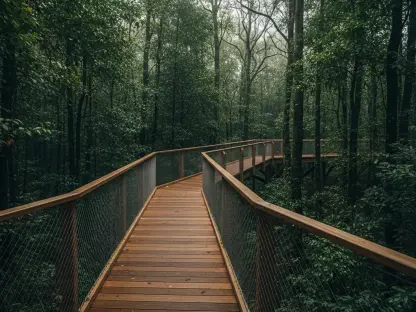
In his current capacity as a Vice President at EDSA’s Dallas office, Javenes manages a portfolio that ranges from culturally significant sites to environmentally sensitive residential developments. A central challenge in contemporary landscape architecture is the maintenance of environmental stewardship within the context of massive, design-driven developments. For instance, projects like the National Juneteenth Museum in Fort Worth or sprawling resorts in Oklahoma require a nuanced understanding of local ecology and cultural heritage. Even when dealing with the hyper-scale of international giga projects, the foundational commitment to preserving existing ecosystems remains the most critical variable for long-term success. The industry has reached a consensus that thoughtful planning must create a harmony between human amenities and the natural landscape. This approach aligns with the strategic vision of modern design education, which prioritizes the creation of sustainable landscapes at the urban-rural interface. By applying these principles, designers ensure that even the most ambitious global projects are grounded in a sense of place and ecological responsibility, preventing the homogenization of the built environment across different continents.
Future Directions: Integrating Sustainability into Urban Design
The evolution of landscape architecture from 2026 and beyond will likely be defined by the integration of advanced ecological modeling and human-centric design on an unprecedented scale. Professionals who have mastered the art of scaling their expertise have demonstrated that the core tenets of design—technical analysis, environmental responsibility, and creative problem-solving—are universal. The transition from a student in a specialized program to a global design leader was facilitated by a curriculum that refused to decouple aesthetic beauty from functional sustainability. Future practitioners should focus on developing a diverse toolkit that includes both traditional analytical methods and emerging technologies to address the climate challenges of the next decade. The successful implementation of these strategies in projects across the Middle East and the United States has shown that the most impactful real-world architecture is born from a deep respect for the site’s original character. Moving forward, the industry must continue to champion educational models that produce architects capable of thinking both locally and globally. This dual perspective was the key to unlocking the potential of large-scale developments while ensuring they remained viable and vibrant for the communities they serve.