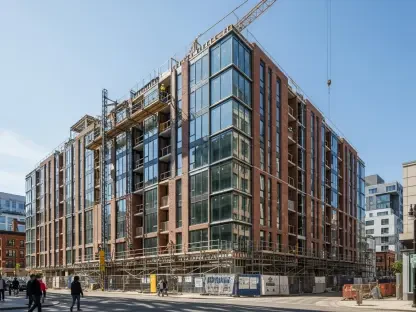

The familiar landscape of downtown Tyler is currently a symphony of construction, where the promise of a revitalized city center is taking shape amidst a temporary labyrinth of detours and road closures. An ambitious Downtown Improvement Project, running concurrently with essential infrastructure upgrades, has transformed the area, creating significant challenges for parking and traffic flow that are expected to persist until at least the middle of the year. In response to the disruption, which is part of a long-term vision scheduled for completion in January 2028, city officials have released a comprehensive plan to ensure residents and visitors can continue to access and support the vibrant businesses at the heart of the community. This guide serves as a clear roadmap, designed to mitigate confusion and demonstrate that while the square is undergoing a major facelift, it remains fully open and accessible for everyone to enjoy. This proactive communication aims to keep the economic heart of the city beating strongly throughout the transformative process.
A Vision of Progress Taking Shape
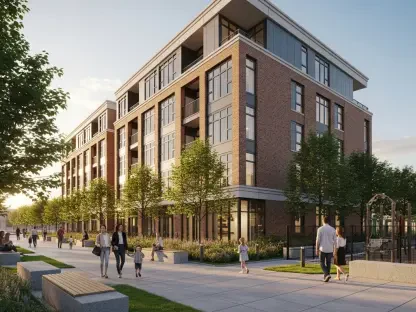
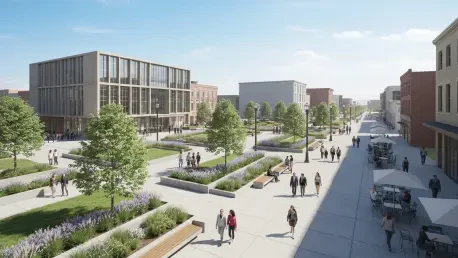
The extensive street closures are the direct result of a multi-million dollar collaboration between the City of Tyler and Smith County, known as the Downtown Improvement Project. This transformative effort is designed to create a more community-oriented and pedestrian-friendly downtown square. A key component of this project is the construction of a new county courthouse, a centerpiece for the revitalized district. The scope of the work also includes converting several one-way streets to two-way traffic to enhance navigability, as well as introducing new green spaces, public restrooms, modern sidewalks, and two roundabouts to improve traffic flow and aesthetic appeal. The city’s portion of this ambitious undertaking is funded by Half-Cent Sales Tax funds, ensuring that the community’s investment directly contributes to its future, while the new courthouse is financed through a bond that was decisively approved by voters, reflecting strong public support for the long-term vision.
Happening in tandem with the surface-level improvements is a massive and critical upgrade of the city’s wastewater system, a project mandated by a Consent Decree with the U.S. Environmental Protection Agency (EPA). This long-term initiative, part of a plan spanning from 2017 to 2027, involves comprehensive improvements to 718 miles of sewer mains, over 11,000 manholes, and 26 lift stations. Earlier this year, the city council approved a substantial $28 million investment specifically for the installation of over 18,000 linear feet of new sanitary lines within the downtown area. The decision to execute these two monumental projects simultaneously was a strategic one, aimed at preventing the immense disruption of repeatedly closing and reconstructing the same streets in the near future. By coordinating the underground and surface-level work, officials are consolidating the inconvenience into a single, albeit significant, phase of construction for greater long-term efficiency.
Strategic Parking Solutions for Visitors
Despite the visual impact of the construction, a significant number of parking spaces remain readily available for public use, with directional signs placed strategically throughout the downtown area to guide drivers. For those seeking convenient, cost-free options, two primary facilities stand out. The Smith County Parking Garage, located at 210 East Ferguson Street, offers a wealth of free spots with direct access to the area’s retail and dining establishments. It is important for drivers to note that vehicle entry and exit for this garage are exclusively from the westbound lane of West Ferguson Street. Similarly, the Fair Plaza Parking Garage, situated at 208 South College Avenue, provides another excellent free parking resource. Positioned just one block from the downtown square, it offers an easy, approximately three-minute walk to the central business district. Access is straightforward, with both entry and exit points located solely on South College Avenue, making it a simple and accessible choice for visitors.
For patrons who prefer paid parking or require different access points, several well-maintained lots offer structured and reliable options. The Plaza Tower and People’s Parking Lots, located on North Bois D’Arc Avenue, are particularly appealing with their user-friendly payment system. The rate is set at a modest $1 per hour, with a daily maximum charge of $10, and as a significant incentive, parking becomes entirely free after 5 p.m. on weekdays and throughout the entire weekend. Some businesses in the vicinity may also offer parking validation for customers. Another key facility is the Regions Bank Parking Lot at 100 East Ferguson Street, which offers paid public parking exclusively on its top level. The payment structure is tiered, starting at $2 per hour for up to five hours, and patrons should note that this garage does not accept cash. For those needing only a brief stay, limited two-hour street parking also remains available along sections of North Broadway Avenue and East Erwin Street, providing quick access for short errands.
Seamless Connectivity via a Free Shuttle Service
To further enhance accessibility and bridge the distance between parking facilities and downtown destinations, the city has partnered with Tyler Valet to operate a complimentary, fixed-route shuttle service. This initiative was specifically designed to assist all visitors, particularly those with mobility limitations, ensuring they can travel easily and comfortably between the primary parking garages and the shops, restaurants, and offices around the square. The shuttle operates on a consistent and convenient schedule, providing a reliable transportation solution throughout the week. A weekday service runs from 8 a.m. to 5 p.m., catering to daytime visitors and employees. To support the downtown evening and weekend economy, an additional service is available on Thursdays from 6 p.m. to 10 p.m. and on Fridays and Saturdays from 7 p.m. to 11 p.m., making it easier for patrons to enjoy a night out without transportation concerns.
The shuttle’s route is thoughtfully designed with six designated stops to provide comprehensive coverage of the downtown core, ensuring that passengers are never more than a short distance from their intended destination. The loop begins at Stop 1, located on the Broadway Avenue side of the Fair Plaza Parking Garage, making it an ideal starting point for those using this free facility. From there, it proceeds to Stop 2 on West Erwin Street, directly in front of the historic Liberty Hall. Stop 3 is conveniently situated on East Ferguson Street at the entrance of the Smith County Parking Garage. The shuttle then continues to Stop 4 at the northwest corner of the Ferguson Street and College Avenue intersection, followed by Stop 5 on North Bois D’Arc Avenue, which serves the Plaza Tower parking lots. The final stop, Stop 6, is at the southwest corner of the College Avenue and Elm Street intersection, completing the loop and returning passengers near the Fair Plaza Parking Garage, thus creating a seamless and efficient transportation circuit.
Downtown Businesses Remain a Vibrant Destination
Amidst the ongoing construction, a vital message from city officials and local proprietors has been one of resilience and continuity: downtown Tyler is unequivocally open for business. The area’s cherished restaurants, unique boutiques, and lively bars around the square, including popular establishments like Rick’s on the Square, The Black Pearl, Prime 102, and Crema Coffee Co., have all continued their operations. These businesses are strategically located within a short and pleasant walking distance of all the major parking garages, ensuring that patrons can still easily access their favorite spots. While venues such as Liberty Hall, Don Juan’s, and Sports Zone remain open, visitors should be aware that parking directly in front of these locations may be limited. The city has encouraged visitors to utilize the available resources, including the new shuttle service, to continue enjoying the diverse offerings of the central business district without interruption.
The period of transformation has not been without its challenges for the local business community. Several proprietors have voiced concerns about the struggles they have faced due to a noticeable decline in patronage since the construction began, a trend that directly impacts their ability to thrive. In response, these business owners have issued a sincere call for community support, asking residents and visitors to make a conscious effort to shop, dine, and gather downtown during this critical period. By navigating the temporary inconveniences and continuing to frequent these establishments, the community played a direct role in ensuring the long-term vitality of the downtown area. The city’s efforts to improve navigation and parking were implemented to support this goal, fostering an environment where these essential businesses could not only survive the construction phase but also emerge stronger and ready to benefit from the revitalized public spaces that were being created just outside their doors.