
The prevailing aesthetic of clean lines and minimalist surfaces that has long dominated interior design is giving way to a richer, more layered approach. In this shift toward spaces with depth, texture, and a tangible sense of history, antique tapestries are emerging not as quaint relics but as powerful, structural elements capable of fundamentally reshaping a room. Far from being simple decorative afterthoughts, these woven chronicles are being rediscovered by designers and homeowners alike for their unique ability to introduce atmosphere, absorb sound, and provide a focal point that is both visually stunning and deeply resonant with cultural heritage. Their resurgence signals a deeper understanding of walls as more than static backdrops, but as dynamic canvases for storytelling and sensory experience.
The Enduring Legacy from Function to Fine Art
More Than Just Decoration The Original Architectural Tool
Long before the advent of modern insulation and central heating systems, antique tapestries served an indispensable architectural function, transforming cold, cavernous interiors into habitable spaces. Within the drafty stone walls of castles, churches, and grand halls, these densely woven textiles were a primary defense against the elements, providing a critical layer of thermal insulation that regulated ambient warmth and made rooms significantly more comfortable. Their utility extended beyond temperature control; the heavy fabric also played a crucial role in improving room acoustics. By absorbing sound and reducing echoes, tapestries softened the harsh, reverberant quality of large, unfurnished areas, creating an environment of greater intimacy and quietude. They were, in essence, a sophisticated and practical solution to the architectural challenges of their time, a testament to the ingenuity of using textiles to master one’s environment. This functional origin is key to understanding their inherent weight and presence in a room today.
Beyond their stationary functions, a key aspect of their historical importance was their remarkable portability, earning them the description of “the earliest form of portable decoration.” Unlike fixed assets such as frescoes or wood paneling, tapestries were considered valuable, movable possessions. The aristocracy would regularly transport them between their various properties, rolling them up and moving them as the court relocated. This mobility endowed them with an incredible versatility; a single piece could be rehung to suit a different season, to add splendor to a specific ceremony, or simply to refresh a room’s decor on a whim. Over time, this constant movement meant that each tapestry “gathered a life of its own,” its threads absorbing the stories and atmospheres of the different settings it inhabited. This dynamic history is palpable in antique examples, distinguishing them from static artworks and infusing them with a sense of accumulated narrative that enriches any modern space they grace.
Woven Wealth and Power Symbols of Status
In an era preceding the widespread availability of wallpaper or framed art, tapestries functioned as the primary medium for complex visual storytelling and cultural expression. They were a “visual language,” communicating intricate narratives and societal values to a largely illiterate populace. The grand workshops of Europe, such as those in Flanders and Aubusson, produced pieces depicting everything from pastoral landscapes and monumental hunting scenes to classical myths and religious parables. In contrast, Central Asian suzanis featured a rich vocabulary of symbolic motifs like suns, pomegranates, and vines, each representing local belief systems and the surrounding flora. A particularly prized category, verdure tapestries, celebrated the natural world with their immersive, lush scenes of foliage and woodland. These pieces can be seen as an early form of biophilic design, intentionally bringing the calming and restorative effects of nature indoors to create a serene, enveloping atmosphere for inhabitants.
The immense labor and costly materials required for their creation made tapestries potent and unambiguous symbols of wealth, power, and elevated social status. Commissioned by elite patrons, from royalty to the burgeoning merchant class, they were a primary vehicle for ostentatious display. The use of expensive silk and metallic threads, which would catch the candlelight and shimmer, was a deliberate choice to showcase a patron’s victories in battle, their noble lineage, or simply their vast fortune. The extraordinarily slow and disciplined making process, where weavers would spend years on a single piece, further added to their prestige and value. As textile artist Chloe Jonason explains, they became “records of culture, craft, and daily life,” with the “rhythm of work” embedded in every stitch. This legacy of craft and patronage imbues antique tapestries with an authority and presence that mass-produced decorative items simply cannot replicate, making them a focal point of genuine historical significance.
The Allure of Authenticity Why Vintage Triumphs
The Inherent Value of Age
A consensus among designers and connoisseurs is the clear superiority of antique tapestries over their contemporary reproductions, which, while mimicking the aesthetic, fail to capture the tactile complexity and profound depth that only time can bestow. Over decades and centuries, the natural fibers of a tapestry undergo a graceful evolution. Wool relaxes and softens, losing its initial rigidity to achieve a supple drape, while silk develops an uneven, captivating way of catching the light that is impossible to replicate artificially. The colors, rather than fading harshly, mellow and soften into a subtle and complex palette, creating nuanced tonal shifts that add to the visual richness. Designer Jessica Jubelirer aptly refers to them as “practical artworks,” whose compelling story is visibly written in their material transformation. This organic aging process imparts a unique character and soulfulness, making each piece a one-of-a-kind artifact shaped by its long history.
The visible signs of a tapestry’s journey through time are not considered flaws but are instead celebrated as integral parts of its narrative, adding character and authenticity to the piece. Gentle thinning in certain areas, carefully executed historical repairs along the edges, or subtle variations in color from different dye lots, known as “abrash,” all contribute to its unique story. As designer Fleur Liversidge notes, these imperfections “become part of the narrative,” providing tangible evidence of endurance and grounding a modern space with a sense of history and perspective. This appreciation for the beautifully imperfect contrasts sharply with the anonymous perfection of new textiles. Furthermore, choosing a vintage piece represents a compelling form of sustainable consumption. Handmade from natural fibers using labor-intensive methods designed to last for generations, their continued use today honors the principles of repair, reuse, and reverence over the disposability inherent in many modern goods.
Integrating History into the Home A Modern Approach
When sourcing a vintage piece, experts advise prioritizing its structural integrity and overall character rather than searching for an unrealistic state of perfection. The primary consideration for a prospective buyer should be the condition of the weave itself; it is crucial that the “ground cloth remains sound,” as designer Joanna Plant emphasizes. A strong, stable structure and intact edges ensure the tapestry’s longevity, even with visible signs of age. In fact, evidence of careful, historical mending is often viewed as a positive attribute, a sign that the piece was cherished and preserved through generations. Color can also be a decisive factor and a powerful catalyst for an entire room’s design scheme. Antique tapestries can retain “surprisingly strong color,” particularly the verdure combinations of blue, green, and buff, providing a foundational palette from which to build the space. Exceptional pieces can be discovered through various channels, proving their accessibility beyond exclusive, high-end galleries.
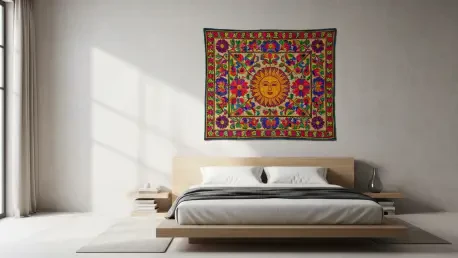
The contemporary approach to styling antique tapestries involves treating them as foundational architectural elements rather than as simple decorative afterthoughts that are added last. Their inherent scale, texture, and visual weight give them the power to define a room’s atmosphere and even influence its layout. Proportion is a critical factor in their placement; a large-scale tapestry can effectively anchor a living or dining room, providing a commanding focal point while also absorbing sound and giving expansive walls a sense of intention and warmth. Smaller pieces, such as suzanis, are highly effective when placed above beds, sofas, or consoles, where their intricate details and skilled embroidery can be appreciated up close. To preserve their tactile, dynamic quality, many designers are moving away from pinning them flat against a wall like conventional art, favoring methods like hanging them from brass poles, which allows the fabric to drape naturally and express its material character.
Rethinking the Tapestry’s Role Innovative Uses
Beyond a Simple Wall Hanging Modern Placement
Pushing beyond traditional applications, designers are increasingly embracing more experimental and functional uses for antique tapestries, showcasing their remarkable versatility. A relaxed and inviting atmosphere can be achieved by casually throwing one over the back of a sofa, a simple gesture that instantly adds a layer of warmth, texture, and historical intrigue to a seating area. Similarly, laying a vibrant suzani across the end of a bed introduces a rich, layered look and a splash of intricate pattern, elevating the entire room’s design. This approach treats these textiles not as precious, untouchable artifacts but as living elements of the home that can be interacted with and enjoyed. This less formal placement allows their beauty and craftsmanship to be appreciated in a more intimate and accessible way, integrating them seamlessly into the rhythms of daily life rather than isolating them as purely decorative objects on a wall.
In modern homes, particularly those with open-plan layouts, antique tapestries have found a new purpose as clever architectural tools for dividing and defining space. Their substantial weight and sound-absorbing qualities make them ideal for use as elegant curtains or room dividers. In a large, open area, a well-placed tapestry can instantly ground the room, creating distinct zones for living and dining while adding depth, warmth, and a wonderfully subtle palette. This application harkens back to their original functional roots in managing large, undefined spaces. Furthermore, they offer an ingenious solution for concealing modern technology. A beautiful tapestry can be used to hide a television when not in use, allowing a room to maintain its aesthetic integrity without sacrificing contemporary conveniences. This clever concealment strategy perfectly marries historical charm with the practical needs of modern living, demonstrating their enduring adaptability.
A Woven Legacy for the Modern Age
The renewed interest in antique tapestries ultimately signaled a profound shift in interior design philosophy, moving away from stark, impersonal backdrops toward spaces rich with narrative and physical softness. By reintroducing these historical textiles into contemporary settings, designers successfully restored not only texture and warmth but also a tangible connection to history and craftsmanship. These pieces, made slowly, altered through generations of use, and endlessly adaptable, proved that true style endures. They demonstrated that some objects are, simply, better vintage, and that their role transcended mere decoration to actively shape and define the very essence of a room.