
The transformation of two early 1950s-era residences into a breathtaking showcase of modern luxury defines the ninth annual Kips Bay Decorator Show House Palm Beach as it arrives in the historic Northwood Shores neighborhood. This year, the event has significantly broadened its scope by occupying two adjacent properties on North Flagler Drive, known as the “Intracoastal House” and “Palm Cottage,” creating an expansive campus for creative exploration. Nearly two dozen of the nation’s most respected interior designers have collaborated to reimagine these mid-century structures, proving that even aging architecture can be revitalized through visionary artistry and sophisticated material application. Beyond the immediate visual impact, the project serves as a critical fundraiser for the Boys & Girls Clubs of Palm Beach County and the Kips Bay Boys & Girls Club in New York City, continuing a fifty-year tradition that has generated over $33 million for youth enrichment programs. By inviting the public to witness this metamorphosis, the organizers highlight the immense potential of Florida’s coastal architecture while securing vital resources for the next generation of community leaders.
Several distinct aesthetic movements have surfaced within this collective effort, most notably a pervasive “Resort Focus” that celebrates the vibrant, sun-drenched lifestyle synonymous with Palm Beach. This thematic core is expressed through a sophisticated palette of citrus yellows, ocean blues, and lush tropical greens, grounding the high-end designs in their local environment. Furthermore, the designers have navigated the challenge of historic preservation by either leaning into the original mid-century modern bones of the houses or providing a stark, contemporary counterpoint that emphasizes architectural evolution. A third emerging trend, “Functional Luxury,” demonstrates that no space is too small for elevation; utilitarian zones like laundry rooms, hallways, and even water heater closets have been reimagined as “jewel-box” environments. These spaces utilize rare marbles, custom-printed wallpapers, and artisanal lighting to ensure that every square foot of the home contributes to a cohesive narrative of opulence and intentionality.
Grand Designs Within the Intracoastal House
Sophisticated Social and Culinary Spaces
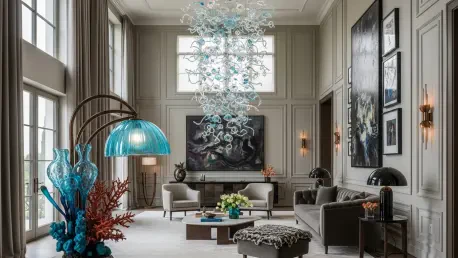
The Great Room, envisioned by Wecselman Design, functions as a “Designer’s Retrospective,” weaving together elements of global travel and personal history into a seamless living environment. A centerpiece of the room is the iridescent, hand-blown glass installation by Jamie Harris that floats across the ceiling, casting a dynamic glow over a collection of antique mirrored panels and curated fine art. The space utilizes a sophisticated foundation of soft neutrals and earthy tones, which are layered with bronze and gold accents to create a sense of timelessness. Notable sculptural pieces, such as a Todd Merrill floor lamp inspired by marine biology and a vinyl sculpture by Gregor Hildebrandt, anchor the room’s various seating vignettes. This room sets an ambitious tone for the house, illustrating how a large, open-concept area can be divided into intimate zones while maintaining a grand sense of architectural continuity and cultural depth.
In the kitchen and dining area, Yarn Design Associates focused on the intersection of materiality and geometry to maximize the potential of a relatively compact footprint. The design is built upon “layered neutrals” that are punctuated by earth-inspired greens and warm golden yellows, reflecting the natural landscape just outside the windows. To address the functional challenges of the space, a custom triangular work island was installed, serving as a multi-purpose hub for storage, casual seating, and large-scale entertaining. The lighting design is particularly evocative, featuring a custom installation by Boyd Lighting that consists of individual leaf-like elements suspended at varying heights above the island to mimic a falling canopy. By prioritizing tactile textures and innovative furniture shapes, the designers transformed a standard utility area into a high-design culinary environment that remains deeply practical for a modern family.
The “Architectural Mirage” sunroom, designed by BAMO Inc., leverages the property’s high ceilings to create a space rooted in architectural surrealism and light manipulation. The ceiling features articulated slats by LEEDS Custom Design that interact with the shifting Florida sun, creating a rhythmic pattern of shadows throughout the day. To provide a sense of softness against the hard architectural lines, the designers utilized continuous linen drapery embedded with metallic threads, which creates a subtle wave pattern that mirrors the nearby Intracoastal Waterway. This room focuses on the interplay of varied materials, from stone and wood to woven textiles, ensuring that the environment feels grounded yet ethereal. Meanwhile, the “Gilded Palm” lounge by Lori Morris Design offers a deliberate contrast with its high-drama aesthetic, utilizing champagne, chocolate brown, and emerald green to evoke a sense of old-world Hollywood glamour. Crystal chandeliers with palm motifs and signature animal prints define this room as a premier destination for evening entertainment.
Intimate Retreats and Thematic Salons
The transition into the home begins at the “Gracious Garden Entry” by Justin P. Moreland Interiors, a space that serves as a study in transitional harmony and fine craftsmanship. Starting with a classic wallpaper by Colefax and Fowler, the foyer was designed to showcase a collection of high-caliber art, including an untitled painting by Susan Rothenberg. The room’s furniture selection, such as a custom butterfly table by Claire Crowe and a Billy Baldwin slipper chair, creates a welcoming atmosphere that balances formal elegance with approachable comfort. Lighting fixtures in brass by Vaughan complement the floor-to-ceiling drapery by Jane Churchill, establishing a design language of refined traditionalism that carries through the home’s public thoroughfares. This entry sequence prepares the visitor for a journey through spaces that are as much about personal storytelling as they are about aesthetic perfection.
The “Royal Retreat” sitting room, created by Lisa Erdmann Interiors, draws direct inspiration from the legendary lifestyle of Princess Margaret on the island of Mustique. Utilizing a palette of soothing Caribbean blues, pinks, and greens, the room is anchored by Brunschwig & Fils wallpaper that depicts watercolor scenes of tropical flora and coastal vistas. A central white linen sofa provides a neutral anchor for the room’s more vibrant patterns, encouraging relaxation and conversation in a setting that feels both historic and fresh. In another part of the house, “Lucinda’s Lounge” by Kate Ives Marshall offers a more personal narrative, serving as a tribute to the designer’s mother. The room features a soft yellow strié on the walls and clever trompe l’oeil painting to simulate architectural paneling. By removing a closet to create an arched desk nook with basketweave detailing, the designer demonstrated how structural modification can significantly improve both the flow and the charm of a smaller interior room.
One of the most surprising transformations within the Intracoastal House is the “Entertainment Command Center” by Tartan & Toile, which proves that even “afterthought” spaces can become luxury destinations. This suite encompasses a hallway, a powder room, and an office, the latter of which was remarkably carved out of a former water heater closet. Utilizing Pierre Frey Braquenié fabrics inspired by Marie Antoinette, the designer successfully disguised the necessary utility units while creating a functional environment for correspondence and event planning. This approach to “hidden” luxury continues in the “Citron Salon” by Pappas Miron Design, where a 1915 Arts & Crafts Savonnerie carpet serves as the foundation for an unconventional color story of bright citron yellow and sage green. The walls, embellished with French grosgrain-ribbon trim and jute cord, provide a textured backdrop for a custom built-in velvet sofa, showcasing how traditional materials can be used to create a modern, high-energy social space.
Private Suites and Wellness Spaces
The “Mame Dennis” guest bedroom by Danielle Balanis is a maximalist celebration of character and whimsy, drawing inspiration from the fictional icon Auntie Mame. The design juxtaposes traditional and contemporary elements through the use of a Lee Jofa/Oscar de la Renta floral print, which serves as the room’s dominant “hero fabric.” A Bunny Williams-designed canopy bed adds a sense of verticality and grandeur, while a mix of moody blues, luscious browns, and leopard print accents provides a rich, layered aesthetic. This suite is intended to be a complete sensory experience, extending into an ensuite bathroom that maintains the bedroom’s bold patterns and high-contrast color palette. This room exemplifies the show house’s trend toward narrative-driven design, where the space is built around a specific personality rather than just a set of aesthetic rules.
In the primary suite, Sherrill Canet Interiors focused on creating a “Primary Sanctuary” defined by serene elegance and architectural restraint. The room is anchored by a sophisticated Bordeaux wallpaper from York Wallcoverings, which provides a textured but quiet background for a bed upholstered in Scalamandre bouclé. An abstract wall hanging by Pierre Frey serves as a modern focal point, while the palette of gentle pastels and various shades of white fosters a calm, sensual atmosphere conducive to rest. The suite is designed to be a private oasis that prioritizes comfort and high-quality textiles, showing that luxury in 2026 is often found in the quality of the materials rather than in overt ornamentation. This focus on wellness and tranquility reflects a broader shift in residential design toward creating spaces that actively support the inhabitant’s emotional and physical well-being.
The wellness theme continues in the primary dressing room by Sire Design, which Eilyn Jimenez treated as an “architectural ritual” rather than a simple storage area. Inspired by the private suites of the 17th and 18th centuries, the room incorporates a beverage bar, a writing surface, and a private sauna, elevating the morning routine to a sophisticated experience. The use of deeply veined Cipollino marble and botanical wallpaper by GP&J Baker creates a rich, organic environment, balanced by a palette of deep plum and soft neutrals. Similarly, the “Terra Calma” cabana suite by Firefinish Interiors utilizes marble mosaics and a lighthearted citron color scheme to connect the indoor bathroom with an outdoor patio. Featuring a scallop-motif floor and organic sculptural forms, this space emphasizes the lightheartedness of Florida living. Meanwhile, Alexander Interiors’ “Chintz by the Sea” bathroom uses floral tones and hand-painted vintage furniture to bring a sense of nostalgic charm to the home’s private corridors.
Outdoor Grandeur and the Palm Cottage Experience
Social Hubs and Landscape Artistry
The expansive backyard of the Intracoastal House has been reimagined as the property’s social heart, dominated by a massive “Tiki Tent” designed by River Brook. Inspired by the iconic 1960s poolside photography of Slim Aarons, the space was “tented” internally with hundreds of yards of striped and neutral fabrics to soften the hard edges of the existing thatched roof. This intervention transforms a rustic structure into a cosmopolitan lounge, complete with a marble bar and sophisticated furniture arrangements that bridge the gap between retro resort glamour and contemporary luxury. The tenting technique creates an intimate, enveloped feeling that encourages guests to linger, effectively turning a backyard feature into a primary entertaining venue that can accommodate large gatherings regardless of the weather.
Complementing this social hub is the landscape architecture of Robert Bell, who created a garden narrative titled “Neither Fish Nor Fowl” that utilizes biological motifs to structure the outdoor experience. The centerpiece of this design is the “Seraphim” bar, a collaborative work with Belt Metal that features massive bronze feathered wings that open to reveal a polished stainless-steel and bronze interior. This sculptural element, inspired by the work of the Lalanne brothers, serves as both a functional bar and a high-impact piece of outdoor art. Bell also optimized the property’s sight lines toward the water, removing obstructions and introducing bright coral custom furniture by McKinnon & Harris to provide a vibrant contrast against the lush green native plantings. These outdoor spaces are not treated as secondary to the interior but as an extension of the home’s architectural and decorative narrative.
The landscape design also prioritizes environmental stewardship by incorporating native Florida species that support local wildlife, such as the butterfly garden included in the “Florida Garden Rooms” by Lopez Group, Inc. These outdoor zones are divided into specific “rooms,” including a dedicated sunbathing area and a summer kitchen for al fresco dining. To add a layer of regional humor and surprise, the designer placed a realistic fake alligator within the shrubbery, a playful nod to the local ecosystem that delights visitors. This holistic approach to landscaping ensures that the outdoor environment is as carefully curated and functional as the interior rooms, providing a variety of experiences ranging from quiet contemplation to high-energy social interaction. By integrating functional art like the Seraphim bar with native greenery, the designers have established a new standard for coastal outdoor living.
Historic Charm in Palm Cottage
Across the street, Palm Cottage offers a more intimate but equally detailed exploration of design, highlighted by “Mrs. Howell’s Retreat” from Eerdmans. Using the fictional character Lovey Howell from “Gilligan’s Island” as a muse, the designer achieved a “tropical grande-dame” aesthetic that makes the most of the room’s modest dimensions. The space is tented in Jim Thompson linen and features an aqua and white color scheme that feels airy and expansive. A shell-encrusted center table serves as the room’s anchor, while an AI-generated portrait of the Howells adds a contemporary, humorous touch to the classic decor. This room demonstrates that high-concept design can be effectively scaled down to smaller cottages without losing its sense of drama or luxury, proving that style is independent of square footage.
The “Breakfast Club” by Amy Young Designs continues this theme of concentrated luxury, reimagining the kitchen and breakfast area as a “modern jewelry box.” The walls are adorned with a hand-painted white-gold-leaf mural wallpaper by Aqualille, which provides a shimmering backdrop for maroon honed quartzite countertops. Design details such as double-stacked bullnose stone shelving and matte black fixtures give the space a subtle Art Deco edge, while maintaining the practical requirements of a working kitchen. In the adjacent “Champagne Conservatory,” Barbara Lewis and Meredith Lewis Gallo utilized a palette of blush pink, buttery yellow, and sky blue to create a light-filled sunroom. Centered around a custom sculptural shell bar, the room uses layered patterns and sculptural furnishings to create “visual weight” that grounds the space without obstructing the natural light from the many windows.
Social interaction remains a central theme in the “Mahjong Lounge” by LTA Interiors, a room designed to celebrate female friendship and the ritual of social games. The designer used matching Calico wallpaper on both the walls and the ceiling to create an “enveloped” feeling, utilizing a rich palette of pink, blush, and deep maroon. A custom mahjong table and a curvy, modern sofa provide the necessary infrastructure for hours of social play, making the room feel like a private club. Nearby, Steven Walsh’s “Botanical Hall” offers a masterclass in architectural restraint and technological integration. By using “invisible” architectural lighting systems, Walsh eliminated the need for bulky visible fixtures, allowing the focus to remain on the three-dimensional tropical fabric tiles and the dramatic red marble trim. These spaces within Palm Cottage demonstrate a commitment to detail and innovation that rivals the larger Intracoastal House, ensuring a consistent level of quality across the entire show house campus.
The 2026 Kips Bay Decorator Show House Palm Beach concluded as a landmark event that successfully combined high-concept interior design with a meaningful philanthropic mission. Designers moved away from minimalist trends to embrace bold, narrative-driven environments that utilized a wide array of tactile materials and vibrant color palettes. The project demonstrated that historic 1950s architecture can serve as a versatile foundation for contemporary luxury, provided there was a willingness to experiment with structural modifications and immersive decor. For future residential projects, these designs suggested that every area of the home, regardless of its original utility, held the potential to be a source of aesthetic pleasure and personal expression. By prioritizing storytelling and materiality, the participating professionals established a forward-looking vision for coastal living that remained deeply respectful of its historical and environmental context. This iteration of the show house provided a clear blueprint for how design can foster community engagement while pushing the boundaries of residential artistry.