
Many new homeowners find themselves in a space that, while perfectly functional, lacks the distinct personality and warmth that transforms a structure into a true home. This common phenomenon, often labeled “builder basic,” is not an indictment of budget or quality but rather the cumulative result of safe, standardized selections made for efficiency and mass appeal. The uninspired aesthetic arises from a series of default choices—from ubiquitous flush-mount lighting to uniform hardware and a monotonous color palette—that collectively create an environment that feels impersonal and unfinished. The key to breaking free from this generic mold lies not in a sweeping, costly renovation but in a series of strategic, thoughtful edits. By swapping, re-scaling, and layering key elements, homeowners can infuse their spaces with character and depth, achieving a curated, design-led feel that is both personal and profound.
Elevating Your Home’s Foundation
Add Architectural Character to Blank Walls
The most significant contributor to a builder-grade aesthetic is often the vast, uninterrupted expanse of plain drywall that defines most modern homes. When walls, ceilings, and doorways are treated merely as functional boundaries rather than integral design features, the result is an interior that feels flat, sterile, and devoid of character. This lack of architectural detail creates a visual monotony that can make a space feel uninspired, regardless of the quality of the furnishings within it. This issue is frequently compounded by other standard-issue elements chosen for economy over style, such as thin, hollow-core doors that feel flimsy to the touch and short, simple baseboards that fail to properly frame the room. While these components are perfectly functional, their collective presence reinforces a sense of uniformity and a lack of custom craftsmanship, leaving the home without the subtle layers that create visual interest and a feeling of permanence. These surfaces become a blank canvas that, if left unadorned, communicates a sense of being incomplete rather than intentionally minimalist.
Transforming these blank surfaces into features of architectural interest is a powerful way to elevate an entire home. The introduction of millwork and molding is one of the most effective strategies for breaking up monotonous walls and adding a sense of history and depth. Detailed crown molding can draw the eye upward and create a more polished transition between the walls and ceiling, while wainscoting or picture-frame molding adds texture and dimension to the lower portion of a room, grounding the space. Beyond wall treatments, upgrading foundational elements makes a substantial difference. Swapping out lightweight, hollow-core doors for solid-core or applied-molding versions provides a satisfying sense of weight and quality, subtly shifting the perception of the entire home. Similarly, replacing standard baseboards with taller, more detailed profiles can dramatically enhance a room’s stature and provide a more finished look. Even uncased drywall openings between rooms can be framed with painted millwork, creating defined, intentional transitions. For those seeking a less structural yet equally impactful solution, a thoughtfully chosen wallpaper can introduce pattern, color, and a compelling focal point to an otherwise plain room, instantly infusing it with personality.
Rethink Your Flooring Choices
Flooring constitutes one of the largest continuous surfaces in any home, giving it a profound and often subconscious influence on the overall atmosphere of a space. When this crucial element is selected based solely on low cost or ease of installation, it can quietly undermine every other design decision. Common builder-grade options, such as laminate with an obviously artificial and repeating wood-grain print, low-density carpet that feels thin underfoot, or plain ceramic tile lacking any textural variation, contribute to a generic and uninspired environment. These materials often fail to provide the warmth, texture, and visual interest that make a space feel considered, comfortable, and luxurious. A floor should be more than just a surface to walk on; it should contribute positively to the room’s sensory experience, impacting everything from underfoot comfort and acoustics to the way light is reflected throughout the space. When the flooring falls flat, it sets a mundane tone that can be difficult to overcome with furniture and decor alone, acting as a constant, underlying reminder of a home’s mass-produced origins.
Prioritizing quality and material interest in flooring selections is a foundational step toward a more elevated interior. The solution lies in choosing materials that add depth and intrigue, transforming the floor from a passive background element into an active contributor to the design. When selecting carpet, for instance, investing in a high-quality, 100% wool option offers not only superior durability but also a luxurious feel that cannot be replicated by synthetic alternatives. A practical test for carpet quality involves pressing a thumb deep into the pile; if the backing is easily felt, the carpet’s density is too low to provide long-term comfort and resilience. For hard surfaces, the key is to seek out materials with natural texture and variation. Wood flooring with a distinct grain pattern, natural stone tiles with inherent color variations, or even high-end luxury vinyl with a convincing texture can add a layer of authenticity and visual richness. The ultimate goal is to select flooring that engages the senses and supports the overall design narrative, creating a solid and sophisticated base upon which the rest of the room can be built.
Layering Light and Finishes for a Curated Look
Illuminate Your Space with Intention
Lighting is a critical detail that can single-handedly relegate a home to “builder basic” territory, regardless of other high-end finishes. The primary offenders are purely utilitarian fixtures installed without any consideration for aesthetics, such as the ubiquitous dome-shaped flush mounts and an over-reliance on large, inexpensive recessed “can” lights. These fixtures are designed to provide basic illumination at the lowest possible cost, and their generic appearance can cheapen the look of an entire room. Even in homes with premium features like marble countertops and custom cabinetry, the presence of these uninspired light sources can create a visual disconnect, making the whole space feel less refined. This type of lighting is purely practical, failing to contribute to the room’s ambiance, create an inviting atmosphere, or act as a decorative element. It simply exists, casting a flat, uniform light that does little to highlight architectural features or create zones of intimacy within a larger space.
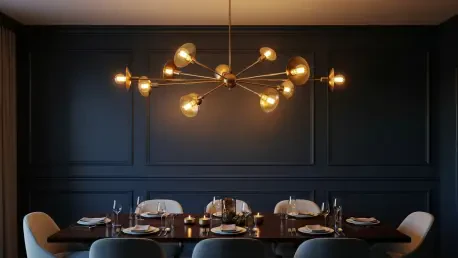
The remedy for poor lighting involves a strategic process of refining the existing scheme and layering new sources to create a more dynamic and inviting environment. Rather than relying on a single, harsh overhead source, a well-designed lighting plan incorporates multiple types of light—ambient, task, and accent—to add depth and functionality. A crucial first step is to replace default fixtures with more sculptural and intentional pieces. Swapping a standard flush mount for an elegant chandelier, a unique pendant light, or a sophisticated semi-flush mount can instantly create a stunning focal point for a room. Even the approach to recessed lighting can be refined. For those building a new home, specifying smaller, more discreet 2-to-3-inch cone lights is preferable to the standard 6-inch cans. In existing homes, conversion kits are readily available to downsize large openings to a more modern 4-inch format, allowing the lighting to blend more seamlessly into the ceiling. By thoughtfully combining these elements, light is transformed from a mere utility into a powerful design tool that shapes mood, defines space, and highlights the beauty of the home.
Introduce Contrast with Color and Hardware
One of the most common pitfalls leading to a generic interior is an over-adherence to flat finishes and a monotonous color palette. A frequent “safe” choice is to paint an entire home in a single shade of flat, cool white and to use the same metal finish—often brushed nickel or chrome—for every piece of hardware, plumbing fixture, and light fixture. While this approach is intended to create cohesion, it often results in a space that feels sterile, one-dimensional, and boring. The lack of variation flattens architectural details, causing beautiful millwork or cabinetry to recede into the background rather than stand out. Furthermore, when all finishes match perfectly, the interior can feel predictable and mass-produced, lacking the layered, collected-over-time aesthetic that gives a home its unique character and charm. This uniformity signals a lack of intentionality, suggesting that choices were made out of convenience rather than a desire to create a specific mood or style.
A more nuanced and layered approach to finishes and color is essential for achieving a curated, high-end look. The key is to introduce thoughtful contrast and material variation. A simple yet highly effective upgrade is to swap out thin, standard-issue cabinet pulls for more substantial hardware in a living finish like unlacquered brass or aged bronze, which will develop a beautiful patina over time and add a sense of weight and history to the space. Instead of insisting that all metal finishes match, designers often advocate for a more dynamic mix. A common guideline is the “one core, two accent” rule, where a dominant metal is used for the majority of fixtures, complemented by one or two different metals in smaller applications, such as a faucet or cabinet knobs. This creates a look that is cohesive yet visually interesting and timeless. Similarly, moving beyond a single paint color can add incredible depth. Using a palette of complex neutrals and warm whites that shift subtly from room to room can respond to different lighting conditions and add a layer of sophistication. Introducing a rich, deep color on a pantry or an accent wall can also create a dramatic and sophisticated focal point, breaking the monotony and infusing the home with personality.