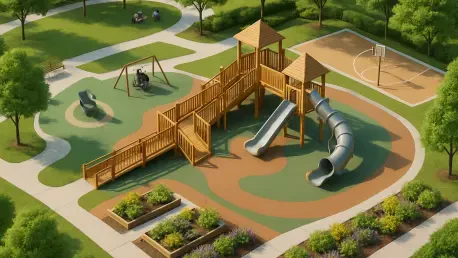

The evolution of urban recreational spaces has reached a pivotal moment as municipal authorities prioritize ecological integration over traditional, static playground structures that once dominated the landscape. Fingal County Council recently addressed this urgent need by selecting a winning design for the new play park at Hazelbury Park in Dublin 15, marking a significant milestone for local community infrastructure. The competition, which targeted young members of the Irish Landscape Institute, highlighted the exceptional vision of Tom Bradford, a landscape architect based in Boyle, County Roscommon. This project encompasses a sprawling 1,000-square-meter area, signaling a departure from the generic, plastic-heavy playgrounds of the past. Instead, the focus has shifted toward a sophisticated integration of natural elements and inclusive structures. By prioritizing creative solutions that engage the senses and respect the local environment, the winning proposal demonstrated how modern public infrastructure can bridge the gap between recreational functionality and artistic expression in a growing metropolitan region.
Innovative Design Principles for Public Engagement
Philosophical Foundations: A Rooted Approach to Landscaping
The design methodology employed by Tom Bradford and his firm, TBLA Landscape Architects, revolves around a deep commitment to what is described as being “rooted in place.” Since establishing the practice in 2023, the team has managed various projects across Ireland and the United Kingdom from their offices in Boyle and Carrick-on-Shannon. Their approach begins with an exhaustive investigation into the site’s unique characteristics, including its geological history, ecological diversity, and cultural significance. This research-heavy phase informs the transition from initial hand-drawn concept sketches to precise technical delivery, ensuring that every element of the landscape serves a specific purpose. Such a collaborative and creative philosophy is essential in an era where public spaces must be more than just aesthetic additions; they must reflect the identity of the community. By anchoring the design in the physical and historical reality of Hazelbury Park, the project successfully avoids the pitfalls of generic urban planning and creates a unique destination.
Inclusive Infrastructure: Sensory Accessibility and Playful Zones
A central feature of the Hazelbury Park proposal is its dedication to inclusive design, ensuring that children of all physical and cognitive abilities can participate fully in the recreational experience. The plan introduces multi-zoned environments that move beyond standardized equipment to offer diverse sensory engagement opportunities for every visitor. For instance, the inclusion of wheelchair-accessible play zones and specialized sand and water play features allows for tactile exploration that is often missing from traditional parks. These sensory areas are strategically placed to encourage social interaction among children of varying ages, fostering a sense of community from an early age. The design acknowledges that play is a fundamental right and that the physical environment must be adapted to accommodate the needs of every user. By integrating these accessible features seamlessly into the overall landscape, the project sets a high standard for how modern municipalities should approach the development of inclusive public infrastructure that leaves no child behind.
Ecological Resilience and Environmental Stewardship
Biodiversity Integration: Sustainable Urban Development Strategies
Beyond social utility, the Hazelbury Park project emphasizes environmental sustainability and climate resilience through the use of nature-based solutions. The landscape design incorporates pollinator-friendly planting and natural landscaping techniques that actively support local biodiversity while managing the ecological demands of an urban setting. This initiative reflects a broader consensus among landscape professionals that public parks must function as active green lungs for the city. By selecting species that are native to the region and resilient to shifting weather patterns, the project ensures that the park will remain a vibrant habitat for years to come. This approach to environmental stewardship transforms a simple play area into an educational resource where children can connect with the natural world in a meaningful way. The collaboration between local authorities and landscape architects highlights the transformative power of using “green” infrastructure to mitigate the impacts of urban heat and improve local air quality.
Community Outcomes: Future Directions for Public Space Design
The successful conclusion of the design competition provided a clear roadmap for future urban development projects seeking to enhance community well-being through thoughtful architecture. Stakeholders recognized that the integration of inclusive, nature-centric play areas served as a vital component in fostering resilient neighborhoods. Moving forward, urban planners and landscape architects should prioritize extensive site-specific research to ensure that new developments remain culturally and ecologically relevant. It was demonstrated that moving away from off-the-shelf playground components in favor of bespoke, site-responsive designs yielded superior results for both the environment and the end-users. Future initiatives should focus on scaling these inclusive models to other districts, ensuring that sensory-rich and accessible environments become the standard rather than the exception. By adopting these strategies, cities maintained a balance between growth and the preservation of natural beauty, ultimately securing a higher quality of life for all residents through the transformative power of landscape design.