
The once-thundering engines of the American nonresidential construction sector have transitioned into a noticeably quieter hum as the first quarter of 2026 reveals a landscape defined by unexpected stagnation. After several years of aggressive post-pandemic expansion and unprecedented spending peaks, the industry now finds itself grappling with a persistent cooling effect that has caught many seasoned observers off guard. While specialized technological niches like data centers continue to thrive, the broader industrial landscape is currently characterized by a contraction in private investment and the natural conclusion of massive, multi-year industrial projects. This analysis explores the multifaceted reasons behind this slowdown, synthesizing data from leading trade organizations to provide a comprehensive look at an industry in transition. By examining the divergence between public and private sectors, readers will gain insight into the economic and geopolitical forces currently dictating the pace of American development.
The Evolution of Nonresidential Development and the Post-2023 Shift
To understand the current malaise, it is necessary to look back at the unprecedented surge in construction activity that reached its zenith in December 2023. During that specific period, a combination of federal incentives and a domestic manufacturing renaissance pushed spending to all-time highs. The primary driver of this growth was the massive influx of capital into industrial megaprojects, particularly within the semiconductor and green energy sectors. However, these background factors, which once provided a robust foundation for annual growth, have fundamentally shifted. As these multi-billion-dollar facilities reach their operational phases, the industry is discovering that the pipeline for new projects of similar scale is not filling as quickly as anticipated. This historical context is vital, as it illustrates that the current stall is, in many ways, a correction from a period of extraordinary, incentive-driven expansion that the private market is now struggling to replicate independently.
Analyzing the Forces Behind the Private Sector Retreat
The Manufacturing Slump: A CHIPS Act Hangover
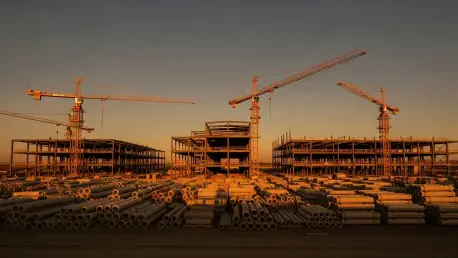
A primary contributor to the current stagnation is the sharp decline in manufacturing construction, which was once the undisputed pillar of industry growth. Spending in this category has plummeted roughly 15% since the beginning of 2025, driven largely by what economists now describe as the CHIPS Act Hangover. The initial wave of computer and electronic manufacturing projects, sparked by landmark federal legislation, is nearing its completion phase. Without a fresh infusion of similar legislative incentives, the computer and electronic subsegment has seen a spending correction of nearly 40% over the last 18 months. This data suggests that while the government successfully jump-started domestic production infrastructure, the momentum has not yet transitioned into a self-sustaining cycle of private manufacturing investment.
A Stark Divergence: Public vs. Private Spending
The current market is defined by a widening gap between public and private sector activity, creating a fragmented landscape for contractors. While private nonresidential spending has seen consecutive monthly declines—now sitting 8% below the peak recorded in 2023—the public sector has shown a modest degree of resilience. Buoyed by ongoing infrastructure legislation, public construction projects saw a slight uptick of 0.6% in early 2026. However, this growth is insufficient to offset the losses in the much larger private market. This imbalance highlights a defensive posture among private developers, who are increasingly hesitant to commit capital in a landscape where high interest rates and fluctuating demand make long-term budgeting a precarious exercise.
The Data Center Boom: An Isolated Growth Driver
Amidst the broader decline, data centers remain the standout exception, functioning as a vital but isolated engine of growth for the industry. Driven by the explosive demand for artificial intelligence and cloud computing infrastructure, this segment saw a 2% jump in spending in the first quarter of 2026. However, industry experts warn against over-reliance on this niche. Despite the momentum in data centers, nine out of sixteen major nonresidential subsegments reported spending drops. This indicates that the technological revolution, while powerful, is not broad enough to carry the weight of the entire construction industry, especially as commercial and water supply projects continue to face downward pressure.
Emerging Geopolitical and Economic Headwinds Shaping the Future
As the industry moves through the remainder of 2026, several external factors are expected to redefine the developmental trajectory. Geopolitical instability, particularly escalating tensions in the Middle East, remains a mounting concern for regional and international contractors. Experts predict that these conflicts will lead to heightened volatility in material prices and energy costs, further squeezing profit margins that are already under pressure. Additionally, trade and tariff uncertainties are complicating the global supply chain, making developers wary of breaking ground on projects that may face unexpected cost hikes mid-construction. There is also a shift toward more stringent environmental regulations and a focus on sustainable building materials, which, while beneficial in the long term, present short-term cost challenges that may further slow the pace of new starts.
Strategic Takeaways: Insights for Industry Stakeholders and Contractors
For businesses and professionals navigating this period of stagnation, rapid adaptation is no longer optional. Diversification should be the primary strategy for the current year; firms that have historically relied on manufacturing or commercial office spaces must pivot toward public infrastructure or specialized technology sectors like data centers. Best practices now include more rigorous risk assessment regarding material procurement and a greater emphasis on lean construction methodologies to preserve thin margins. Furthermore, stakeholders should remain vigilant regarding federal policy shifts, as new incentives or regulatory changes could provide the spark needed to end the current slump. Real-world application of these insights involves maintaining high liquidity and being prepared for a market that rewards agility over sheer scale.
Synthesizing the Path Forward for US Construction
In summary, the stalling of US nonresidential construction in 2026 resulted from a perfect storm of maturing megaprojects, a cooling private sector, and significant global uncertainty. While the data center boom provided a glimmer of hope, it was insufficient to bridge the gap left by the manufacturing retreat and the broader economic headwinds. This topic remained significant because construction served as a leading indicator of overall economic health; a prolonged slump here signaled wider challenges for the national economy. Moving forward, the industry sought a new equilibrium that balanced the demands of the digital age with the realities of a volatile global market. For developers and contractors, the message was clear: success depended on navigating uncertainty with strategic foresight and operational efficiency.