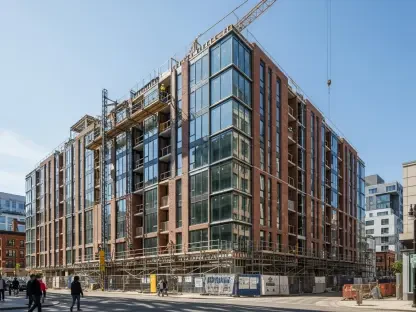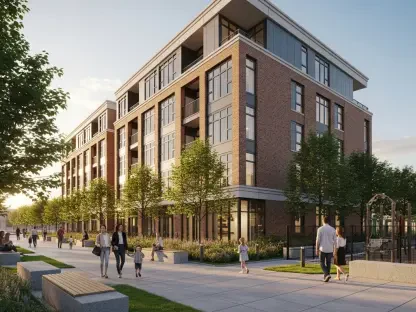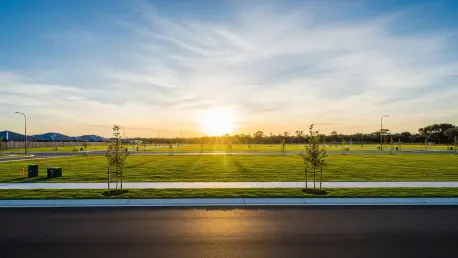

The skyline of Austin has long been defined by the rapid skeletal ascent of new residential developments, yet a stark disconnect has emerged between the availability of prepared land and the pace of actual vertical construction. Recent market intelligence reveals that the Austin metropolitan area is currently experiencing a level of lot saturation not seen in major American hubs for nearly a decade, specifically since the market corrections observed in 2017. While the city remains a magnet for corporate relocation and tech investment, the sheer volume of “finished lots”—parcels of land that are fully permitted and ready for a foundation—has swelled to a point where supply significantly outpaces current buyer absorption. This transition from a period of extreme scarcity to an environment of “significant oversupply” represents a fundamental recalibration of the local real estate ecosystem. The current inventory landscape suggests that the aggressive land acquisition strategies pursued by developers during the peak of the recent housing boom have finally hit a wall of economic reality.
This surplus is not merely a local anomaly but a reflection of broader fiscal shifts that have altered the feasibility of homeownership for a vast swath of the population. As regional developers continue to sit on thousands of ready-to-build sites, the momentum of the market has stalled, leaving many projects in a state of suspended animation. The situation is further complicated by the fact that Austin, along with Denver, stands as one of the few major metropolitan regions in the United States to reach this specific designation of oversupply. For years, the narrative surrounding Central Texas focused on the inability of builders to keep up with the influx of residents moving from coastal states; however, the current data paints a very different picture. Today, the challenge is no longer finding a place to build, but rather finding a buyer who can navigate the complex financial hurdles required to sign a mortgage. This surplus serves as a bellwether for the region, signaling that the era of runaway price appreciation and instant sales has transitioned into a much more calculated and cautious phase.
Economic Pressures and Shifting Consumer Behavior
The primary catalyst for this mounting surplus of home lots is a palpable cooling in consumer demand, which has forced regional homebuilders to rethink their immediate construction timelines. Through the final quarter of 2026, new-home starts in the Austin area plummeted by roughly 14.5% compared to the previous annual cycle, a statistic that highlights the defensive posture builders have been forced to adopt. High interest rates remain the most significant deterrent, as they have drastically reduced the purchasing power of first-time buyers and those looking to upgrade. When combined with the high cost of living in Travis and Williamson Counties, as well as the lingering burden of student loan debt, many potential homeowners are simply priced out of the market. Consequently, the lots that were prepared with the expectation of rapid turnover are now sitting idle. Builders are choosing to let these parcels remain vacant rather than committing to the high costs of materials and labor for homes that might sit on the market for months without a serious offer.
Furthermore, the general uncertainty within the labor market has introduced a layer of hesitation that did not exist during the post-pandemic migration surge. Even as tech companies maintain a presence in the region, the frenzy of “sight-unseen” purchases has evaporated, replaced by a demographic of buyers who are far more scrutinized by lenders and far more selective in their choices. This change in behavior has created a bottleneck in the development pipeline; while civil engineering and land development firms have successfully delivered the infrastructure for new communities, the vertical construction phase has hit a snag. The inventory of finished lots continues to grow because the rate at which builders “pull” these lots for active construction has dropped significantly. This divergence between land readiness and housing starts is the clearest indicator of a market in flux, where the initial optimism of land developers has collided with the financial constraints of the average American household in the current economic climate.
Regional Comparisons and Market Divergence
While Austin grapples with its surplus, the broader Texas landscape offers a study in contrasts, particularly when looking at the neighboring San Antonio market. Interestingly, the combined Austin-San Antonio corridor remains the third-strongest region in the country for new-home construction, yet the internal dynamics of these two cities are moving in opposite directions. San Antonio is currently classified as “appropriately supplied,” meaning its lot inventory matches the pace of its sales and construction starts. In a recent three-month window, San Antonio actually outpaced Austin by approximately 3,000 new home starts, demonstrating that while the capital city is struggling with a glut of land, its neighbor to the south has maintained a more harmonious balance. This discrepancy suggests that price points and buyer demographics in San Antonio may be more resilient to the current interest rate environment, or perhaps that Austin’s previous growth was so overextended that a correction was inevitable.
The situation in other major Texas hubs further highlights Austin’s unique position as the state’s most oversupplied market. Dallas is currently categorized as “slightly oversupplied,” while Houston remains largely balanced, indicating that the surplus issue is particularly concentrated in the Central Texas tech corridor. This regional cooling has transformed Austin into the strongest “buyer’s market” in the United States, according to recent brokerage reports. For the first time in recent memory, buyers have the upper hand, possessing the leverage to negotiate on prices, upgrades, and financing concessions that were unthinkable only a short time ago. This shift is a direct result of the lot surplus; when developers have too much inventory on their books, the pressure to liquidate or begin construction becomes a powerful motivator for offering incentives. The divergence between these cities serves as a reminder that real estate is local, and Austin’s specific mix of high-end tech growth and rapid land appreciation has left it more vulnerable to the current slowdown than its peers.
Strategic Realignment for Future Stability
The current imbalance in the Austin market necessitated a shift in strategy for developers and investors who must now prioritize long-term stability over short-term volume. Moving forward, the industry must focus on diversifying the types of housing offered on these surplus lots to meet the actual financial capabilities of the modern buyer. This could involve a pivot toward smaller, more efficient floor plans or “missing middle” housing types like townhomes and duplexes, which can be built on existing lots but at a lower price point for the end consumer. Developers who continue to push high-end luxury products in an oversupplied environment will likely face continued stagnation. By recalibrating the product mix to align with current wage growth and interest rate realities, the industry can begin to chip away at the lot surplus and restore a sense of equilibrium to the regional housing market.
In the coming months, stakeholders should closely monitor the relationship between municipal zoning changes and the speed of lot absorption. Increasing the density allowed on existing “finished lots” could provide builders with the flexibility needed to lower prices without sacrificing their margins. For buyers, the current environment offers a rare window of opportunity to enter a historically high-growth market with significant leverage. However, for the market as a whole to recover, there must be a concerted effort to address the underlying affordability issues that created this surplus in the first place. The excess of land is not a sign of Austin’s decline, but rather a call for a more sustainable and realistic approach to urban expansion. Stakeholders must move away from the speculative frenzy of the past and toward a data-driven model that ensures housing production actually meets the needs of the resident population. Only through this strategic realignment will the surplus be transformed from a financial liability into a foundation for the city’s next phase of growth.