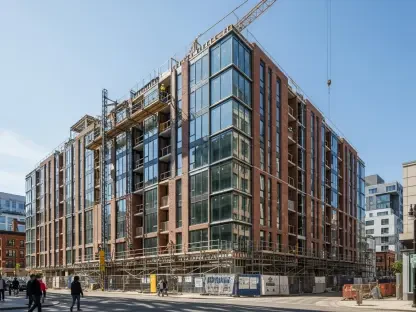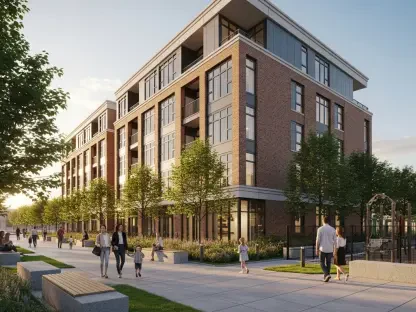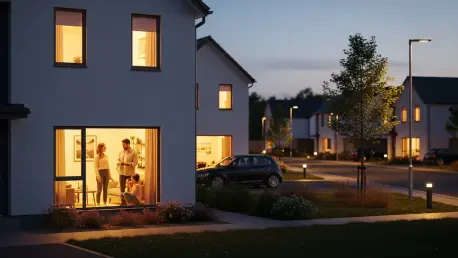

The United Kingdom’s housing market is undergoing a profound and accelerating transformation, quietly reshaping the very definition of rental living for millions. Far from the traditional image of city-center apartment blocks, a powerful new movement is gaining momentum in the suburbs, where single-family housing (SFH) has emerged as the dominant force within the build-to-rent (BTR) sector. This surge is not merely a fleeting market trend but a definitive response to a confluence of economic pressures, evolving lifestyle demands, and strategic investor repositioning. Once a niche segment, SFH is now a central pillar of the nation’s housing delivery strategy, attracting billions in capital and fundamentally altering the landscape for renters, developers, and institutional investors alike, signaling a permanent shift in the UK’s residential future.
A Foundation Built on Shifting Sands
The explosive growth of single-family rentals is built upon the unprecedented expansion of the UK’s Private Rented Sector (PRS), which has become a cornerstone of the nation’s housing. Driven by a government commitment to deliver 1.5 million new homes by 2029, the PRS has solidified its position as England’s second-largest housing tenure, expanding by a remarkable 52% over the last 15 years. This substantial growth is not accidental; it is a direct consequence of significant affordability pressures that have made homeownership an increasingly distant dream for many. The home ownership affordability ratio has more than doubled since 1997, creating a vast and diverse pool of long-term renters. This demographic, coupled with a societal demand for more flexible living arrangements and a rise in single-person households, has created a fertile environment for new, innovative housing models to take root and flourish.
While the rental market has expanded, its internal structure is undergoing a seismic shift, creating a vacuum that institutional capital is rushing to fill. A significant portion of traditional private landlords are now exiting the market, with recent data showing that 35% have either sold their properties or are actively trying to sell within the last year. This landlord exodus is a reaction to an increasingly challenging operational environment, characterized by adverse tax changes, persistent economic headwinds, and a growing regulatory burden, including the Building Safety Act of 2022 and the anticipated Renters Rights Act of 2025. The departure of these smaller-scale landlords has created a substantial supply gap, paving the way for the institutionalized growth of the Build-to-Rent sector. These professionally managed, purpose-built communities offer a more stable and high-quality alternative to the fragmented, aging stock of the traditional rental market.
The Decisive Pivot to Suburban Living
Within the rapidly maturing BTR sector, a clear and decisive trend has emerged: a significant pivot away from multi-family housing (MFH) toward single-family developments. This is not a minor adjustment but a major reallocation of capital, reflecting a deep understanding of modern rental demand. In 2025, of the £5.3 billion invested into BTR, a commanding £3.17 billion was deployed directly into SFH, meaning it accounted for between 55% and 59% of the total annual investment. This financial momentum is mirrored in development pipelines, with over 101,500 BTR homes in the planning stages as of late 2025. The shift is already visible in delivery figures, where SFH’s market share reached a record high of 25% in 2025, while MFH and co-living completions contracted significantly, dropping by 28% and 33% respectively.
This strategic shift is propelled by a confluence of powerful drivers that create a compelling case for tenants, investors, and developers. The rise of remote and hybrid working models has fundamentally altered what renters prioritize, leading to a clear demand for more living space, private gardens, and a higher quality of life outside of dense urban cores. For institutional investors, SFH offers an attractive proposition by allowing for portfolio diversification, aligning with long-term Environmental, Social, and Governance (ESG) investment goals, and generating earlier rental returns. Unlike MFH projects that require an entire building to be completed, SFH schemes can be developed and tenanted in phases, drastically improving cash flow. Furthermore, the model directly addresses a well-documented shortage of high-quality, professionally managed rental homes suitable for families in suburban locations, a void it is perfectly positioned to fill.
Designing the Future of Rental Communities
The success of an SFH development hinges on a sophisticated formula that goes far beyond simply building houses for rent. Location remains paramount, with a strong preference for sites offering proximity to essential transport infrastructure, good schools, and vibrant local amenities that foster a sense of community. The target demographic for these developments is notably younger than the broader rental market, with nearly 90% of occupiers under the age of 45. This cohort largely consists of professionals and key workers, including nurses, teachers, and social workers, who are drawn to the affordability and lifestyle benefits that suburban SFH provides compared to expensive city-center apartments. Affordability is a critical factor, making these schemes a financially accessible option that attracts a broad and stable tenant base.
Beyond location and affordability, the most successful SFH schemes are distinguished by their commitment to bespoke design and sustainability. There is a strong emphasis on meeting ESG requirements, with modern developments frequently incorporating features like electric vehicle charging points, air source heat pumps, and photovoltaic panels as standard. To maximize land use and meet market demand, homes are often designed to be slightly smaller than their for-sale counterparts, with less reliance on detached properties and garages. Finally, investors place a high premium on the swift delivery of approved homes and, crucially, the creation of a “complete community” from the outset. This forward-thinking approach ensured that supporting infrastructure, open spaces, and amenities were developed early in the program, which attracted residents and established a tangible sense of place from day one.