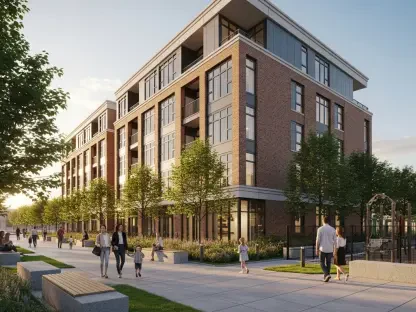

The American dream of stable homeownership and affordable renting has faced unprecedented pressure as a result of a decades-long supply shortage that has finally forced a massive realignment of federal and state legislative priorities. This fundamental shift in governance marks a departure from a century of localized land-use control, as policymakers recognize that the traditional “Home Rule” philosophy has inadvertently created a fragmented and restrictive regulatory environment that cannot sustain the needs of a growing population. By examining the current landscape of executive orders, bipartisan legislative packages, and aggressive state-level preemptions, it becomes clear that the United States is entering a period of top-down intervention designed to dismantle the “regulatory thicket” that has historically inflated construction costs and stifled the development of diverse housing types. The emergence of these policies, documented in recent policy briefs and legislative sessions, highlights a desperate search for equilibrium between market-driven production and populist protections for individual homebuyers.
This transition toward more assertive oversight is not merely a reaction to rising prices but a strategic effort to modernize the way the nation approaches residential infrastructure and urban planning. For years, the federal government remained on the sidelines of local zoning disputes, yet the current affordability crisis has reached such a critical mass that it now threatens broader economic stability and labor mobility. Consequently, the focus has shifted toward reducing the administrative friction that delays projects for years, with a particular emphasis on streamlining the permitting process for both suburban expansion and high-density urban developments. As these new strategies take hold, the tension between preserving local character and meeting national housing demands has become the central conflict of contemporary domestic policy. The following analysis explores how the federal executive branch, the U.S. Senate, and innovative state legislatures like Florida’s are attempting to navigate this complex terrain to ensure that attainable shelter remains a reality for all citizens.
Federal Executive Action: Deregulation and Greenfield Expansion
The executive branch has recently taken a direct role in addressing the housing shortage by issuing a series of orders aimed at reducing the federal footprint in residential construction oversight. This strategy marks a pivot toward “greenfield” development, focusing on the expansion of housing into suburban and exurban areas where land is more plentiful and construction can theoretically proceed more quickly. By targeting the specific mandates that govern land disturbance and infrastructure, the administration hopes to lower the “regulatory tax” that adds tens of thousands of dollars to the price of a typical single-family home. This deregulation effort is built on the premise that the primary barrier to affordability is not a lack of land, but an overabundance of bureaucratic hurdles that make it prohibitively expensive to prepare that land for residential use. The shift away from focusing solely on urban “infill” suggests a realization that density alone cannot solve the crisis and that a multi-pronged approach involving geographical expansion is necessary to meet current demand levels.
Central to this executive push is a comprehensive overhaul of environmental and stormwater regulations that have long been a source of contention for developers and civil engineers. Current federal mandates often require rigorous and expensive permitting for any project that disturbs more than a single acre of land, necessitating the construction of detention ponds, silt fences, and other mitigation measures that critics argue are often redundant. Furthermore, the Environmental Protection Agency has been directed to revisit the definitions of protected wetlands and navigable waters under the Clean Water Act to provide more certainty and reduce the “endless litigation” that frequently stalls projects for years. By expanding categorical exemptions under the National Environmental Policy Act (NEPA) for housing-related infrastructure like roads and sewers, the administration is attempting to create a “fast lane” for residential projects. This approach acknowledges that the environmental review process, while well-intentioned, has become a tool for obstruction that frequently drives up the cost of living for the very people it was designed to protect.
Legislative Limits: The Senate Strategy Against Institutional Investors
While the executive branch focuses on the mechanics of construction, the U.S. Senate has moved to address the market’s ownership structure through a rare bipartisan housing bill that targets large-scale institutional investors. Passing with a decisive 89–10 vote, the legislation reflects a growing political consensus that “corporate landlords” are outcompeting individual families for a limited pool of available homes. The bill establishes a prohibition on new single-family home purchases for any entity owning more than 350 properties, a move intended to preserve the stock of entry-level housing for traditional buyers. This populist approach seeks to restore the balance of power in the real estate market, as lawmakers argue that the massive influx of institutional capital has distorted prices and reduced the opportunities for middle-class wealth building through homeownership. However, the legislation has sparked a fierce debate over whether such restrictions will actually improve affordability or if they will simply discourage the very investment needed to expand the housing supply.
A particularly contentious element of this legislative package is the seven-year divestiture mandate applied to “build-to-rent” (BTR) communities, which are developments designed specifically for long-term rental rather than individual sale. Under the new rule, investors who develop these communities would be required to sell the units to individual owners after a fixed period, a provision that industry experts warn could function as a de facto ban on the BTR model. These developments are often built on single legal parcels with shared amenities and management structures, making the process of “unbundling” them into individual lots for sale both legally complex and financially unviable in many jurisdictions. Research suggests that thousands of these units exist across the country, providing a crucial alternative for families who need the space of a house but are not yet ready or able to purchase one. By forcing a transition to individual ownership, the Senate bill risks disrupting a growing sector of the market that has provided much-needed density and professional management in suburban environments.
The Supply Paradox: Balancing Deregulation and Protectionism
The current federal landscape presents a fascinating paradox where different branches of government are pursuing seemingly contradictory goals in their quest to solve the housing crisis. On one hand, the drive for deregulation aims to empower the private sector to build more units at a lower cost by removing government-imposed barriers. On the other hand, the push for investor restrictions suggests a desire for the government to take a more active role in picking winners and losers in the housing market. This tension creates a significant degree of uncertainty for developers and financial institutions, who must navigate a shifting regulatory environment while trying to plan long-term projects. If the goal is to lower prices through increased supply, many economists argue that restricting the pool of potential owners could have the unintended consequence of reducing the total amount of capital available for new construction, thereby perpetuating the very shortage the policies are meant to address.
This ideological divide is most apparent as the bipartisan Senate bill moves toward the House of Representatives, where leaders have expressed significant reservations about the potential for market distortion. Critics of the investor ban point out that large-scale developments often require the deep pockets of institutional investors to survive the high-risk, high-cost early phases of construction and infrastructure development. Without this capital, many projects might never break ground, leading to an even tighter market and higher prices for everyone. The debate highlights a fundamental question in American policy: is the housing crisis primarily a result of “who owns the homes,” or is it simply a matter of “how many homes exist”? As 2026 progresses, the outcome of this legislative battle will likely determine whether the federal government continues to lean into populist market controls or if it returns to a more traditional focus on supply-side incentives and regulatory relief.
Florida’s Live Local Act: A Template for State-Level Preemption
While federal efforts remain embroiled in debate, individual states have begun to take decisive action by reclaiming zoning authority from local municipalities to fast-track housing production. Florida has emerged as a leader in this movement through its “Live Local Act,” which has already resulted in the development of tens of thousands of new units since its initial implementation. The law effectively bypasses local zoning restrictions in commercial and industrial zones, allowing developers to build multifamily projects “by right” if a certain percentage of the units are designated as affordable. This state-level preemption represents a significant shift in the balance of power, as it prevents local governments from using “NIMBY” (Not In My Backyard) tactics to block dense developments that are essential for the state’s economic health. By prioritizing the statewide need for housing over local opposition, Florida has created a more predictable and efficient environment for developers to meet the massive demand for attainable housing.
Building on the success of the initial legislation, the Florida Legislature recently expanded the framework to include even more flexible land-use options and further limit the ability of local counties to obstruct progress. One of the most innovative additions allows religious organizations that have been active for at least a decade to develop housing on their land under the “Live Local” rules, provided they maintain their core operations. This provision recognizes that houses of worship often own underutilized land in central locations that is ideal for residential development. Furthermore, the new amendments strictly limit the use of height limits and setback requirements as “backdoor” methods to kill projects, ensuring that the spirit of the law is not undermined by creative local regulation. This aggressive approach to zoning reform has turned Florida into a testing ground for how states can use their sovereign authority to override local inertia and deliver tangible results in the fight against housing unaffordability.
Modern Realities: Diversifying Housing Models and Local Innovations
The evolving housing policy landscape is also beginning to reflect a pragmatic acceptance that the 20th-century model of “one lot, one house” is no longer sufficient to meet the needs of a diverse and mobile workforce. Federal policies are starting to adjust by rolling back energy-efficiency and water-use requirements for manufactured housing that were originally intended to be environmentally friendly but proved to be financially burdensome for low-income buyers. By treating factory-built homes as a vital component of the affordable housing stock rather than a niche product, the government is acknowledging that technological innovation in construction can lower costs if the regulatory framework allows for it. This shift toward flexibility is mirrored in various regional initiatives that recognize the intersection of housing and other economic challenges, such as childcare and labor shortages. For instance, some states are moving toward “by-right” approvals for home-based businesses, recognizing that a house must often serve multiple functions in the modern economy.
As the nation looks toward the future, the success of these diverse initiatives will depend on their ability to coexist and reinforce one another rather than working at cross-purposes. In New Hampshire, the push for simplified approvals for home-based childcare demonstrates a growing understanding that housing stability is inextricably linked to the broader infrastructure of community life. Conversely, the legal and economic challenges facing rent control initiatives in states like Massachusetts serve as a reminder that price controls can often deter the very investment required to maintain and expand the housing stock. The overarching theme of 2026 is a move toward market efficiency, with an emphasis on production and the removal of artificial barriers. Whether through the deregulation of construction, the restriction of institutional ownership, or the preemption of local zoning, the goal remains the same: to create a housing market that is responsive to the needs of the population and resilient in the face of economic change.
Actionable Outcomes: Building a Resilient Housing Ecosystem
The transition toward more centralized and deregulatory housing policies suggests that the path to affordability lies in a combination of administrative efficiency and market-driven innovation. To ensure that these shifts produce long-term benefits, it is essential for state and local governments to collaborate on establishing clear, objective standards for development that minimize discretionary delays. Stakeholders should prioritize the adoption of “by-right” zoning frameworks that provide developers with certainty, as this reduces the financial risk associated with long permitting cycles and ultimately lowers the cost to the end-user. Additionally, diversifying the types of housing that are legally permitted—including accessory dwelling units, manufactured homes, and build-to-rent communities—will be critical in creating a balanced ecosystem that caters to different income levels and life stages. Policymakers must also remain vigilant about the unintended consequences of market restrictions, ensuring that efforts to protect individual buyers do not inadvertently starve the construction industry of the capital it needs to grow.
Moving forward, the focus should remain on data-driven reforms that prioritize the actual production of units over the preservation of existing aesthetic or density standards. As the Florida experience has shown, preemption can be a powerful tool, but it must be accompanied by investments in supporting infrastructure such as transit, utilities, and public services. Private sector partners can contribute by exploring new construction technologies and modular designs that further reduce the time and labor required to bring new homes to market. By fostering a policy environment that rewards efficiency and penalizes obstruction, the United States can begin to reverse the decades-long trend of underbuilding and move toward a future where housing is no longer a source of economic anxiety. The current legislative and executive efforts represent a bold first step toward this reality, provided they are refined through continuous evaluation of their impact on supply, owner diversity, and overall market health.