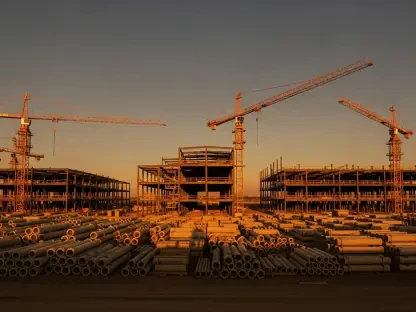

The Civil Construction Renaissance and Its Impact on National Infrastructure
The massive scale of modern infrastructure often remains invisible to the public until a major contractor demonstrates how a multibillion-dollar portfolio can be successfully steered from the brink of litigation toward historic financial dominance. Heavy civil construction serves as the backbone of domestic stability, modernizing the transportation and utility networks that sustain urban life. These projects are not merely about pouring concrete; they represent the complex orchestration of massive utility relocations, deep-earth tunneling, and the integration of high-capacity mass transit systems into existing metropolitan footprints.
The specialized nature of these ventures, particularly in the healthcare and transportation sectors, necessitates a level of technical expertise that few firms possess. Elite contractors must navigate the intricacies of public-private partnerships, where the management of high-risk, high-capital ventures requires both engineering precision and immense balance sheet strength. This dynamic creates a significant barrier to entry, leaving only a handful of players capable of executing the nation’s most ambitious megaprojects.
Market Dynamics Driving the Infrastructure Surge
Emerging Trends in Large-Scale Project Procurement and Technology
Owners and contractors are increasingly shifting toward collaborative delivery models to foster more equitable risk-sharing. This transition reflects a growing recognition that adversarial relationships during the construction phase often lead to project failures and cost overruns. Moreover, the push for sustainable building practices and advanced engineering technologies has altered project timelines, making efficiency a primary driver of cost-effectiveness in a high-inflation environment.
Evolving consumer behaviors also play a role, as municipal governments favor mass transit expansion and modernized urban hubs to meet the needs of a mobile population. These shifts require contractors to adapt their procurement strategies, ensuring that they can deliver complex facilities while adhering to strict environmental standards. The integration of digital twins and real-time project tracking has become a prerequisite for managing the logistical nightmares associated with urban megaprojects.
Performance Indicators and the Record-Breaking Growth Forecast
Public funding tailwinds are currently fueling an unprecedented era of domestic infrastructure investment, providing a steady stream of high-value opportunities. Following a challenging period of net losses, the industry saw a remarkable financial rebound in the previous fiscal year, highlighted by a record-breaking $80.4 million net income for leading firms. This swing to the black signals that the strategic pivots implemented in earlier years are finally yielding tangible rewards.
This growth is anchored by an enormous project backlog, which now exceeds $20.6 billion and provides a clear runway for double-digit revenue increases through the coming months. As high-value projects move from the design phase into active construction, the financial stability of the sector continues to strengthen. Analysts suggest that the current trajectory will sustain a period of prolonged profitability as long as firms remain disciplined in their operational execution.
Overcoming Legacy Liabilities and Operational Obstacles
Success in this sector requires more than just winning new work; it involves resolving the burden of long-standing litigation and project disputes. For companies previously bogged down by legal complexities, reducing active cases from dozens to a manageable few has acted as a primary catalyst for margin improvement. Moving away from these legacy liabilities allows management to refocus on project execution rather than courtroom defense, which significantly enhances the predictability of earnings.
Navigating “no damages for delay” clauses remains a hurdle, but contractors are becoming more adept at negotiating these high-risk terms. The inherent volatility of multi-billion-dollar project timelines means that “lumpy” award cycles are a reality of the business that must be meticulously managed. Strategic firms handle this by ensuring that the projects they do win carry sufficient margins to weather the inevitable gaps between major contract starts and completions.
Navigating the Regulatory Landscape and Contractual Reform
Federal and state legislation continues to play a pivotal role in project availability, providing the funding security necessary for long-term planning. Contractors are leveraging their market position to insist on improved payment schedules and fairer liability standards, ensuring that regulatory compliance does not come at the expense of financial health. This involves maintaining transparency and meeting stringent safety regulations on massive job sites where any oversight can lead to significant delays.
Furthermore, the role of bond requirements and financial transparency remains critical in maintaining institutional trust among public owners and private investors. By adhering to rigorous reporting standards, firms can secure the necessary bonding capacity to bid on the largest projects in the market. This focus on regulatory alignment ensures that contractors can participate in federally funded programs while mitigating the risks of non-compliance.
The Horizon of Heavy Civil Engineering and Future Growth Areas
Upcoming mega-opportunities such as the Sepulveda Transit Corridor and the transformation of Penn Station illustrate the scale of current demand. Additionally, the expansion of defense-related infrastructure in strategic locations like Guam and California offers a steady stream of specialized work that requires high security clearances and specialized engineering. With limited competition for projects exceeding the billion-dollar mark, contractors have gained substantial leverage to set terms that favor operational stability.
The next wave of innovation is expected to focus on tunnel boring technology and the design of institutional facilities that can withstand the effects of climate change. Contractors that invest in these niche areas will likely dominate the market, as municipal owners look for partners who can offer both technical prowess and long-term durability. This focus on future-proofing infrastructure ensures a steady pipeline of work even as older projects reach completion.
Strategic Outlook and Recommendations for the Path Ahead
The strategic pivot from litigation-heavy operations toward disciplined growth proved to be the most effective way to secure long-term viability. Firms that prioritized selective bidding and rigorous risk mitigation found themselves better positioned to maintain financial health amidst fluctuating economic conditions. Those that successfully transitioned to more favorable contract structures avoided the pitfalls of the past, ensuring that revenue increases were matched by real margin expansion.
Ultimately, the successful execution of these massive engineering feats solidified the industry’s role as a fundamental cornerstone of national economic stability. It was determined that maintaining operational excellence required a constant focus on safety and technological adaptation. Moving forward, the most successful entities focused on building a sustainable backlog while avoiding the temptation of high-volume, low-margin work. This approach provided a clear blueprint for navigating the high-stakes construction markets of the modern era.