
We’re joined today by Luca Calaraili, a leading voice in construction and architectural design, known for his insights on integrating technology into large-scale projects. We’ll be diving into the complexities of modern healthcare construction, using the recently announced $500 million Baptist Health Sunrise hospital as a lens. Our discussion will explore the immense financial and logistical challenges of such a build, the critical importance of designing for resilience in high-risk environments like South Florida, and how facilities are being future-proofed to accommodate advanced medical technology. We’ll also touch on the broader market trends that make the healthcare sector a consistent area of growth for the construction industry.
For a half-billion-dollar hospital project, what are the primary cost drivers beyond initial materials? Could you detail the financial management strategies and risk mitigation tactics used to keep such a massive, multi-year build on budget, perhaps with a specific example?
On a project of this scale, the sticker price for steel and concrete is just the beginning. The real complexities in that $500 million budget lie in the long-term variables. We’re looking at a build that won’t see patients until 2029, so we have to meticulously forecast labor costs, potential supply chain disruptions, and inflation over that entire period. A huge portion of the budget is allocated to highly specialized mechanical, electrical, and plumbing systems that a standard commercial building just doesn’t have. For risk mitigation, we bake in significant contingency funds and use phased budgeting, locking in prices for materials and equipment far in advance. For instance, the robotic-assisted surgical equipment is a major capital expense; we would engage with vendors years ahead of installation to hedge against price increases and ensure the technology we plan for today won’t be obsolete by the time we install it.
Building in a hurricane-prone region like South Florida presents unique challenges. Beyond standard codes, how does the plan for a dedicated central energy plant influence a hospital’s design, construction timeline, and budget? Please walk me through the key resiliency features.
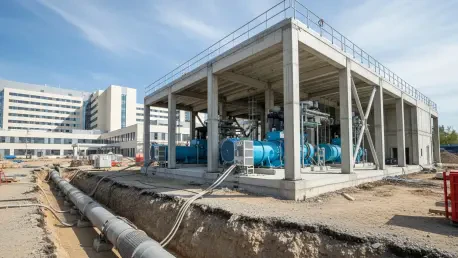
That central energy plant is the heart of the hospital’s resilience strategy; it’s non-negotiable. From day one of the design, it dictates the entire site layout. It’s not just a generator in a shed; it’s a hardened, standalone facility designed to operate like a bunker through a major storm, providing uninterrupted power. This means we have to excavate and build a robust foundation, often isolated from the main hospital structure, and run heavily protected conduits. This adds significant time and cost upfront, impacting the project’s initial phases. The key features are redundancy—multiple generators, independent fuel sources—and fortification. The goal is that when the power goes out everywhere else, the lights, the life-support systems, and the surgical suites in this hospital don’t even flicker. It’s about creating an island of stability in a sea of chaos.
The plan includes four surgical suites with robotic-assisted capabilities and room for future additions. From a construction standpoint, what are the unique requirements for installing this advanced technology, and how do you design the facility to ensure seamless expansion of these critical areas later?
Building a room for a surgical robot is far more complex than just building a standard operating room. The structural slab beneath the floor has to be significantly reinforced to handle the weight and eliminate any vibration from the robotic arms, which demand absolute stability. We also have to embed an incredibly dense network of infrastructure within the walls and ceiling—specialized power, redundant data lines for the terabytes of information being processed, and medical gas hookups. To future-proof the design for additional suites, we essentially build the bones for them from the start. We will stub out the necessary high-capacity power conduits, data ports, and plumbing connections in the adjacent, unfinished spaces. This way, when the hospital decides to add a fifth or sixth suite, it’s not a major demolition and construction project; it’s more of a plug-and-play operation, which saves immense time and money down the line.
While some construction sectors fluctuate, healthcare projects remain a resilient area. What specific factors are driving this consistent demand for new facilities? Using this new hospital as an example, how are modern designs balancing immediate community needs with long-term flexibility and growth potential?
Healthcare construction remains a bright spot because the demand is driven by fundamental, non-negotiable community needs—an aging population, demographic shifts, and the constant advancement of medical technology that requires new facilities. This project in Broward County is a perfect example of that. It’s designed to serve the community’s immediate needs with a 30-bed emergency department and 100 inpatient beds right out of the gate. But the real genius is in the flexibility. The design explicitly includes the capacity to expand the number of inpatient beds and add surgical suites without disrupting existing operations. This balance is key; you build a world-class facility for today while ensuring it can evolve and grow with the community over the next 30 or 40 years, making it a sustainable, long-term asset.
What is your forecast for healthcare construction?
I am incredibly optimistic. While we might see short-term slumps in planning, the underlying drivers for healthcare construction are stronger than ever. The integration of technology, like robotics and advanced diagnostics, is demanding facilities that are more complex and powerful than ever before. We’re moving beyond just building hospitals; we’re creating resilient, technologically advanced healthcare campuses. Projects like the Baptist Health Sunrise hospital and the massive $3.7 billion tower at UC Davis Health are not outliers; they are the new standard. My forecast is for continued, robust growth, with an increasing focus on specialized facilities, outpatient centers, and designs that prioritize both technological integration and long-term, flexible expansion.