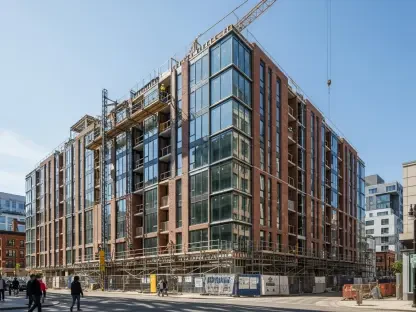

Imagine planning to build a dream home in one of New Zealand’s bustling urban centers, only to discover that the cost has crept higher than expected due to a critical material spiking in price. This scenario is becoming a reality for many as recent data reveals a subtle yet significant uptick in residential construction expenses across cities like Auckland, Wellington, and Christchurch. According to a comprehensive construction cost database, the average cost to build a standard home has risen by 0.5% in a recent three-month period and 1.1% over the past year. While these numbers might seem modest at first glance, they signal the beginning of renewed cost pressures in an industry that had enjoyed a period of relative stability. At the heart of this shift lies a dramatic surge in timber prices, a fundamental component of home building, raising concerns among builders and prospective homeowners alike about affordability in an already challenging market.
Unpacking the Rising Costs of Construction Materials
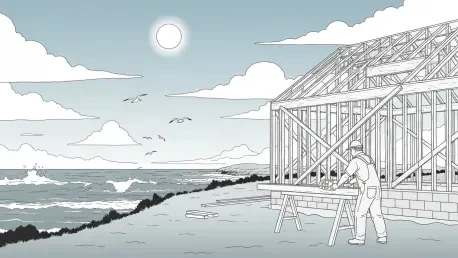
Delving deeper into the numbers, the increase in construction costs isn’t a uniform wave washing over every category. Instead, it’s a patchwork of gains and losses that paints a complex picture for the industry. Timber stands out as the primary culprit, with structural timber prices climbing by a notable 5.2% in a short span, directly impacting the bottom line for residential projects. Other materials like cladding systems and concrete have also seen rises of 5.0% and 4.5%, respectively, adding to the financial strain. Meanwhile, not all sectors are feeling the pinch—plumbing materials, for instance, have dipped by 1.5%, thanks to sharp declines in specific items like PVC tanks. This uneven landscape suggests that while the overall cost hike is moderate, the heavy reliance on timber in New Zealand’s building practices amplifies its effect, making every percentage point increase feel like a much larger burden for developers and contractors navigating tight budgets.
Moreover, the disparity in price movements across materials highlights a broader uncertainty in the market that could complicate future projects. Diesel costs, up by 3.0%, add another layer of expense for construction operations, while smaller increases in painting and specialist finishes at 2.3% contribute to the creeping tally. These fluctuations aren’t just numbers on a spreadsheet—they translate to real-world decisions about whether to delay a build or pass costs onto buyers. Industry watchers note that timber’s dominance in the cost equation stems from its irreplaceable role in framing and structural integrity, leaving little room for substitution. As a result, even a seemingly small spike ripples through the entire process, pushing stakeholders to rethink timelines and financial strategies in a sector where margins are often razor-thin.
Regulatory Changes and Future Market Pressures
Shifting focus beyond raw material costs, another looming factor threatens to shape the construction landscape in New Zealand. Proposed changes to the Building Act, including a move from joint and several liability to proportionate liability for building defects, are stirring debate among industry professionals. Additionally, mandates for warranties and professional indemnity insurance for design experts could introduce new compliance burdens. While these reforms aim to create fairer risk-sharing, they also risk adding unforeseen expenses that might trickle down to developers and, ultimately, homeowners. A quantity surveyor familiar with the market has cautioned that such regulatory shifts could inject uncertainty at a time when cost predictability is already under strain, potentially slowing down projects or inflating budgets as firms adjust to new rules.
However, there’s a flip side to this regulatory cloud that offers a glimmer of hope. If implemented thoughtfully, proportionate liability could reduce the frequency of costly disputes and delays that often plague construction timelines, potentially easing some financial pressures over the long haul. Looking ahead, with construction activity expected to ramp up into 2026, the interplay between these regulatory proposals and ongoing material cost trends will be critical to monitor. Timber’s price trajectory, in particular, remains a wildcard that could either stabilize or further disrupt the market. The cautious outlook from industry experts underscores a need for builders to stay agile, balancing immediate cost challenges with the anticipation of broader systemic changes that could redefine how homes are built and priced in the near future.
Navigating the Road Ahead for Home Builders
Reflecting on the evolving dynamics, it’s clear that the modest rise in residential construction costs witnessed recently marked a turning point after a stretch of relative calm. Timber, with its outsized 5.2% price jump, emerged as the key driver, casting a shadow over budgets in a nation where wood frames so many dreams of homeownership. The mixed signals from other materials and the specter of regulatory reform added layers of complexity to an already intricate challenge for the industry. Yet, amid these hurdles, there was a shared resolve among stakeholders to adapt and innovate.
Moving forward, builders and developers must prioritize strategic planning, exploring alternative materials where feasible and engaging with policymakers to shape regulatory outcomes that support growth without undue cost burdens. Keeping a close eye on timber market trends and leveraging detailed cost data will be essential steps in maintaining affordability. As activity builds toward an anticipated surge in the coming year, these proactive measures could help transform early challenges into opportunities for a more resilient construction sector in New Zealand.