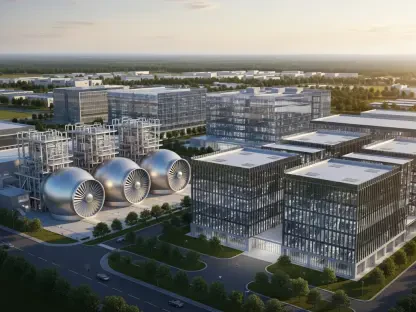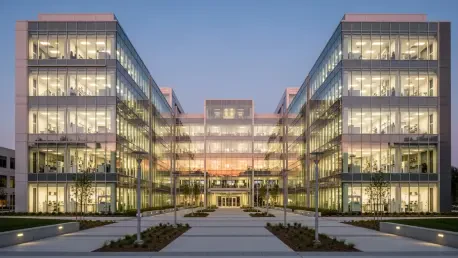

The landscape of American higher education is currently undergoing a radical physical transformation as aging lecture halls give way to massive, high-tech research ecosystems designed to attract the world’s leading scientific minds. Skanska, a global leader in construction and development, recently secured a $165 million contract with Texas A&M University to build a 185,000-square-foot biology teaching and research facility at the College Station campus. This investment is not merely about adding square footage; it represents a strategic shift toward modernizing academic infrastructure to meet the demands of 2026 and beyond. By replacing obsolete buildings with a centralized hub for biomedical inquiry, the university is positioning itself at the forefront of global scientific competition.
Strengthening Academic Infrastructure Through a Massive $165M Investment
This project highlights a broader market trend where universities are increasingly moving away from decentralized, siloed departments in favor of integrated facilities. The new biology building is designed to consolidate various disciplines into a single, high-performance environment, streamlining resource allocation and fostering cross-disciplinary breakthroughs. For Skanska, this contract reinforces its dominant position in the American educational sector, particularly in Texas, where the demand for specialized STEM facilities continues to outpace many other regions.
A Legacy of Collaboration and Modernization in Higher Education
The relationship between Skanska and Texas A&M has evolved into a cornerstone of the university’s long-term master plan. This partnership was recently validated by the successful opening of the Wayne Roberts ’85 Building in early 2025, which provided a sophisticated expansion for business education. The consistent delivery of such complex projects suggests that the university prioritizes reliability and specialized expertise when selecting construction partners. As educational institutions navigate the transition from traditional classrooms to tech-heavy environments, the ability to execute large-scale, specialized builds has become a significant competitive advantage for global firms.
Building the Future of Biological Research and Innovation
Sophisticated Design Meets Advanced Biomedical Research Capabilities
The core of the new facility lies in its ability to support immersive research and experimentation through high-performance laboratories. These spaces are engineered to meet the stringent technical requirements of modern biomedical research, which often involve sensitive equipment and specific environmental controls. By moving research out of antiquated structures and into this centralized hub, the university can ensure that its safety protocols and technical capabilities align with the highest industry standards.
Fostering Active Learning and Interdisciplinary Engagement
Education in 2026 has shifted toward hands-on, collaborative models, and the new facility reflects this by incorporating active-learning classrooms. These areas are designed to facilitate problem-solving and direct participation rather than passive observation. Skanska has refined this student-centric methodology through other significant projects, such as a $100 million STEM building at Texas State University, illustrating a standardized yet adaptable approach to modern academic design.
Promoting Inclusion Through the Building Blocks Initiative
Beyond the physical structure, Skanska’s operational model emphasizes social responsibility and the development of local supply chains. The “Building Blocks” program serves as a vehicle for training smaller, historically underutilized businesses in safety, sustainability, and complex contracting. By awarding a significant percentage of contract values to these firms, Skanska helps build a more resilient and diverse construction ecosystem. This strategy has already empowered hundreds of companies to secure nearly a billion dollars in subsequent contracts across the industry.
Anticipating the Next Generation of STEM Facilities and Regional Growth
The future of institutional construction is likely to be defined by carbon-neutral materials and flexible laboratory layouts that can be reconfigured as scientific needs change. As the Texas A&M project moves toward its spring 2027 groundbreaking, the industry expects to see even tighter integration of digital twins and artificial intelligence in facility management. Texas is rapidly cementing its status as a global biotechnology hub, suggesting that the demand for these specialized, high-cost facilities will remain a primary driver of the regional construction market.
Strategies for Success in Large-Scale Institutional Construction
For developers and academic stakeholders, the primary takeaway is the necessity of long-term strategic alignment. Success in these high-stakes projects often depends on integrating social equity goals directly into the procurement process, ensuring that large investments benefit the broader community. Furthermore, prioritizing “active” spaces over traditional layouts ensures that the facility remains relevant for decades. Stakeholders should focus on modularity and technological scalability to protect their investments against rapid advancements in research methodology.
The Long-Term Significance of Modernizing Texas A&M’s Campus
The decision to centralize biological and biomedical research into a single, $165 million facility was a decisive step toward maintaining institutional prestige. By prioritizing inclusive construction practices and high-tech infrastructure, the university and Skanska provided a blueprint for how large-scale developments can foster both academic and economic growth. Future projects will likely need to emphasize even greater environmental sustainability and adaptive reuse strategies to meet evolving public expectations. Ultimately, this facility was designed to serve as a catalyst for the next generation of scientific discovery, ensuring that the physical campus evolved at the same pace as the research conducted within its walls.