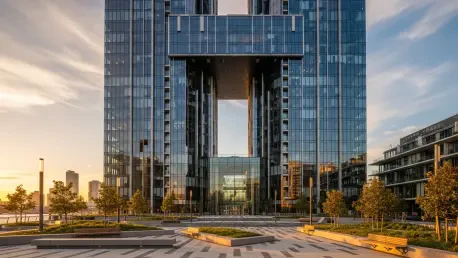

The urban landscape of Melbourne is currently witnessing a significant shift in residential development priorities as the demand for secure, high-quality rental housing continues to outpace traditional ownership models. Salta has officially secured a planning permit for a landmark 37-story build-to-rent tower at 699 La Trobe Street in the Docklands, marking a pivotal moment for the precinct. This project, which will operate under the developer’s specialized Est brand, features a sophisticated design by the architecture firm FK that utilizes two interlocking volumes to create a striking profile on the city skyline. The development is set to deliver 554 design-led apartments, including a vital allocation of 26 units specifically dedicated to affordable housing programs. Situated at the strategic junction between the Central Business District and the waterfront, the project aims to revitalize the public realm near the Marvel Stadium precinct through an activated ground plane and a landscaped forecourt that invites community engagement.
Modern Amenities: Driving Institutional Confidence in the Rental Sector
Beyond the provision of housing units, this 37-story structure is designed to function as a self-contained ecosystem that caters to the professional and social requirements of the modern urban dweller. The inclusion of extensive co-working spaces and communal hubs reflects a deep understanding of the evolving workforce trends that prioritize flexibility and connectivity within the home environment. This development arrives during a period of intense pressure on the local rental market, aligning with a broader national trend where the build-to-rent pipeline has doubled in size recently. With over 16,000 apartments now operational across the country, the sector is benefiting from a surge in institutional confidence. This growth is largely supported by stabilizing capitalization rates and rental increases that are currently outpacing the rising costs of construction. By focusing on professionally managed assets, developers are offering a level of stability and service that was previously unavailable in the fragmented private rental market.
Future Directions: Strategic Growth and Professional Management Standards
As the third major project in the current portfolio, following successful implementations in Fitzroy and Richmond, the Docklands site brought the group’s total supply to more than 1,100 high-quality apartments. This expansion represented a deliberate transition toward high-density housing solutions located in well-connected urban hubs where residents gained immediate access to transport and employment. Stakeholders looked toward professional management as a standard for future developments, ensuring that long-term maintenance and tenant satisfaction remained the primary metrics of success. Moving forward, urban planners and developers prioritized the integration of lifestyle amenities with residential density to address the complex housing demands of a growing population. Future projects focused on creating inclusive environments that balanced market-rate offerings with affordable housing mandates. By adopting these integrated models, the industry stabilized the rental supply chain and provided a sustainable template for metropolitan growth that other cities eventually sought to replicate in the years following 2026.